In a previous post I explored happiness and fulfillment in retirement drawing on the work of Bec Wilson, creator of the Epic Retirement Flagship Course and the author of the book, How to have an Epic Retirement. In that post, I shared some of Bec’s suggestions concerning “Epic Pursuits” that could enable us to achieve an “engaged, curious and happy life”. In her Workbook accompanying the course, she suggests that epic pursuits are “things you really enjoy doing, and that you want to deepen your knowledge of and get better at”- a source of joy, learning and contentment. The Workbook helps us explore our achievements, passions, purpose, interests, and values as a basis for deciding what epic activities to pursue in retirement.
I retired as a Professor of Management in 2017 and ceased management consulting work in 2024, following the serious illness of my consulting colleague who was my co-facilitator for the previous 16 years – we had run hundreds of workshops together. In reflecting on my own life story to date, I began to identify what epic pursuits I have undertaken both before and during my retirement:
- Research and writing
- Tennis and pickleball
- Social networking
- Travel overseas
Research and Writing
I have developed the art of writing over many years and followed the exhortation of one of my professors: “if you want to learn to write – write, write, write”. So my writing has included theses, articles, book chapters, conference papers, blogs, e-books and training courses. Hence my non-fiction writing has included the following:
- Master’s research project and doctoral thesis (100,000 words) – doctorate awarded in 1996
- Multiple published book chapters and articles on action earning and action research published in academic journals (one of my co-authored academic articles won an Award for Excellence from The Learning Organisation: An International Journal)
- Co-author/editor of two books on action learning and action research
- Chief editor and occasional author for a journal on action learning and action research
- 4 blogs covering internet/social media marketing
- Current blog, grow mindfulness.com, which has 791 posts, 977 moderated comments and a total word count in excess of 550,000 words
- Created 15 poems incorporated in my mindfulness blog
- Broad based articles published on Squidoo (over 100 before it was terminated), HubPages, ArticleDirectory.com and Wizzley.com, a writer’s community (also co-creator of this social media site with colleagues in Germany and the US)
- Creator of a 6-month, online course on Social Media Marketing (comprising 24 PDFs)
- Supervisor of Master’s and Doctoral students including recommended content and format edits; examiner of Doctoral thesis for 12 Universities, including 3 overseas (Britain, South Africa and New Zealand)
- Developed short e-books on Affiliate Marketing and The Inner Game of Tennis.
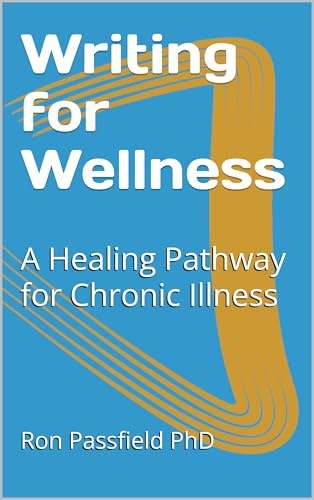
Recently I also published an Amazon Kindle e-book, Writing for Wellness: A Pathway for Chronic Illness.
My research and writing goals for my retirement are:
- Complete 5 more Kindle e-books drawing on my Grow Mindfulness blog and my other publications
- Research and write 2 X 1,000+ word articles per month for my Grow Mindfulness blog which covers topics such as mindfulness practices, chronic illness, leadership, management, health and happiness
Tennis and Pickleball
I have played tennis for more than 65 years but owing to a number of chronic conditions I have not participated in my weekly social tennis since February 2025. Tennis was very much a part of my life since I was 9 years old. I played at primary and secondary school, in the seminary in Melbourne, competitively at A grade and Pennant levels and socially after this. Tennis gave me a sense of competence, motivation for maintaining my fitness and a source of relaxation. I have written a poem about my gratitude for experiencing the joy of tennis.
However, I am currently experiencing the following chronic illnesses that impact my ability to play tennis (even socially at night):
- arthritis in the middle finger of my right hand (I am right-handed)
- osteopathy affecting my hips and other parts of my body
- multi-level spinal degeneration (likely impacted by my MCAS chronic condition)
- exercise asthma.
I decided to explore pickleball as an alternative to tennis and found that I am able to play this sport to an intermediate level. I recently wrote about my joy in playing this game in a blog post and a poem titled, For the Love of Pickleball. I have avoided competitive pickleball sessions and focused on social games to protect my fragile body.
I am thoroughly enjoying the social aspects of pickleball and experimenting with new shots and ways to improve each time I play – a great source of learning! One clear advantage is that I can build on the skills and court craft I acquired through my many years of playing tennis – more than 10,000 sets of tennis. I have played tennis on multiple surfaces – grass, concrete, bitumen, artificial grass, ant bed, clay and flexipave. I have enjoyed playing social tennis locally as well as overseas in Auckland, Boroughbridge (Yorkshire, UK), Port Moresby and Lake Annecy (France).
My pickleball and exercise goals:
- Continue to play social pickleball weekly
- Undertake daily exercises provided by an exercise physiologist for my chronic conditions
- Resume regular Tai Chi activity (both as a mindfulness practice and source of health benefits).
Social networking
I joined a social network for writers-with chronic-illness about two years ago. The group, Creative Meetups, has a Zoom meeting each month which is currently facilitated by Jennifer Crystal, author of One Tick Stopped the Clock and a writing-to-heal coach. The online sessions involve a stimulus piece provided by Jennifer along with time to write to the relevant theme and an opportunity to share our writing whatever form that takes. I have been very inspired by this social connection and the creative writing of others, some of whom have very serious chronic illnesses.
The inspiration I have received from this group sharing has enabled me to write a series of poems about the stimulus topics and incorporate them in a relevant blog post. This has proven to be an excellent stimulus to my own creative writing. On a health front, I find that I really enjoy writing and that my pulse rate drops when I am in the process of creating a post or poem – I tend to “be-in-the-zone”.
My social networking goals are:
- Continue to participate in the monthly, online meetings of the writers-with-chronic-illness
- Use these meetings as a continuous source of inspiration
- Continue to create poems stimulated by the shared stories and writing of the Creative Meetup group
- Explore volunteering particularly visiting hospital-bound war veterans.
Travel Overseas
When I reflect on my achievements in this area, both domestically and internationally, I can feel a strong sense of gratitude for the opportunities I have had and also for the health and fitness that enabled me to undertake the relevant travel. I have focused on my overseas travel in this post.
The best way to recall and record this travel is to categorise the travel by year:
- 1994 – my wife and I and our two boys (aged 3 and 6) travelled to England for the World Congress on Action learning and Action Research (I was President, at the time, of the ALARA Association that sponsored and organised the Congress). We were able to stay in Yorkshire and Bath (the location of the Congress). We also spent a week at Lake Annecy in Northern France with our Yorkshire-based in-laws.
- 1995 – I travelled to England by myself to undertake research as part of a validation process for my doctoral thesis. This research trip enabled me to visit action learning/action research experts in London, Lancaster, Nottingham, Bristol, and Brighton. At the time, my adult son was on a working holiday at a restaurant in the Lakes District and one of my daughters was working as a child carer in a castle in Lockerbie, Scotland. We were then able to travel together by train to Edinburgh, through snow-covered terrain.
- 1997 – I travelled to Cartagena, Colombia, via Singapore, Los Angelos, Miami, and Bogota (a 36 hour trip). I was attending a World Congress on action learning and action research as President of the ALARA Association (joint sponsor). I had participated as a member of the international Planning Committee and attended the Congress as Convenor of the Organisational Development Stream and a member of the Expert Panel session. We were overwhelmed by the 1,800 participants from 61 countries who turned up for the event (despite only 500 people registering in advance).
- 1998 – three trips to Singapore to run workshops on action learning in Port Moresby for the International Management Centers (UK).
- 2014 – my wife and I travelled in November/December via Hong Kong to Frankfurt, Bingen (Germany, where we spent a week in a friend’s unit), Paris, Venice, Florence, and Rome. We were able to spend 7 nights in each location and spent New Year’s Day in Rome (-4 Degrees Centigrade, turning a fountain to ice).
- 2017/2018 – my wife and I travelled in December/January via Hong Kong to Milan, Lake Como, Turin, Santa Margherita, Bologna, and Venice (New Year’s Day there).
My wife and I had planned to travel to Paris and Northern Italy again for my 80th birthday (2026). However, I have reluctantly acknowledged that I have reached a fragile stage in relation to overseas travel, given my osteoporosis and multi-level spinal degeneration. I can no longer sit or lie down for extended periods, even in business class plane travel. This means that I will have to travel “closer to home”. This does not preclude my wife from travelling overseas, either by herself or with a companion. I will have to concentrate on domestic travel and use virtual travel to enable me to gratuitously experience travelling overseas.
My travel goals are:
- Expand my digital photo album to incorporate photos and videos of my previous overseas travel (to enable virtual travel)
- Visit overseas sites virtually via the drone photography that is readily available on the Internet
- Write a blog post recording domestic travel undertaken before and during retirement
- Develop domestic travel goals for the next five years.
Reflection
Bec identifies 5 stages of retirement planning – “fragility” being one of them. However, this may be a stage in relation to one or more epic pursuits – it may not extend to all our activities. For example, I am still able to play pickleball but I cannot travel overseas. I think one of the challenges is to learn to adapt retirement planning progressively as we age and not let fragility in one area contaminate our thinking about other areas of activity or epic pursuits.
The core challenge of aging and retirement is to make the most of our “spare time” in retirement, the surplus in our life. As Bec notes, if we do not actively plan our retirement, we can be overwhelmed by boredom and negatively impact our longevity. It is much better to plan for happiness and fulfillment in retirement. If we grow in mindfulness through a range of mindfulness practices we can enhance our physical and mental health, develop constructive routines and find creative ways to grow and contribute.
By recalling and recording my epic pursuits before and during retirement, I have become more aware of the opportunities I have had in my life and feel a strong sense of gratitude for what I have been able to achieve.
________________________________
Image by Ahmet Yüksek from Pixabay
By Ron Passfield – Copyright (Creative Commons license, Attribution–Non Commercial–No Derivatives)
Disclosure: If you purchase a product through this site, I may earn a commission which will help to pay for the site, the associated Meetup group, and the resources to support the blog.