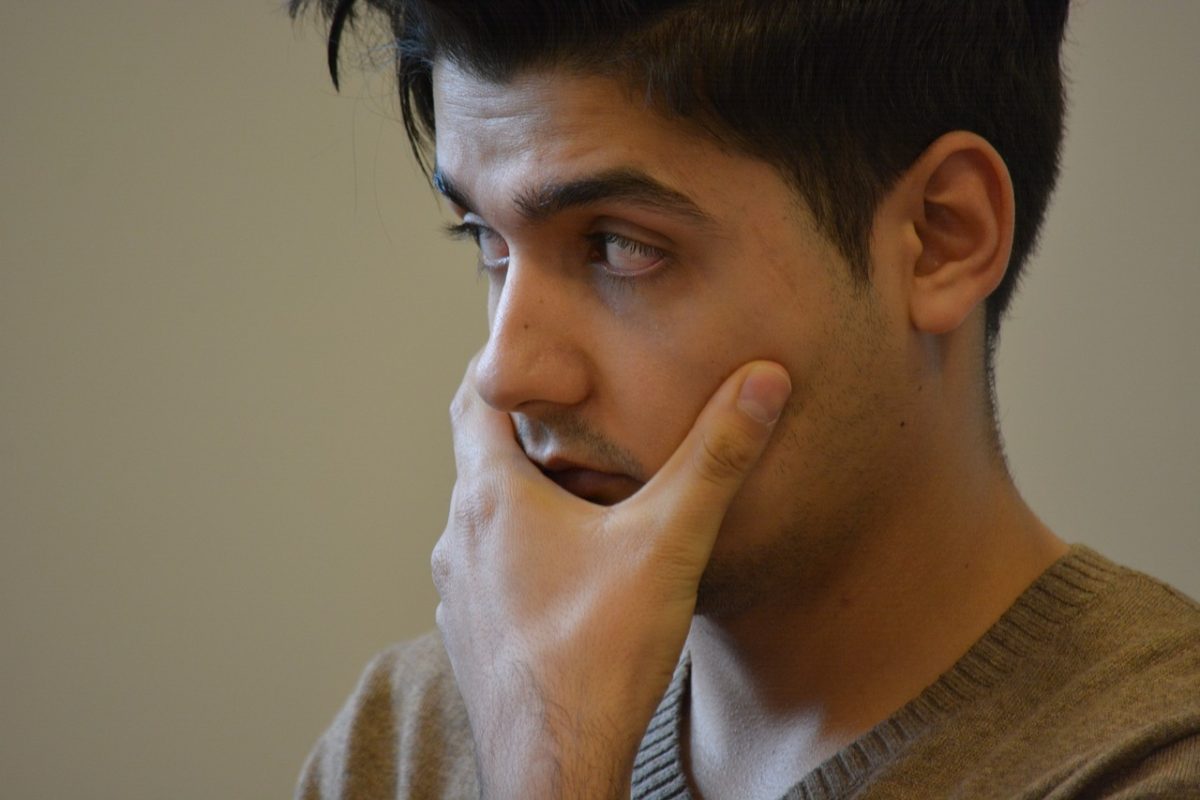
Lifelong Learning Through Mindfulness

In their book, Organizational Change by Choice, Dexter Dunphy and Bob Dick quote an anonymous author who provides a very simple, behavioural description of the way we learn:

To look is one thing

To see what you look at is another

To understand what you see is a third

To learn from what you understand is something else

But to act on what you learn is all that really matters. (p.120)

The wisdom of this way of looking at learning was brought home to me during one of Bob Dick’s MBA classes that I attended many years ago (32 years ago to be exact). Bob was introducing us to the art of facilitating groups and understanding group dynamics.  He formed us into groups and each person in a group was assigned an observation task to undertake while the group simultaneously discussed a controversial topic – in my group’s case, “Should people who drink and drive be jailed?”

We each had to look for and observe some aspect of the group’s behaviour, e.g. amount of eye contact, level of dissent in the group, non-verbal behaviour, the level of participation and how people built on other’s ideas.  As the discussion progressed, it became quite heated and one of our group was showing signs non-verbally that he was becoming distressed by the discussion.  However, the person who was supposed to look for non-verbal behaviour in the group was totally oblivious of this distress and kept on pushing his point that drink drivers should not be jailed.  The distressed person finally got up and left the group.  The person who was supposed to observe non-verbal behaviour, immediately asked the group, “What did he do that for?”  It turned out that a friend of the distressed person had been killed by a drunken driver.

This experience really brought home to me very starkly that you can look and not see if you stop paying attention and lose focus on what you intend to observe.  If you then do not see what is happening, you will be unable to understand another person’s behaviour.  If you don’t understand the interaction, you will not learn how to adjust your own behaviour.  In the final analysis, you will not act in a way that puts the desired learning into practice – in the case of my example, you will not be able to effectively facilitate group processes.

To look in a meaningful way requires focus, purposeful noticing and full attention.  It is only then that we see in a way that enables learning.  So while we may be looking at the same scene or object we will see different things.

Understanding what we see requires an uncluttered mind and the capacity to maintain focus.  It is only through sustained seeing that we come to understand what we are actually looking at – to realise the impact of something for our lives and that of other people.  Focused attention builds our understanding because we are better able to access our subconscious and realise the connections between things that we perceive now or have perceived in the past.

Learning from what you understand is another level of challenge in the quest for lifelong learning.  Having understood something impacting our lives, we have to be able to think through the behavioural implications – its meaning for how we should act towards our self and/or others.

In the final analysis, what really matters is taking action in line with our understanding and learning – translating our learning into practice.  As I discussed in a previous post, it is one thing to look for and read about mindfulness, it’s another to understand the benefits of mindfulness, but it is something else to learn from your understanding of mindfulness how you should behave and, all that matters, is engaging in mindful practice – taking action by being mindful in our everyday lives.

So, being mindful can help us to engage in lifelong learning – to look, see, understand, learn and act on our learning in our everyday lives.  As we grow in mindfulness, we are better able to focus, pay attention, gain insight and be conscious of what we are learning and what it means in our life.  Ultimately, we are better able to achieve congruence – to line up our actions with our thoughts and words.

Image source: Courtesy of Mojpe on Pixabay

Do You See What I See?

It is highly unlikely that you see what I see or what other people might see.

So much of what we see is filtered by our past experience and our thoughts and emotions generated by those experiences. So, what each of us see when experiencing a scene like the picture in this post of the Manly foreshore at sunrise, might be very different.

If you are a runner you might focus on the runner in the foreground, the idyllic environment for their run and their running style. If you have recently visited Stradbroke Island, you could be looking at the island in the background and searching for the tell tale sandhills while remembering an enjoyable aspect of your visit there.

If you have experienced a tsunami, the water and its calmness might remind you of your horrifying experience that followed in the wake of a calm sea. Instead of calming you, the scene might generate fear in you.

If you love trees you might focus on the different varieties of trees along the shorefront or notice the bright aura of the fir tree in the foreground.  If you have an interest in photography, you might critique the photo itself and its technical aspects of shade and light, contrast, background and foreground, positioning of key elements or the impact of the rising sun illuminating the image.  A landscape artist could be deciding whether to paint the scene in its totality or to focus on the trees.

If you are inwardly focused and preoccupied with worry or concerns about the day ahead, you might be unaware of what is actually in front of you.

What we attend to influences what we see or don’t see.  Our attention, in turn, is influenced very much by what has happened previously in our life and/or what is happening now for us.

Jon Kabat-Zinn has this to say about our limited perception and the influence of our thoughts and emotions on what we actually see:

Instead of experiencing the bare actuality of our senses, we are more experiencing our life through our thoughts about our experience – our preferences, likes, dislikes, our worries, concerns or addictions, and in a sense not fully inhabiting the full spectrum of our innate capability.

This is one reason why open awareness is a very important mindful practice if we want to grow in mindfulness and reach our full potential. Otherwise we can be lost in our thoughts and miss the world around us, its richness and beauty.

Image source: Copyright R. Passfield

Start Your Meeting With Reflection Time

When we arrive at a meeting, our thoughts are often elsewhere rather than in the room – with the unfinished task we have just left, the things that we have to do, the work that will not get done as a result of the meeting.

So we do not have a meeting of minds, because the minds of people “present” are elsewhere – we have a physical collection of people.  People are not present in the sense that their attention is not fully on the meeting, its purpose and goals.

What exacerbates this situation is that many people “at” the meeting are checking their phones for their latest emails or social media updates, doing their to-do lists or planning another activity.  This multitasking in itself is both personally injurious (can cause inflammation of the brain) and contaminates the meeting (inattention spreads).

What some organisations are starting to do now is to begin their meetings with a short reflection time (5-10 minutes) so that people can become grounded and really present.  Besides helping people to become focused on the meeting and its purpose, this reflection time reminds people why they are at the meeting and the need to attend to (pay attention to) what is going on.

At a recent mindfulness conference, a group of digital designers from a bank decided then and there that they would start their meetings with a ten minute reflection time.  They realised the power of reflection to develop focus and release creativity.

If you do build in time for reflection at the start of a meeting you will experience a heightened level of focused energy and strengthening of team spirit.  You will also be more productive as a team.  Residual resentments about missed opportunities will be less likely to contaminate the meeting process.

Starting your meetings with time for reflection also helps your team to grow in mindfulness and focused attention so that the benefits flow beyond the meeting.

Image Source: Courtesy of ForMyKerttu on Pixabay

Grow Mindfulness through Reflective Listening

Have you ever been in a “conversation” where the other person was obviously not listening?

They may have been distracted by their own thoughts, looking at their smart phone or watching things going on elsewhere.  While you are talking they could be keying on their computer, shuffling papers or doodling.  One cue that they are not listening is the lack of listening non-verbals, e.g. eye contact, facing you, conversation encouragers such as a nod or smile.

The non-listener will interrupt, talk over you, try to solve your problem before they know what it is and direct the conversation to their own issue or story.

Of course, each of us engages in one or more of these behaviours at one time or another.  The net result of the failure to listen is that the speaker becomes frustrated, annoyed and even aggressive in tone or posture.

When you really listen, you give the speaker the gift of affirmation – you affirm their existence, their worth and that you value them enough to pay attention to them (rather than to your own needs).

However, to listen reflectively you need to be present to the other person – to be mindful.  You can reflect what the speaker is saying through summarising, paraphrasing and checking for understanding.

Reflective listening requires focused attention – a key feature of mindfulness.  It is really a two-way street.  The more you listen and focus on someone talking, the more mindful you become; the more you develop the habit of mindfulness, the more you are able to listen reflectively.

You have to learn to use your ears more and your mouth less so you can focus on the other person and what they are saying.

Image source: Courtesy of Pixabay.com.