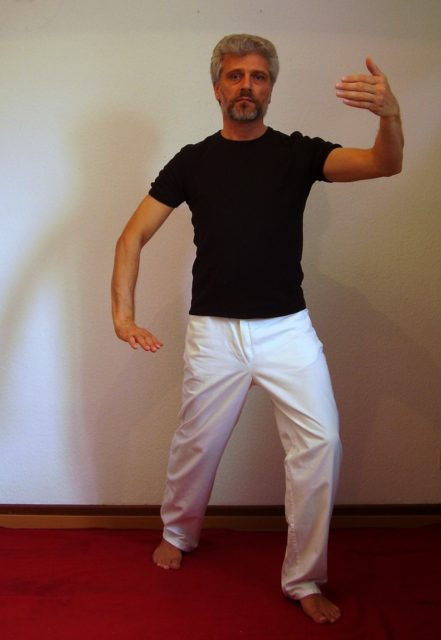
Tai Chi and the Mind-Body Connection

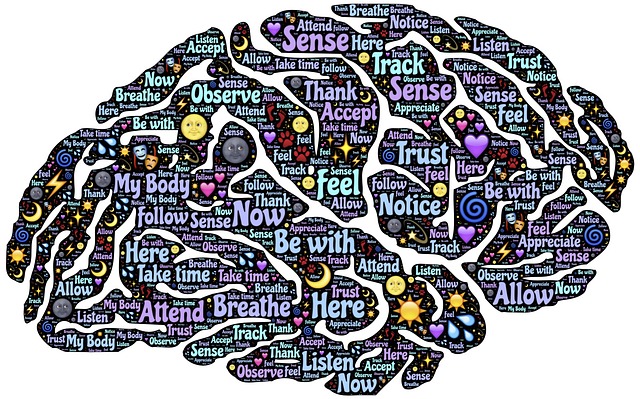
In a previous post when discussing mindfulness and neuroplasticity, I mentioned that Tai Chi actually develops the mind physically by increasing the size of the insula in the brain.

Tai Chi is one of the mind-body techniques that form part of Traditional Chinese Medicine and is based on Chinese philosophy incorporating Taoism and Confucianism.  Tai Chi involves a combination of slow movements, body postures and mindful breathing.  In Chinese philosophy terms, it facilitates the flow of Qi, “life energy”.

Tai Chi has been shown to improve muscle strength, balance and flexibility and, when used in conjunction with Western Medicine, helps patients suffering from Parkinson’s Disease, Arthritis and low bone density as well as helping people to recover from the effects of a stroke.

The real benefits of Tai Chi flow from its capacity to simultaneously develop the mind and body of the practitioner and thus enhance their mind-body connection.  Alzheimer’s disease is a clear example of the mind-body connection because as the mind deteriorates so does the body.  Tai Chi has been shown to combat Alzheimer’s.

The power of Tai Chi to develop the mind derives from the state of “relaxed concentration” achieved by focusing on the coordination of mind and body in a series of slow, balanced and rhythmic movements, while focusing on a single thought.  The focused attention develops mindfulness, improves memory and strengthens concentration.  Dr. Shin Lin, in a talk at the UCLA Center for East-West Medicine, provided research results to show that Tai Chi produces new neurons during regular practice which suppress stress and build memory.

Dr. Lin indicated that Tai Chi, besides producing stress release, also improves immunity and eases chronic pain and fatigue.  Professor Michael R. Irwin, Medical Doctor and Director of the Cousins Center for Psychoneuroimmunology at UCLA, has demonstrated in his research that Tai Chi “promotes improvements in health functioning, viral specific immunity, and inflammation”.  His area of research and practice is focused on the mind-body connection – “Psychoneuroimmunology” involves the “study of the interaction between the psychological processes and the nervous and immunity systems of the human body”.

I have found from personal experience that Taoist Tai Chi helps both my mind (concentration, focus and creativity) and my body (energy, balance and fitness). I use the evidence of the mind-body benefits of Tai Chi to motivate my daily practice.

Karl Romain, in discussing how Tai Chi trains the brain, suggests that if you cannot find time for meditation and Tai Chi, practise your Tai Chi because it has a meditation element, as well as provides benefits for your mind-body connection.  I think the two practices, meditation and Tai Chi, are highly complementary and my personal goal is to achieve daily mindfulness practices that include both traditions.

As we grow in mindfulness through meditation and/or Tai Chi, we develop improved health and wellness, develop our minds and deepen our mind-body connection.

By Ron Passfield – Copyright (Creative Commons license, Attribution–Non Commercial–No Derivatives)

Image source: courtesy of johnhain on Pixabay

Disclosure: If you purchase a product through this site, I may earn a commission which will help to pay for the site, the associated Meetup group and the resources to support the blog.

Mindfulness and Neuroplasticity

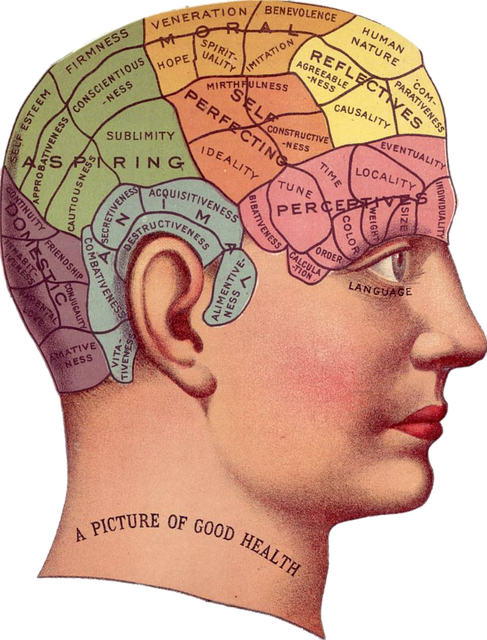
Norman Doidge, in his book The Brain That Changes Itself, explained that early brain researchers discovered what became known as “neuroplasticity”:

They showed that the brain changed its very structure with each activity it performed, perfecting its circuits so it was better suited to the task at hand.  If certain “parts” failed, then other parts sometimes take over. (p.xv)

For example, people who meditate or teach meditation have been shown to have a thicker insula – a part of the brain that is activated by paying close attention to something (p.290).

Dr. Bruno Cayoun observed that neuroscience has demonstrated that brain plasticity explains how mindfulness training increases our perceptual ability leading to a greater sense of self control and self-awareness.  Perceptual ability, according to the Oxford Dictionary, is “the ability to be able to deal with and give meaning to sensory stimuli”.

Research conducted jointly by the Fudan University in China and the University of South Florida showed that Tai Chi- often described as “meditation-in-motion” – actually increased the size of the brain of seniors who practised Tai Chi for 40 weeks and did so at least three times per week.  Tai Chi has many other benefits and these are discussed elsewhere in this blog.

Norman Doidge discusses the work of Michael Merzenich, Emeritus Professor in neurophysiology, who started a company called Posit Science to extend neuroplasticity of the brains of people as they age, as well as extend their lifespan (p.85).  Professor Merzenich maintains that, if we are in the older age group, we may not have been developing our brain plasticity since middle age because we are often working off already mastered knowledge and skills.

So, learning new skills such as mindfulness meditation and Tai Chi, with the attention and concentration required, will help to alleviate this problem of mental decline.

As we grow in mindfulness through meditation and approaches such as Tai Chi, we increase the size of our brain, enhance brain plasticity and enjoy the consequential benefits such as self-awareness and self-control.

By Ron Passfield – Copyright (Creative Commons license, Attribution–Non Commercial–No Derivatives)

Image source: courtesy of ArtsyBee on Pixabay

Disclosure: If you purchase a product through this site, I may earn a commission which will help to pay for the site, the associated Meetup group and the resources to support the blog.


Tai Chi – A Pathway to Mindfulness

Tai Chi is described as “poetry in motion” and is a popular pathway to the development of mindfulness. It builds the connection between body, mind and spirit.

I first encountered Tai Chi practice when, as a manager in the public service in the 1980s, I engaged a Tai Chi instructor to conduct training for myself and my staff on a weekly basis.  At the time I felt extraordinarily uncoordinated but persisted with the practice in the weekly lessons, only to drop away as pressure of work took over.

In 2014 my wife and I undertook the beginners class in Taoist Tai Chi before going overseas to Europe.  I think it certainly helped our fitness and presence of mind.  More recently, I returned to the weekly beginners classes but was unable to maintain attendance and learn the full 108 movements owing to work commitments.

The Tai Chi classes provide social support and motivation to master the art of Tai Chi. However, I became discouraged with the classes because I could not keep up owing to my work-induced absences.  However, I had really appreciated the benefits of practising Taoist Tai Chi, so I located a training video that takes you through the first 17 moves and now I attempt to use this video to practise Taoist Tai Chi on a daily basis.  This video takes you through the steps very slowly with a clear explanation:

The advantage of this video is that the 17 moves take only about 4 minutes and they can be completed in sets of three or more repetitions. The creators of the video also provide a practice video for the highly recommended warm-up exercises.

As with mastery of anything, Taoist Tai Chi requires regular practice, ideally on a daily basis. The more frequently you practise, the greater are the benefits you can experience in terms of physical and mental health and the growth of mindfulness.

Tai Chi is an antidote to the business of life and work. As the Fung Loy Kok Institute of Taoism (FLK) observes:

Taoist Tai Chi® arts offer a powerful opportunity to unplug from our phones, tablets and computers, and reconnect with the world.

There are many health benefits attributed to Tai Chi.  The Taoist Tai Chi Society of Australia explains the basis for these benefits as follows:

The significant degree of turning and stretching in each of the movements, combined with the adaptability of the form to suit individual needs, are just some of the factors that contribute to its focus on restoring, improving and maintaining health. 

The specific health benefits they identify include:

  • improved circulation
  • improved balance and posture
  • increased strength and flexibility
  • reduced stress
  • alleviation of the symptoms of illness such as arthritis, high blood pressure and migraine.

Tai Chi, like mindfulness, develops calmness, focus, concentration and clarity.