Ben Crowe, author of Where the Light Gets In: Simple, playful and profound perspective shifts to change your life, suggests that our modern world is driven by pressure and fear. Pressure comes from multiple sources including expectations (our own and other’s), relentless marketing, unhealthy comparisons (e.g. body image, financial position, status), the speed of life and the pervasiveness of social media. Fear arising from these numerous pressures can induce a sense of helplessness, inertia and a loss of creativity. Hugh van Cuylenburg points out that “fear of failure” can lead to all kinds of emotional and physical symptoms, including panic attacks.
Ben, like many other authors, contends that freedom is the opposite of pressure and expectation, while the real antidote to both pressure and fear is play. He acknowledges that “play” means different things to different people but there is a common element which he describes as “finding time and space for curiosity, creativity and experimentation to be here now”. He argues that there are three readily identified forms of play: (1) curiosity play, (2) spontaneous play and (3) nonsense play.
Curiosity Play
Ben explains that the essence of curiosity play is to ask the question, “What if? He gives several illustrations of this in action. The first relates to the arrangement between Michael Jordon and Nike to have a coloured basketball shoe in defiance of the NBA’s rules about uniform uniformity (wearing only predominantly white shoes). The colourful Nike’s Air Jordon 1 went on to be a fashion trend worldwide, worn by people of all walks of life (even priests and doctors). This “curiosity play” generated a huge sales boost for Nike and Michael Jordon got to wear his coloured basketball shoes.
Another example of “What if?” defiance of rules was that of Cathy Freeman wearing the Indigenous flag embroidered on the heel of her running shoes for the Atlanta Olympics (in defiance of IOC’s rule about “political statements” by Olympic athletes). Four years later at the Sydney Olympics she had both the Indigenous flag and Australian flag draped over her shoulders when she won the 400 metres Gold Medal. The IOC did not take action despite threats to do so in the event of a “political statement”.
Spontaneous Play
Spontaneous play is about possibilities – accessed by asking, “Why not?” It is very much about openness and curiosity in the present moment – exploring without judgment while noticing what is happening. This is akin to Jon Kabat-Zinn’s definition of mindfulness. Ben describes spontaneous play as “being open to the universe, suspending judgment, entertaining possibilities, noticing more, and connecting the dots”.
Ben provides a number of interesting examples of spontaneous play including Nike’s founder, Bill Bowerman, designing the company’s first shoe based on noticing the waffle iron in the kitchen – a design that addressed the existing deficiency in running footwear, namely “the lack of traction”. Paul McCartney in his book, The Lyrics, stated that “one of the things about the Beatles is that we noticed accidents”. He maintained that even a vinyl record playing backwards could stimulate creative ideas that they acted on. According to Paul, the Beatles “always loved being sidetracked by these ideas”.
Nonsense Play
Nonsense play involves frivolity, fun and games. It often leads to raucous laughter. Ben suggests that nonsense play can release creativity as it is often used to “replace expectation with experimentation”. He cites the example of the Beatles and their Sergeant Pepper’s Lonely Hearts Club Band album. At the height of their career, the Beatles were finding that the pressure of expectation was getting to them – they felt that they were continually expected to produce a new album that was better than their previous one (a constant drain on their enjoyment and creative energy). The Beatles developed the Sergeant Pepper’s Band album by treating the band name as an “alter ego” – an example of experimentation to reduce the pressure of expectation that resulted from their outstanding and rapid success. The album became one of their greatest achievements – all because of “nonsense play”. One song alone, Lucy in the Sky With Diamonds, has generated over 274 Million plays on Spotify at the time of writing this post.
Getting Into the Play State
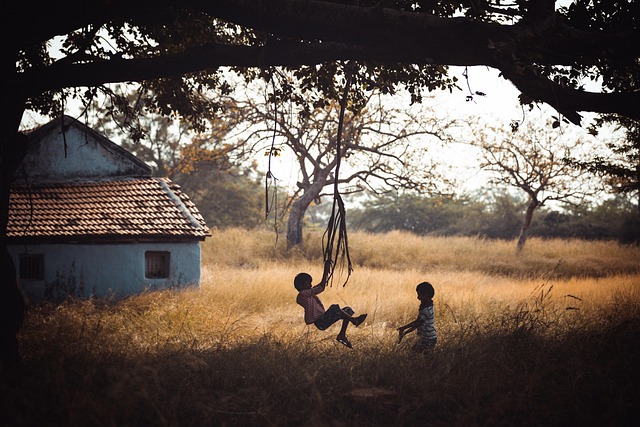
Ben suggests that the easiest way to get into the play state is to recall one of our “earliest play memories”. When I thought about this, I remembered vividly playing with model trains with one of my older brothers. We would save our pocket money and progressively buy track, carriages, bridges, and engines. Then together we would set about building a model railway track weaving through trees, houses and shops. Through our joint purchases we were able to expand our track and our railway gear.
Ben takes this “play state” one step further when he maintains that hidden in play are a “quintet of emotions” that are only readily accessible through a “stream of consciousness” that comes from memory and imagination. When I tried to recall the emotions I experienced in model train play with my brother, I came up with emotions that resonated with Ben’s quintet – joyful, excited, lost in the moment, connected and loved. He argues that this playfulness is when we are authentic and truly human – “before fear, comparison with others, and wanting to fit in”.
I also recall going on extended push bike rides (around 40 kms) on weekends with a school friend. We would ride together along busy roads (often nearly blown off the road by passing semi-trailers). We were carefree, connected, playful and exhilarated. The play state releases uninhibited behaviour, a sense of freedom, empowerment and creativity.
Other early play memories that come to mind, as I write, relate to going to tennis coaching with my two brothers and fishing trips with my brothers and sister. Tennis coaching occurred each Saturday and Sunday morning and we would have an hilarious ride in my eldest brother’s car as we anticipated the joy of learning and playing tennis. Like Ash Barty, we had an arrangement with our tennis coach that, if we assisted with coaching younger players on the Saturday, we would have free coaching on the Sunday. In between, we were able to play tennis fixtures (competitions), so we effectively played tennis all weekend. Our coach had been previously selected as a member of the Australian Davis Cup team but had been unable to compete at that level after a motorbike accident (he taught himself to play double-handed for his forehand and backhand to offset weaknesses in his wrists after the accident).
The fishing trips with my brothers and sister were also an enormous source of fun, not only from the joy of fishing itself (at Pinkenba, Breakfast Creek, Brisbane River and Tewantin), but also the adventure of the ride to these favoured fishing spots. Invariably, my sister and I would ride pillion passenger on one of the Vespa motor scooters owned by our brothers. We would race trains and enjoy the freedom and freshness of the breeze as we travelled to and from our fishing spots.
Reflection
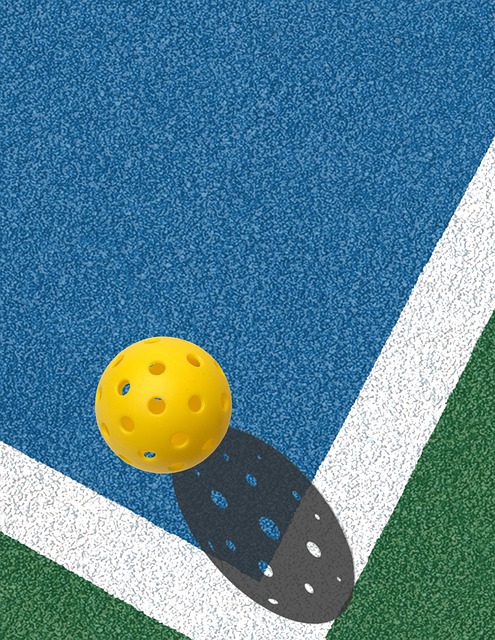
When I play pickleball I am able to draw on skills and strategies I developed playing tennis, squash and table tennis for many years. This prior experience and attendant body memory often enable me to play shots as a senior player (over 80 years old) that surprises my younger partners and opponents. The downside of this achievement is that it automatically produces a new set of expectations which were recently voiced by a pickleball partner who said, “Slay them Ron, like you usually do!” I can very easily fall into the trap of this new set of expectations which will work against my goals in playing recreational pickleball. The challenge is not to succumb to others’ expectations or to unconsciously create new expectations of myself. Expectations of others and our own expectations are anathema to freedom and play.
As I have stated before, because of my physical limitations, I don’t try to win every game but try to enjoy the process, experiment with new shots and learn through playing different people on different courts. One of the things that has attracted me to playing pickleball is the playfulness and fun experienced at the Intermediate Recreational Level. When I was an academic, Emeritus Professor David Limerick, who taught organisational learning and change, was very supportive of “play” and had even considered setting up a research centre on play. Apparently, Dr. Stuart Brown established the National Institute for Play to achieve similar goals to what David envisaged.
As we grow in mindfulness through practices such as mindful breathing, reflection, curiosity and natural awareness, we can become more aware of the influence of expectations on our behaviour and resolve to restore our natural, playful freedom. I was taken with Ben’s statement that play is when we are truly human. This statement inspired my Haiku poem below:
At Home
Natural at play,
joyful and spontaneous,
connected to self.
_____________________________________________
By Ron Passfield – Copyright (Creative Commons license, Attribution–Non Commercial–No Derivatives)
Disclosure: If you purchase a product through this site, I may earn a commission which will help to pay for the site, the associated Meetup group, and the resources to support the blog.