Acceptance and Appreciation – Completing the Three A’s of Personal Freedom

While agency is about acting on the controllables in our life, acceptance is acknowledging the things we cannot control – truly comprehending “what is” in all its vicissitudes and inherent challenges.  Acceptance moves beyond denial and rejection to recognising the vulnerability and difficulty of the human condition.

Acceptance is not about enduring a toxic situation or ignoring inevitable disappointments or frustrations.  Unlike complacency, acceptance does not mean avoiding responsibility or putting up with mediocrity or tolerating unacceptable behaviour.  According to Ben Crowe, acceptance is “the portal to improvement” because it is owning up to our mistakes, identifying things that we could have controlled in a situation and avoiding the tendency to blame others or abdicate responsibility.

Ben contends that there is serenity to be found in “the bridge between agency and acceptance”.  When confronted with an unpalatable situation we can choose to accept it (if we can’t do anything about it), attempt to change it (if there is some creative option) or leave the situation.  Serenity is achieved when we accept what we can’t change or exercise the courage required to change the things that are within our control, however difficult this might be.  

Ben likens acceptance to a boundary, similar to the boundaries we employ in life to protect ourselves, our interests and our welfare.  It serves as a boundary in that we finally say “no” to things we cannot control and move past resentment, anger and frustration over hurts, slights, or mistreatment.  We move on with our life rather than being obsessed with regrets about the past that can sap our energy and lead to depression.

Once we acknowledge that life is difficult, we can accept the reality of our lives, whether that involves chronic illness, financial difficulty or other harsh circumstances.  Through acceptance of “what is’ – the reality of the difficulty of life – we can move forward and find creative solutions to  our situation.  Being stuck in the “why me syndrome” can only exacerbate our difficulties as we “stew” over our circumstances, and this inevitably leads to inertia.

Ben highlights his work with WHO (World Health Organisation) during the COVID Pandemic as his greatest challenge in terms of helping people involved to “decipher agency and acceptance and distinguish the controllables from the uncontrollables”.  The life and death situation and the stresses on professional staff (who cared so much) to find a solution (a vaccine), brought the concept of “perspective” into clearer light for him and the WHO staff.  His assignment with WHO at the time of the Pandemic had been precipitated by his ABC Conversation podcast when he talked about his role as Ash Barty’s “mindset coach”  (Ash was playing Wimbeldon at the time, while he was grounded because of the Pandemic).

Self-Acceptance – the foundation for acceptance  of life’s difficulties

Self-acceptance is an antidote to perfectionism and the pressure of expectations (both our own and that of others).  It is underpinned by self-belief which together with self-acceptance is foundational to self-confidence.

I’ve found self-acceptance challenging during my early pickleball games because of my physical limitations associated with exercise asthma, arthritis, multi-level spinal degeneration and swollen ankles from allergies.  As a former “A” Grade tennis player, I expected that I would win more points than I would lose at Pickleball.  However, like Ash Barty, I’ve had to avoid confusing my persona (as a quality tennis player) with myself as a person (pickleball is only what I do now, my mistakes and results do not define me as a person). 

As Ben suggests, I have had to focus on the process rather than the outcomes – “simply to compete, have fun and play”.  To this end, I have chosen to play intermediate recreational pickleball, rather than intermediate competitive.  I still have to challenge expectations (my own and that of others) as I acquire skills in playing pickleball.

We can move towards self-acceptance and self-love by showing ourselves self-compassion which builds resilience, quietens the inner critic and ultimately has the power to transform us.  Ben suggests that we can create an “acceptance list” detailing what we need to accept about ourselves.  He also offers a number of “acceptance statements” that other people have used to build their own self-acceptance.  The one that I prefer is as follows:

I’m imperfect and that’s okay [self-acceptance], as I’m also original [self-compassion].

Appreciation – gratitude for what we have and can do

Ben maintains that appreciation and acceptance “form a powerful pair” – we have to learn to accept the things that we don’t appreciate in our life while being grateful for what we value about our life.  This positive focus overcomes envy and a deficit mentality.  The associated perspective shift enables us to celebrate milestones and be thankful for the people and things around us that contribute to our quality of life.  We can more readily savour what we have and what we experience – the small things in life, our unconscious mind, life itself, our children, our achievements and rewards and our friends.

Ben suggests that one of the simplest ways to achieve this perspective shift is to substitute “get to” for “got to”.   Instead of “I’ve got to” take my daughter to the doctor, we could say “I get to” take my daughter to the doctor (and thus contribute to her good health and spend quality time with her travelling to and from the clinic).

Engaging in loving-kindness meditation can be a form of gratitude if we focus on the people in our life who are close to us and have helped us throughout our life.  Loving kindness meditation incorporating kindness towards ourself and gratitude can generate equanimity and be a strong support in times of difficulty.

Reflection

Pressure and expectations are a reality of everyday life and we each experience them to different degrees at different points in our lives.   As we grow in mindfulness through adopting mindfulness practices, we can gain insight into our inner landscape (or what Jon Kabat-Zinn calls “mindscape”). By focusing on process rather than outcomes and practicing loving kindness meditation towards ourself, we can quieten the inner critic, enhance self-awareness and free ourselves from the tyranny of expectations.  In this way, we can enjoy greater personal freedom and live a more fulfilling life.

_________________________________

Image by Alexa from Pixabay

By Ron Passfield – Copyright (Creative Commons license, Attribution–Non Commercial–No Derivatives)

Disclosure: If you purchase a product through this site, I may earn a commission which will help to pay for the site, the associated Meetup group, and the resources to support the blog.

The Three A’s of Personal Freedom – Agency, Acceptance and Appreciation

Ben Crowe in his book, Where the Light Gets In: Simple, playful and profound perspective shifts to change your life, identifies the Three A’s as the source of living with confidence and happiness.  He describes agency, acceptance and appreciation as the “Triple-A mindset muscles” that are foundational to “being human with freedom, clarity and enjoyment”.  In this post, I will discuss agency and highlight it’s relationship to dealing with expectations and pressure. 

Agency – power and control

Agency is the capacity to exercise control, choice or decision-making in a particular context.  In a previous discussion, I highlighted the role of action learning in facilitating agency in the workplace both for employees and managers.  While agency has a key role in our professional lives, it also impacts our personal life, whether we are talking about our relationships and/or sporting/recreational  activities.  It can also be very relevant to our longevity as we age.

Agency enables us to shape our lives and our environment and facilitates the release of creativity.  We become “masters of our own destiny” in the sense that we take control of the controllables in our life, including how we respond to difficult circumstances such as chronic illness.  We can control how we respond to our circumstances or adopt a victim mentality.   Controlling our response leads to freedom, victimhood leads to a sense of powerlessness and inertia (“there is nothing I can do about my situation!”).  When we see ourselves as a “victim” we “abdicate our responsibility for living”.

Ben draws inspiration about agency from the example of Viktor Frankl who survived Auschwitz and became a globally acknowledged author and psychiatrist when he wrote his landmark book, Man’s Search for Meaning.  Ben specifically quotes a significant statement by Viktor Frankl where he maintains that, in the face of being stripped of everything (dignity, choice, decision-making, control), the last human freedom still remains – “to choose one’s attitude in any given set of circumstances, to choose one’s own way”.  Ben points out that both Nelson Mandala and Viktor Frankl exercised internal freedom despite the loss of their external freedom through imprisonment.

Matt Mauser, who lost his wife Christina in the same helicopter crash that killed Kobe Bryant, epitomises agency in “choosing one’s attitude”.  In subsequently singing on AGT, he stated that he wanted to perform to teach his three young children that “grief is not going to define who we are as a family” and that “you have to find joy in life and just continue”.  

Projection – reducing agency

Ben Crowe points out that “choosing our own path” entails risk and opens us up to the prospect of “failure”, criticism, and even ridicule.  We can recall, for example, the personal cost for singers and artists who chose in their early years to defy their parents’ wishes for their career and instead pursued, at considerable emotional cost, what they considered to be their own “life purpose”.  

Ben maintains that parents often project onto their children their desire to satisfy their own unfulfilled dreams. This projection can conflict with the child’s own career goals and aspirations.  Ben cites the example of Andre Agassi whose father insisted that he play tennis against Andre’s own desires at the time.

Projection reduces agency.  Encouraging independence in children builds their capacity to make choices in line with their natural talents – it builds the child’s decision-making muscle.  This freedom to choose and pursue their own path gives them “personal agency”.   

Intuition and agency

Intuition is wisdom born of experience, reflection and subconscious processing, and insights gained through writing.  Agency, then, is the willingness and capacity to act on “intuitive judgments”.   Sometimes, agency can also involve the decision to not act on our intuition when it’s the result of bias, fear, or inadequate information about the context or the people involved.  However, when we can truly rely on our intuition and bring it into alignment with agency, we can move forward and “trust our gut”.

The reflective capacity of introverts, and their ability to slow down and be still, builds their insights, intuition and agency.  David Lynch (famous filmmaker, artist, Director, photographer and musician) maintained that creative ideas come from within and are stimulated by stillness and silence and the act of reflection which enables access to the “infinite dynamism” within us.

Susan Cain, in her book, Quiet, lauds the intuition of introverts who strive to exercise agency in a world dominated by extroverts.  She points out that social constraints and external validation of extroverts negatively impacts the freedom of introverts to share their insights, thus limiting their agency in a world that desperately needs their incisive thinking and decision-making.  She argues for empowering introverts, helping them to exercise agency “in a world that can’t stop talking”.

Reflection

I’m older than the great majority of pickleball players and opponents express surprise when I retrieve balls or play shots that much younger players are not able to do (especially spins).  Ageism is rife and sometimes I feel the need to prove that age does not define competence.  As a result I occasionally up the ante to prove my competence as I did recently playing a person who had played more than 1,000 pickleball games ( I have only played 250 games).  I noticed that the right-handed player had a weak backhand (they would stand in the very corner of the backhand court so that they could take the ball on their forehand).  So I served very deep into the backhand corner of their court so that they were forced to play a backhand (actually they used their left hand to retrieve the ball and play an ineffectual shot).

When I reflect on my competitive response, I wonder whether I am being trapped by my own projection of the other player’s expectations of me.  Am I giving up my freedom, my agency to play more socially than competitively, driven by the felt pressure to rectify an assumed expectation?  I have nothing to prove but do I need to show that I can play better, when we are actually playing recreational (non-competitive), intermediate-level pickleball?  It seems that our own expectations of personal competence, as well as our assumptions re other’s expectations, can limit our decision-making and choices, thus reducing our agency in the situation.

As we grow in mindfulness through the stillness and silence of reflection, we can enhance our self-awareness and unearth our assumptions and projections.  In the process, we can develop our intuition and facilitate our agency in our personal and professional lives.

_____________________________________

Image by Ahmet Yüksek from Pixabay

By Ron Passfield – Copyright (Creative Commons license, Attribution–Non Commercial–No Derivatives)

Disclosure: If you purchase a product through this site, I may earn a commission which will help to pay for the site, the associated Meetup group, and the resources to support the blog.

Play to Drive Out Fear

Ben Crowe, author of Where the Light Gets In: Simple, playful and profound perspective shifts to change your life, suggests that our modern world is driven by pressure and fear.  Pressure comes from multiple sources including expectations (our own and other’s), relentless marketing, unhealthy comparisons (e.g. body image, financial position, status), the speed of life and the pervasiveness of social media.  Fear arising from these numerous pressures can induce a sense of helplessness, inertia and a loss of creativity.   Hugh van Cuylenburg points out that “fear of failure” can lead to all kinds of emotional and physical symptoms, including panic attacks.

Ben, like many other authors, contends that freedom is the opposite of pressure and expectation, while the real antidote to both pressure and fear is play.  He acknowledges that “play” means different things to different people but there is a common element which he describes as “finding time and space for curiosity, creativity and experimentation to be here now”.  He argues that there are three readily identified forms of play: (1) curiosity play, (2) spontaneous play and (3) nonsense play.

Curiosity Play

Ben explains that the essence of curiosity play is to ask the question, “What if?  He gives several illustrations of this in action.  The first relates to the arrangement between Michael Jordon and Nike to have a coloured basketball shoe in defiance of the NBA’s rules about uniform uniformity (wearing only predominantly white shoes).  The colourful Nike’s Air Jordon 1 went on to be a fashion trend worldwide, worn by people of all walks of life (even priests and doctors).  This “curiosity play” generated a huge sales boost for Nike and Michael Jordon got to wear his coloured basketball shoes.

Another example of “What if?” defiance of rules was that of Cathy Freeman wearing the Indigenous flag embroidered on the heel of her running shoes for the Atlanta Olympics (in defiance of IOC’s rule about “political statements” by Olympic athletes).  Four years later at the Sydney Olympics she had both the Indigenous flag and Australian flag draped over her shoulders when she won the 400 metres Gold Medal. The IOC did not take action despite threats to do so in the event of a “political statement”.  

Spontaneous Play

Spontaneous play is about possibilities – accessed by asking, “Why not?”  It is very much about openness and curiosity in the present moment – exploring without judgment while noticing what is happening.  This is akin to Jon Kabat-Zinn’s definition of mindfulness.  Ben describes spontaneous play as “being open to the universe, suspending judgment, entertaining possibilities, noticing more, and connecting the dots”.   

Ben provides a number of interesting examples of spontaneous play including Nike’s founder, Bill Bowerman, designing the company’s first shoe based on noticing the waffle iron in the kitchen – a design that addressed the existing deficiency in running footwear, namely “the lack of traction”.  Paul McCartney in his book, The Lyrics, stated that “one of the things about the Beatles is that we noticed accidents”.  He maintained that even a vinyl record playing backwards could stimulate creative ideas that they acted on.  According to Paul, the Beatles “always loved being sidetracked by these ideas”.

Nonsense Play

Nonsense play involves frivolity, fun and games.  It often leads to raucous laughter.  Ben suggests that nonsense play can release creativity as it is often used to “replace expectation with experimentation”.  He cites the example of the Beatles and their Sergeant Pepper’s Lonely Hearts Club Band album.  At the height of their career, the Beatles were finding that the pressure of expectation was getting to them – they felt that they were continually expected to produce a new album that was better than their previous one (a constant drain on their enjoyment and creative energy).  The Beatles developed the Sergeant Pepper’s Band album by treating the band name as an “alter ego” – an example of experimentation to reduce the pressure of expectation that resulted from their outstanding and rapid success.  The album became one of their greatest achievements – all because of “nonsense play”.   One song alone, Lucy in the Sky With Diamonds, has generated over 274 Million plays on Spotify at the time of writing this post.

Getting Into the Play State

Ben suggests that the easiest way to get into the play state is to recall one of our “earliest play memories”.  When I thought about this, I remembered vividly playing with model trains with one of my older brothers.  We would save our pocket money and progressively buy track, carriages, bridges, and engines.  Then together we would set about building a model railway track weaving through trees, houses and shops.  Through our joint purchases we were able to expand our track and our railway gear.

Ben takes this “play state” one step further when he maintains that hidden in play are a “quintet of emotions” that are only readily accessible through a “stream of consciousness” that comes from memory and imagination.  When I tried to recall the emotions I experienced in model train play with my brother, I came up with emotions that resonated with Ben’s quintet – joyful, excited, lost in the moment, connected and loved.  He argues that this playfulness is when we are authentic and truly human – “before fear, comparison with others, and wanting to fit in”. 

I also recall going on extended push bike rides (around 40 kms) on weekends with a school friend.  We would ride together along busy roads (often nearly blown off the road by passing semi-trailers). We were carefree, connected, playful and exhilarated.  The play state releases uninhibited behaviour, a sense of freedom, empowerment and creativity.

Other early play memories that come to mind, as I write, relate to going to tennis coaching with my two brothers and fishing trips with my brothers and sister.  Tennis coaching occurred each Saturday and Sunday morning and we would have an hilarious ride in my eldest brother’s car as we anticipated the joy of learning and playing tennis.  Like Ash Barty, we had an arrangement with our tennis coach that, if we assisted with coaching younger players on the Saturday, we would have free coaching on the Sunday.  In between, we were able to play tennis fixtures (competitions), so we effectively played tennis all weekend.  Our coach had been previously selected as a member of the Australian Davis Cup team but had been unable to compete at that level after a motorbike accident (he taught himself to play double-handed for his forehand and backhand to offset weaknesses in his wrists after the accident).

The fishing trips with my brothers and sister were also an enormous source of fun, not only from the joy of fishing itself (at Pinkenba, Breakfast Creek, Brisbane River and Tewantin), but also the adventure of the ride to these favoured fishing spots.  Invariably, my sister and I would ride pillion passenger on one of the Vespa motor scooters owned by our brothers.  We would race trains and enjoy the freedom and freshness of the breeze as we travelled to and from our fishing spots. 

Reflection

When I play pickleball I am able to draw on skills and strategies I developed playing tennis, squash and table tennis for many years.  This prior experience and attendant body memory often enable me to play shots as a senior player (over 80 years old) that surprises my younger partners and opponents.  The downside of this achievement is that it automatically produces a new set of expectations which were recently voiced by a pickleball partner who said, “Slay them Ron, like you usually do!”   I can very easily fall into the trap of this new set of expectations which will work against my goals in playing recreational pickleball. The challenge is not to succumb to others’ expectations or to unconsciously create new expectations of myself. Expectations of others and our own expectations are anathema to freedom and play.

As I have stated before, because of my physical limitations, I don’t try to win every game but try to enjoy the process, experiment with new shots and learn through playing different people on different courts.  One of the things that has attracted me to playing pickleball is the playfulness and fun experienced at the Intermediate Recreational Level.  When I was an academic, Emeritus Professor David Limerick, who taught organisational learning and change, was very supportive of “play” and had even considered setting up a research centre on play.  Apparently, Dr. Stuart Brown established the National Institute for Play to achieve similar goals to what David envisaged.

As we grow in mindfulness through practices such as mindful breathing, reflection, curiosity and natural awareness, we can become more aware of the influence of expectations on our behaviour and resolve to restore our natural, playful freedom.  I was taken with Ben’s statement that play is when we are truly human. This statement inspired my Haiku poem below:

At Home

Natural at play,

joyful and spontaneous,

connected to self.

_____________________________________________

Image by Fabio from Pixabay

By Ron Passfield – Copyright (Creative Commons license, Attribution–Non Commercial–No Derivatives)

Disclosure: If you purchase a product through this site, I may earn a commission which will help to pay for the site, the associated Meetup group, and the resources to support the blog.
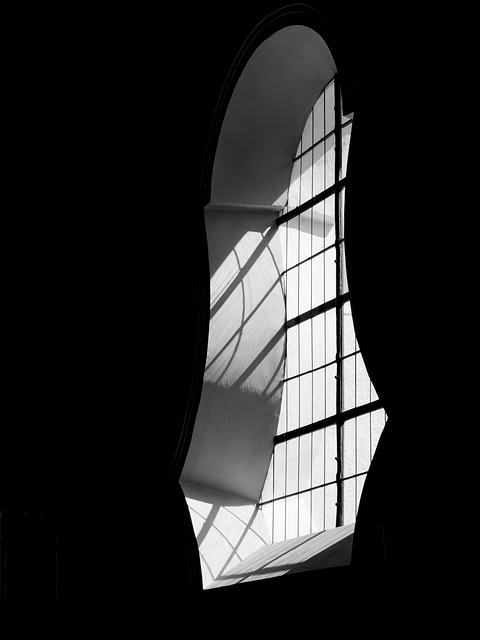
Perspective Shifts: From Darkness to Illumination

Ben Crowe, world leading mindset coach, has published his philosophy and perspective changing concepts in his book, Where The Light Gets In: Simple, playful and profound perspective shifts to change your life.  Ben has worked with elite athletes such as Ash Barty and Andre Agassi as well as large corporations.  While the principles espoused in his book are not new, what he does uniquely is to interlink the underlying concepts, highlight their interplay and illustrate them with stories of his experiences in working with clients to put them into practice.  His book is illuminating – he even has a final chapter on “illumination” to summarise his principles.

Overcoming the pressure of expectations

Ben’s book is replete with wisdom and engaging stories that readers can readily relate to.  He places special emphasis on the pressure generated by expectations – both our own and those of others (which we often assume to exist without any evidence). He counsels us to detach from expectations if we are to achieve freedom in our life.  Besides recommending removal of the word “expectations” from our vocabulary, he offers three core strategies to achieve this detachment – replace expectations with (1) appreciation, (2) experimentation and (3) dedication.

  1. Ben argues that appreciation reflected in gratitude is a “potent perspective shifter”.  Gratitude creates awareness about what we do have and what is possible – it opens up insight into possible creative, alternative solutions and is a powerful antidote to the corrosive influence of expectations.   I have often expressed gratitude when playing sport, instead of focusing on the chronic illnesses that negatively impact my quality of life and impede the realisation of my full sporting capabilities. 
  2. Ben encourages experimentation because when you experiment, “you are in the play state not the fear state”.   We can build up expertise as we go.  The process of experimentation enables us to fearlessly draw on prior knowledge and experience, even accessing experiences acquired in an entirely different arena.  When I switched from playing tennis to pickleball, I made a conscious choice to experiment with new shots, drawing on knowledge and skills acquired through other racquet sports.  So now I can use skills I have acquired over many years through playing tennis, squash, table tennis and badminton.  I worked out recently that I can play more than 650 different shots (using any of my 7 spins across 6 basic strokes; using either forehand or backhand; left hand or right hand; and playing the ball down the backhand side, the forehand side, the middle of the court or cross-court).  Recently I expressed my appreciation for this aspect of playing pickleball – “experimenting with new shots and ways to improve each time I play – a great source of learning!”
  3. Ben strongly encourages employing dedication as a way to replace expectations, especially our own expectations.  He suggests that this approach works because when you dedicate your performance to a person who has contributed to your knowledge and skill, “you let go of ego and fear because it’s no longer about you”.  I have been avoiding the writing a book on action learning but now that I have decided to dedicate an e-book on the topic to my seriously ill co-author, Julie Cork, I have experienced a release of the fear that “it will not be good enough” and feel motivated to resume writing the book (currently in draft form).

The role of mindfulness in managing expectations

In his discussion of the pressure of expectations, Ben mentioned that the Richmond AFL club had engaged Emma Murray to conduct a mindfulness program for the club.  He maintained that mindfulness can be a powerful tool to release the pressure of expectations, particularly if we can combine “accepting and letting go of the uncontrollable and focusing all our attention on controllables”.   

Ben argued that what we can control is “intention, effort and mindset”.  He suggests that the two major distractions we experience to draw us away from our focus on the controllables are The Double O’s –  outcome expectations and others’ expectations.   If we tie our self-worth to outcomes, we will be caught up in a sea of emotional disturbance and lose focus.  Ben points out that we cannot control outcomes as there are too many variables impacting outcomes over which we have no control.  He recommends adopting the mindset of one coach – “I don’t mind what happens”.   I found this approach very freeing and energising in a recent game of pickleball (Intermediate Recreational level).  Ben also points to some wise advice about outcomes expectations – “let go of winning or losing and let the game be your teacher”.

Phillip Moffitt argues that we can be enslaved by our expectations that can force a degree of rigidity in our life.  We cannot control others’ expectations and often have limited control over outcomes.  Yet expectations play heavily on our mind – expectations about parenting, managing, performing in sport, punctuality, and every aspect of our daily life.  Phillip suggests that ways to free ourselves from the “tyranny of expectations”, and release our creativity, include “look for possibilities” rather than a predetermined result, “expect to stumble” and “live in the now”.  Ben argues that it is about “human-being” not “human-doing” – a key mindset change developed through mindfulness.

Reflection

I found Ben Crowe’s book, Where The Light Gets In, highly relatable in multiple ways.  So much of his philosophy and concepts resonate with me and many aspects of these have been the subject of my writing in this blog.  The ups and downs of Richmond AFL football club and its key figures are central to a lot of Ben’s discussion and examples – I was born in East Melbourne, lived in Richmond until I was five years old and followed Richmond as a fan for many years.

Ben states that his understanding of the power of words and their impact on people’s lives was first achieved through his schooling at the Carmelite’s Whitefriars College in Donvale Victoria – I was a member of the Carmelite Order for five years and lived and studied for four years at the Whitefriars seminary located on the same property as the school.

Ben draws heavily on mindfulness and its power to shift our “inner landscape” – he places considerable emphasis on being present with “non-judgmental awareness of thoughts and emotions”.   He explicitly alludes to the definition of mindfulness by Jon Kabat-Zinn and references the work of George Mumford in bringing mindfulness to mainstream sport.  Ben points out that as we grow in mindfulness through mindfulness practices such as mindful breathing, meditation and visualisation, we can achieve authenticity, focus, calmness, and confidence, and realise “the best version of ourself” no matter what our arena of activity is.

 I had previously read Ash Barty’s memoir, My Dream Time: A Memoir of Tennis & Teamwork – A Grand Slam Champion’s Journey from Anxiety to World #1 and Joy.  Through Ash’s story I had been exposed to Ben Crowe’s influence on her mindset and career.  Throughout her book, Ash reiterates his fundamental philosophy and identifies how he helped her achieve her outstanding results.  Ash’s story, in turn, has been a source of inspiration for me and my own sporting journey while experiencing multiple chronic illnesses. 

In the epigraph to his book, Ben quotes the chorus from Leonard Cohen’s song, Anthem, which incorporates “ring the bells” and “how the light gets in”.  Ben’s book resonates with me so strongly – it’s as if bells are ringing in my head like church bells ringing in the New Year.  Ben argues that Illumination occurs when we come to understand that the things that we can control are our processes, our own expectations, our anchoring in the present, our intrinsic motivations and our response to our past and its impacts on our life.  His “perspective shifts” reflect this focus on the “controllables” versus the “uncontrollables” – a strong underlying theme in this blog.

_______________________________________

Image by Tom from Pixabay

By Ron Passfield – Copyright (Creative Commons license, Attribution–Non Commercial–No Derivatives)

Disclosure: If you purchase a product through this site, I may earn a commission which will help to pay for the site, the associated Meetup group, and the resources to support the blog.