The Art of Journalling

Suleika Jaouad brilliantly illustrates the art of journalling in The Book of Alchemy: A Creative Practice for an Inspired Life, which she published in 2025.  In explaining the practice, she drew on examples and stories from her own life and that of others.  The book grew out of a 100-Day Project she started during the Covid-19 Pandemic. Suleika, experiencing the negative effects of isolation, decided to start a newsletter to encourage people to start journalling daily to manage their challenging situations as a result of the Pandemic. 

Suleika provided a short essay and writing prompt with each newsletter to encourage people to write about their experiences. She first approached some well-known people she knew but before long the project went truly viral beyond anyone’s expectations.  Participants in the project were encouraged to share their journalling to create a sense of community and shared challenge.  The Book of Alchemy draws some of these contributions together.  In the process, Suleika shares her own experiences and wisdom, sometimes painfully achieved, as well as the insights and personal changes experienced by the contributors to the book.

Each chapter has an introduction by Suleika around some theme such as “On Beginning” and “On Memory”.  The contributions of people such as Sharon Salzberg, Elizabeth Gilbert, and Esther Perel are grouped under one of the ten chapters, with ten contributors in each chapter.  Thus the book provides essays and writing prompts for our own 100-day project. 

In her book, Suleika, as well as many contributors, offer suggestions on how to overcome blockages to writing a journal.  At the outset, she points out the need to avoid expectations about output volumes, just the admonition to write daily.  Suleika explains that there were times when she had to accept a paragraph in her journal as her output for the day.  She points out that no one has to see what you have written.  There is no coercion (apart from self-messages) to achieve coherence, cohesion, clarity or content in a journal entry. 

Overcoming blockages

Suleika found that by reading a poem or an excerpt from something someone else has written (e.g. a memoir or novel), she was able to progress her writing even when initially “stuck”.   She maintains that reading can prompt ideas, offer creative solutions and provide inspiration.  It can also propose alternative perspectives, stimulate lines of enquiry and identify new aspects on which to focus.  Erin Khar, in her contribution to the book, states that when she feels blocked she pulls a single sentence from one of her favourite essays or books to use as a starting point.  She often uses the sentence as the opening for her journal entry. Erin is the author of Strung Out,  

Ash Parsons, in her story in the book, discusses her “Ten Images” approach to journal writing.. She had adopted a son who was premature, football-size and confined to an Intensive Care Unit (ICU).  Being with him and holding him close to her was “all-consuming and not conducive to writing”.  She had to rely on creating “mental notes of images” of whatever was around her, e.g. the scrub room used before entering the ICU.  She would write about the images once she returned home after hospital visits. Unwittingly she was effectively “writing her life”.

Marie Howe, author of New and Selected Poems,  shared her “Radical Receptivity” story in the Book of Alchemy and explained her own process of journal writing.  When she is overcome with the pressures of her “to-do” list, she clears her desk and gathers a pile of clean paper and begins to write with her non-dominant hand after setting a timer for a specified number of minutes.  She then repeats the cycle and finds often that her mind slows down and she can more readily access her subconscious. 

Suleika suggests too that we don’t have to only resort to writing for our daily journalling.  We can draw pictures, paint with water colours, build a collage (e.g. from photos), or create a poem.  Kim Rosen reminds us that writing poetry can be transformative.  Poetry, like other forms of journalling, can enable us to “blend opposites and break frames”.

Carmen Radley offers the idea of mind maps as a way forward when we are stuck.  She adopts the practice of creating a mind map by putting a year, place or person at the centre.  The mind map can be developed by extending out from the centre using any other items of association such as words, feelings or events.  Carmen describes the process as surprising and exhilarating as it effectively “mines the memory for things long buried”.

Overcoming the self-critic

Suleika suggests that we have to find our own ways to overcome the self-critic so that we can “let the words flow without self-censure”.  There is a natural tendency to be self-critical, to perpetuate negative self-stories.  She proposes the  idea of addressing the ego directly by saying “You are sabotaging my writing, be quiet!”  The processes of  challenging expectations (about output and quality), writing with the non-dominant hand and writing freehand are also ways to help overcome the “internal censor”.

Even the very best and most experienced writers have to deal with the inner critic.  Dani Shapiro, author of 11 books, suggests that no matter what you are attempting to write “you must first gather up an unreasonable, unearned confidence bordering on lunacy”.  She talks about the inner voices that say something like, “You will fall flat on your face”, “People have done this before”, “Who do think you are to talk about your life?”, “How many followers do you have on the Internet?”.   Dani ignores these voices and tells herself, “Here goes nothing!”.  She says to get to this point in self-awareness and beyond self-censure, you need to believe that you have “nothing to lose”.

Even highly successful writers such as Elizabeth Gilbert have to deal with negative thoughts that can attack self-esteem and derail creative endeavours.  After the outstanding success of her first book, Eat, Pray, Love, she was beset by negative thinking about her second book and whether it would be good enough – the challenge of expectations, our own and that of others.  Elizabeth addressed the related anxiety in her TED Talk, Success, failure and the drive to keep creating.  She found that reflection, meditation, mindfulness practices and writing herself “daily letters of love” enabled her to overcome the natural inclination to “self-hatred”.   She explains this “letters of love” process in Suleika’s book and offers a writing prompt based on this approach.

Why people journal

Suleika explains that people journal for all kinds of reasons, reflecting where they are at in life.  Some use journalling to deal with grief, to manage transitions (such as leaving home for college), to gain self-understanding, to manage a relationship break-up or to help them to live with a chronic or terminal illness.

People who journal find that the process is transformative – they gain new perspectives, insights and creative ways of moving forward in their life.  Suleika describes the process of journal writing as alchemy – a metaphor for inner transformation or purification.  She maintains that journalling creates space for exploring alternative responses to those generated by our habituated behaviours.  In her view, journalling provides the tools necessary “to engage with discomfort, to peel back the layers, to uncover your truest, most laid-bare self”.

Reflection

I was stuck for what to write for this blog post until I started reading The Book of Alchemy by Suleika.  Her book provides 100 essays and writing prompts by accomplished writers as well as extended essays by Suleika at the start of each chapter.  There are numerous prompts available online including poetry prompts by Rosemerry Wahtola Trommer.   Rosemerry contends that poetry enables us to blend opposites, break mental frames and change perspectives.

The barriers to daily journalling are typically internal – our own self-criticism, mental blockages and excuses we give ourselves (such as not enough time).  The secret is to start small and build on an existing daily habit like having a cup of coffee or undertaking an exercise routine.  What will help to maintain the habit of daily journalling is develop your own personal strategies to deal with expectations, mental blockages and self-criticism.  Suleika and her hundred contributors offer numerous suggestions for strategies that you can employ to achieve these goals.

As Suleika and her contributors attest, there are numerous benefits to daily journalling, not the least being that we can grow in mindfulness and tap into “flow” as we experience “being-in-the-zone”.  As we commit to daily journalling we can grow in self-awareness, enhance our creativity, progress a writing project, and find creative solutions to life’s daily challenges.

If you need community support to start your journalling, you can join a journalling club or start one of your own as Sheri Campbell did (she provides some guidance for others who want to do the same).  You can also access Suleika’s Journalling Club Guide here.

_______________________________________

Image by Penny from Pixabay

By Ron Passfield – Copyright (Creative Commons license, Attribution–Non Commercial–No Derivatives)

Disclosure: If you purchase a product through this site, I may earn a commission which will help to pay for the site, the associated Meetup group, and the resources to support the blog.

Cultivating Curiosity and Openness

Frank Ostaseski in his presentations during the Healing Healthcare Summit focused on openness and curiosity.  In the process, he revisited two of the key lessons of living and dying that he had previously written about – (1) welcome everything, push nothing away and (2) cultivate a don’t know mind.

Openness – welcome everything

Frank suggests that we need to be able to meet whatever our life circumstances bring our way and do so in a way that we are open to the full range of thoughts and emotions involved.  He reminds us that life is a series of constant changes, e.g. loss of a job, death of a close family member, change In financial circumstances or location.  He encourages us to meet these changes as if welcoming a familiar person at our front door.  He draws on James Baldwin’s insightful comment for his rationale – “Nothing can be changed, if it is not first faced”.

Frank reminds us that denial or ignoring unpleasant experiences does not create freedom, only servitude.  He encourages “fearless receptivity” – awareness of fear without imprisonment by it.  He maintains that mindfulness involves moment to moment awareness of everything we are experiencing – bodily sensations, thoughts and emotions.  In this openness lies true freedom – because we are fully aware of what is happening to us and conscious of our habituated responses and yet able to regulate our emotions and explore alternative ways of responding.

Frank suggests that sometimes mindfulness practices involving “precise attention” to a single thing, e.g. a word or our breathing can create something of a struggle or tension in our minds and somewhat defeat the purpose of the practice.  He contends that the practice of “open boundless awareness”, sometimes called “natural awareness”, can be more liberating when we feel constrained by a focused meditation practice.  He offers awareness of the sky and its vastness as an example.  He also provides a mini-practice that can help to engender this sense of boundlessness.

In the mini-practice, Frank encourages us first to become grounded and relaxed so that we can focus on the meditation.  He then encourages us to take in the space above us, to our left, then to our right, followed by the space below and in front of us.  An alternative to this, is to focus on the sounds that surround us, progressively shifting our focus onto the soundscape in the directions that Frank mentions above.   Frank suggests that we treat distracting thoughts like birds flying past, not landing or hovering above.

Becoming more curious and less critical

This topic was the theme of his second presentation during the Summit and aligns with his exhortation to “cultivate a don’t know mind”.  Frank argues that mindfulness is not about searching for some future enlightenment goal but becoming “up close and personal” with ourselves.  He contends that our aim is to become “intimate” with ourselves and every aspect of our lives, pleasant and unpleasant.  He explains that this is the path to true liberation and reinforces the view that “the path is right beneath your feet”. 

In cultivating intimacy with ourselves we will become aware of parts of ourselves that we do not like.  In Frank’s view, the inherent challenge is to be able to “tolerate intimacy” – be able to fully face up to who we are really, warts and all.  In his podcast interview with Whit Missildine, Frank addressed the question, “What if you witnessed a thousand deaths?”  – a question that was based on his personal experience as End-of-Life Teacher, Founding Director of the Zen Hospice Project and Director of the Metta Institute.  Frank maintained that the ways we define ourselves will be stripped away in the process of dying and death.  He contends that throughout life we live a delusion about ourselves – we project an image that is not our real self, but our imagined or idealised self.  He has witnessed numerous people expressing regret as they lay dying – regrets about what they have done of failed to do.  In dying, we are confronted with who we really are. 

Frank maintains that when people are dying they have no interest in, or energy for, maintaining an illusion of who they are and cease to be concerned about what others think about them.   He suggests that it behoves us during life to express remorse rather than regret – because remorse confronts the unpleasant side of ourselves and motivates us to avoid similar actions or omissions in the future.  As we grow in intimacy with ourselves through meditation, we can progressively strip away the illusions about who we are through a process of loving kindness and forgiveness towards ourselves, avoiding harsh self-criticism.

Frank argues that In developing intimacy with ourselves, we become acutely aware that we are not separate but connected to everyone.  He maintains that in this deep learning about ourselves, we develop a “deep sense of belonging” – an acute recognition of our interdependence and a strong desire to move beyond our limiting self-centredness.  He suggests that a simple practice is to just “pause” throughout our day, taking a break from the busyness of life, and to focus on our experience as it is occurring.  Frank contends that “mindfulness emerges from a relaxed heart and mind”.

Reflection

Frank has learned so much through observing the process of dying and death and willingly shares the lessons he has learned.  He explains that he learns from the dying as they learn from him – there is a reciprocity about his engagement with them.  He is humbled and amazed by what he learns and yet he recognises that he still harbours a fear of death because of its uncertainty.  Frank has detailed his lessons learned in his book, The Five Invitations: Discovering What Death Can Teach Us About Living Fully.

Regrets are a natural response in the event of someone dying who is close to us (or not as close as they should have been).  I can certainly acknowledge that I had regrets on the recent death of my brother Pat.  However, as Frank suggests, remorse is a better option.  With remorse we can revisit what we have said and done or failed to say and do, give ourselves forgiveness and express the intention to do better in the future. We can reflect on our individual regrets and ask ourselves:

  • What will I do more of in the future?
  • What will I do less of?
  • What will I stop doing?
  • What will I start doing?

As we grow in mindfulness through reflection, meditation and other mindfulness practices, we can develop intimacy with ourselves, recognise our connectedness, deepen our connection with others and learn the profound lessons from death and dying.  

_____________________________________

Image by Tommy_Rau from Pixabay

By Ron Passfield – Copyright (Creative Commons license, Attribution–Non Commercial–No Derivatives)

Disclosure: If you purchase a product through this site, I may earn a commission which will help to pay for the site, the associated Meetup group, and the resources to support the blog.

Dealing with the Inner Critic through Self-Compassion

Clare Bowditch – singer, storyteller and actor – recently released a biography titled, Your Own Kind of Girl.   In the book, which she had been attempting to write since she was 21, Clare discusses how she dealt with her inner critic which was all encompassing and destructive.  Clare writes that the book is “about the stories we tell ourselves, and what happens when we believe them”.  She lived in hope that someone would tell her that she was “more than” her grief, her failures and the negative stories about herself that she constantly carried in her head.  Clare explained that the title of the book is drawn from a song she wrote in 2008 and, to this day, she is immensely moved by the lyrics in the second verse, including the words, “You are fine, you’re more than enough”.  The book is about her painful journey to come to this realisation – a journey that is a common story for many people, particularly women.

The debilitating effects of the inner critic

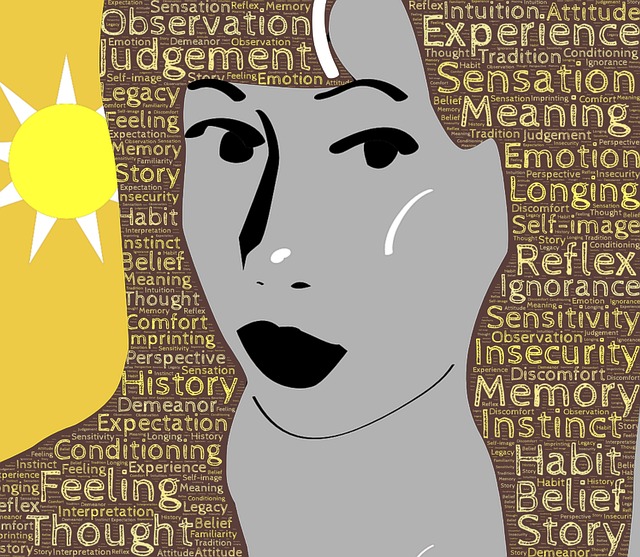
In an earlier blog post, I spoke about the negative self-stories that we perpetuate, partly because our brain has a negative bias but also because of social pressures and the materialistic values that are propagated on an hourly basis through intrusive advertising and image making in videos and films.  Our self-stories can undermine our self-esteem, entrap us in a sense of helplessness and create a negative spiral leading to anxiety and depression.  These stories, often based on irrational fears, can become deeply ingrained and extremely difficult to shift.  They can blind us to creative options, block the realisation of our potential and harm our interpersonal relations.

Self-compassion to overcome the inner critic and negative self-stories

Tara Brach recently released a book titled Radical Compassion: Learning to Love Yourself and the World with the practice of R.A.I.N.  This meditation practice involves four basic steps – recognise, accept, investigate and nurture.  Tara provides a brief example of this process in a 9-minute, guided meditation, Reflection: Healing Self-Blame.   Below are some of the key points in this meditation that is based on the R.A.I.N. approach:

  • The starting point is to recognise some aspect of your life where your inner critic is active.  It does not have to be a major example of self-denigration – it could be some relatively minor self-critique, e.g. focusing on your failure sometimes to really listen to someone or diverting a conversation to establish your credentials.   The important thing is to have a focus for this meditation.  More complete self-awareness can grow out of recognising even a small aspect of the inner critic in our life – this can puncture a hole in the wall of self-protection that blocks our self-realisation. 
  • As we progress in the meditation, we come to a point of self-acceptance. This involves acknowledging what we say and do but also accepting that we have an innate goodness and that we are not defined by our thoughts – that we are “more than” our negative self-evaluation.  In Clare’s words, “You are fine, you’re more than enough”.
  • Our investigation of the impacts of our inner critic extends to recognising bodily sensations as well as feelings that flow from the inroads that negative self-stories make on our sense of self-worth.  We can experience tension in our muscles, pain (e.g. in our arms, neck and back), headaches or a nervous twitch when our inner critic is running rampant in our thoughts.  A body scan and progressive tension release can help here.  The key thing is to experience the impact of our negative self-story in a holistic way – this builds awareness and increases our understanding of the negative impacts of our inner critic.
  • Lastly, we reach the stage of self-nurturing in the meditation process.  This can be expressed physically by placing your hand on your heart or mentally through naming the self-criticism and countering with expression of self-forgiveness, acknowledgement of your positive contributions and achievements and gratitude for all that you have in life – opening yourself to what is good in you and what is wonderful in the world around you.

Reflection

Our inner critic is deeply entrenched and can be very damaging to our self personally, and to our relations, both at work and at home.  As we grow in mindfulness through meditation and especially the R.A.I.N. meditation, we can become more aware of our inner critic (negative self-stories), understand its impacts physically and mentally and develop strategies to counter its inroads into our sense of self-worth.  As both Clare and Tara point out, dealing with the inner critic can create a new sense of freedom and realisation of our true potential.

____________________________________________

Image by John Hain from Pixabay

By Ron Passfield – Copyright (Creative Commons license, Attribution–Non Commercial–No Derivatives)

Disclosure: If you purchase a product through this site, I may earn a commission which will help to pay for the site, the associated Meetup group and the resources to support the blog.
A Guided Meditation on Self-Compassion

Diana Winston provides a guided meditation on self-compassion as part of the weekly offerings of meditation podcasts from the Mindful Awareness Research Center (MARC), UCLA.   These weekly podcasts are also available via the UCLA Mindful App.  

Diana explains that the tendency to be self-critical – to disown parts of ourselves that we don’t like – is universal, not the province of a single age group, gender or ethnic group.  We can hear our own voice telling us that we are “stupid” “undeserving”, “inconsiderate” or some other self-demeaning term.  These inner voices focus on our flaws and not our essential goodness or kindness.

In line with the research and philosophy of Kristin Neff, Diana encourages us through self-compassion meditation to accept ourselves as we are with all our warts and flaws and to recognise that in common with the rest of humanity we make mistakes, make poor decisions and say or do things that we later regret.

A guided self-compassion meditation

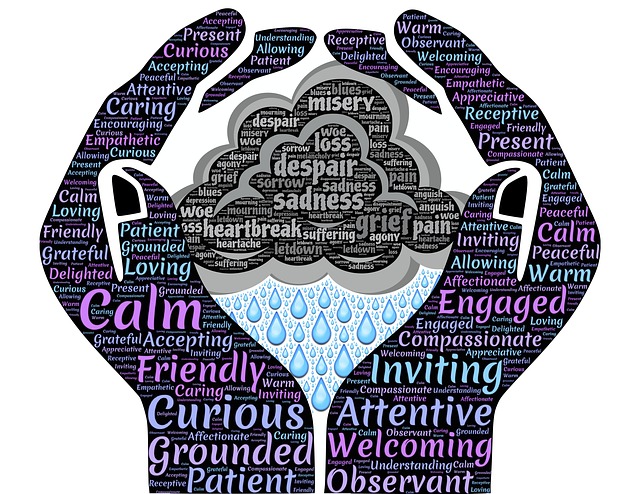
In her introduction to a guided meditation on self-compassion, Diana leads us through a basic process for becoming grounded – adopting a comfortable position, taking a couple of deep breaths and engaging in a body scan to release points of tension to enable us to become focused on the task at hand. Diana then takes us through three basic steps of a self-compassion meditation:

  • 1. Mindful awareness of our negative “voices” – getting in touch with the self-criticism in our heads and being able to accept ourselves as we are, with all our faults, failings and mistakes.  This does not mean engaging with the voices but noticing what they are saying and accepting that we are not perfect.
  • 2. Recognising that flaws are an integral part of our shared humanity – acknowledging that this is part of the human condition.  No one is perfect and everyone makes mistakes – we have this in common with the rest of humanity.  We can then offer self-forgiveness and kindness to ourselves.
  • 3. Extending kindness to others – when we recognise that we share a flawed existence with the rest of humanity, we are better able to offer kindness towards others.  We can start by expressing gratitude to the people we admire and acknowledging how they enrich our lives. We can then extend this kindness to wishing them and others safety, health, happiness and the ease of wellness.

As we grow in mindfulness through awareness of our negative voices and our inherent flaws, we can learn to accept ourselves as we are, acknowledge our shared humanity and extend self-compassion to ourselves and kindness to others.

____________________________________________

Image by Ioannis Ioannidis from Pixabay

By Ron Passfield – Copyright (Creative Commons license, Attribution–Non Commercial–No Derivatives)

Disclosure: If you purchase a product through this site, I may earn a commission which will help to pay for the site, the associated Meetup group and the resources to support the blog.

Mindful Self-Compassion

Compassion is an integral element of mindfulness and emotional intelligence.

It involves being concerned for the pain and suffering of others, having the desire to reduce that suffering and taking action, at whatever level, to redress the suffering of others.   Taking action is a key aspect that differentiates compassion from empathy.

Self-compassion, then, is exercising compassion towards ourselves – ultimately, it means doing things to reduce our own self-initiated pain and suffering.

As we mentioned in a previous post, our minds tend automatically towards negative thoughts.  We are critical of ourselves, dwell on failures, feel embarrassed when we make a mistake and carry shame with us to our own detriment and that of others.

Diana Austin, in her doctoral study of midwives in New Zealand, found, for instance, that the sense of shame and self-blame impacted severely the ability of midwives to recover from the trauma of critical incidents.  Her study resulted in an e-book tool designed to promote self care and kindness towards self in the event of a health professional experiencing a critical event.

The Critical Incidents E-Book contains stories, information and practical advice for health professionals and their managers when mistakes happen and things go wrong.  In the final analysis, the e-book is a journey into self-compassion for those experiencing the depths of self-blame, shame and questioning of their own competence and ability to support others professionally.

Kristin Neff, one of the founders of the Center for Mindful Self-Compassion, identified three components of self-compassion:

  • physical warmth
  • gentle touch
  • soothing vocalization

In her video describing these three components, Kristin suggests a number of self-compassion practices that draw on these components.  For example, she recommends self-hugging and a simple exercise involving placing your hands over your chest while communicating care and tenderness towards yourself.

More detail on these self-compassion exercises can be found in the video below where Kristin Neff describes exactly how to do them:

As you grow in mindfulness you become more aware of self-criticism and the ways in which you blame yourself, and you gain the presence of mind to counter these self-initiated attacks on your self-esteem and sense of self-worth.  Mindful self-compassion exercises build mindfulness and develop self-care and kindness.  The more we are kind to ourselves, the more sensitive we become to the needs of others.

By Ron Passfield – Copyright (Creative Commons license, Attribution–Non Commercial–No Derivatives)

Image source: Courtesy of johnhain  on Pixabay