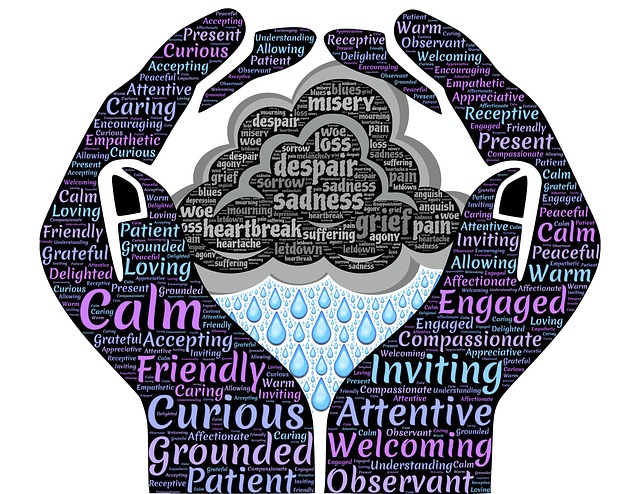
Creativity through Mindfulness

Over several blog posts I have explored the relationship between mindfulness and creativity.  In this post, I want to bring these ideas together to provide a more complete picture of how to develop creativity through mindfulness.

Mindfulness creates the internal environment for creativity through the following:

Stillness and silence

We discussed previously how creative people use stillness and silence to access their inner resources including their imagination.  The busyness of life and constant thinking means we are rarely still or silent.  In the process, we cut ourselves off from creative insight.  Jon Kabat-Zinn and Reg Revans also remind us that exploring what we do not know or understand is the beginning of learning and creative solutions.   As we practice mindfulness through meditation, we engage in stillness and silence and open ourselves up to what Jon Kabat-Zinn describes as “deep interior capacities” that lie within the “spaciousness” of our minds.

Turning down negative thoughts

Mindfulness can make us aware of the negative thoughts that often block creativity and constitute self-sabotage.  Creative people like David Lynch, Amanda Sinclair, Elizabeth Gilbert and Seth Godin report the importance of turning down, or turning off, thoughts about potential failure or deemed personal inadequacy.  Seth even ascribes this self-sabotage to the “Lizard Brain”.  Sam Smith, singer-songwriter, during a recent interview while performing in London, spoke of the internal demons that beset him and almost prevented him from pursuing his highly successful songwriting and singing career.

Mindfulness enables us to address negative thoughts and stories and defuse their strength to release creativity.  Boy George in a recent coaching session with a very nervous performer on the TV show, The Voice, encouraged the singer to let go of preoccupation with what others might think of their performance:

I think you are someone who really thinks about what people think about you.  We do that as performers – it’s just one of those things, it’s like a default setting in out make-up.  We worry too much about what other people think of us and that can get in the way of what we do.  Don’t think about it too much is the key.

Positive anticipation instead of disabling fear

In a previous post, I discussed the research of Anna Steinhenge and her demonstration of how positive anticipation can overcome the disabling effects of fear and enable us to access clear thinking and creativity.  In this discussion, I explored the R.A.I.N. meditation process that enables us to face the fear within and conquer it so that we free ourselves for new insights and creative endeavour.   Through mindfulness meditation we learn to name our feelings in order to tame them.

Calming the busyness of our minds

Mindfulness enables us to calm our minds and free us from mental busyness or what Haruki Murakami describes as “convoluted waterways of my consciousness” that result in a “restless aquatic organism” .   Even experienced meditation practitioners will sometimes find their mind racing and being invaded with endless thoughts.  Kabat-Zin reminds us that this is part of the human condition and we will not be able to stop the thoughts.  He suggests that instead of entertaining these thoughts, we view them as bubbles in boiling water floating to the surface and bursting on reaching the extremities of the container – our minds.

Being present and grounded

Rasmus Hougaard and Jacqueline Carter, co-authors of The Mind of the Leader, stress the importance of leaders being present and grounded.   They argue that being present in conversations gains respect and facilitates open sharing of ideas.  Being grounded before beginning a conversation or meeting can enhance a leader’s capacity to listen, take in ideas and access their own creative potential.   Practicising somatic meditation, which incorporates many approaches to being grounded in our body, will strengthen our capacity to be present in the moment, stay grounded in the conversation and be open to creative ideas.

Acting on creative ideas with boldness and bravery

It is one thing to have creative ideas, it is another to have the necessary  boldness and bravery to implement creative ideas.  Amanda Sinclair points out in her book, Leading Mindfully, that creativity involves breaking with tradition, taking risks, trying out something new and having the self-esteem and resilience to be able to persist in the face of opposition – especially from those who have a vested interest in maintaining things the way they are.

Mindfulness helps us to maintain focus, to remain calm, build resilience in the face of opposition and setbacks, and to become braver and less fearful of the difficulties, dangers and risks involved in implementing creative ideas.

As we grow in mindfulness, we are able to access our inner resources through stillness and silence of meditation, overcome our fears, stay present and grounded, remain calm in the face of difficulties and develop boldness, bravery and resilience as we venture beyond “the tried and true”.

By Ron Passfield – Copyright (Creative Commons license, Attribution–Non Commercial–No Derivatives)

Image source: courtesy of geralt on Pixabay

Disclosure: If you purchase a product through this site, I may earn a commission which will help to pay for the site, the associated Meetup group and the resources to support the blog.


 

The Power of Awareness: Mindful Breathing

Jack Kornfield and Tara Brach, in their online Power of Awareness Mindfulness Training, stress the importance of mindful breathing as a universal practice that is foundational to developing mindfulness.  Jack not only leads participants in a mindful breathing practice, but also explains the rich rewards of this practice.

Why practice mindful breathing?

Mindful breathing is, perhaps, the simplest and most accessible mindfulness practice.  It can be done anywhere, anytime because we are always breathing, whether we are conscious of it or not.  Jon Kabat-Zinn suggests that it is lucky that our breathing is not dependant on conscious thought, otherwise we would stop breathing because we are so often unaware of what is going on within and around us.

In a talk to Google staff, he explained to the managers and programmers present that they could easily take a few moments and do mindful breathing at their desk during the day.  Mindful breathing is so powerful because it gives us access to both self-awareness and self-management.

Developing self-awareness through mindful breathing

Jack talks about breathing mindfully as opening a window to ourselves.  If we are having trouble starting the practice – by locating a place in our body where we sense our breath (e.g. in our chest, throat, nose or stomach) – then this tells us something about our lack of awareness.

As a window, mindful breathing allows us to look in on ourselves – to notice the thoughts and their content that pass through our minds, to sense the tightness in various parts of our body and to understand the link between our emotions and our bodily reactions, e.g. fear creating tightness in our chest, nervousness causing us to shake.  We become acutely aware of our emotions and the connection between our mind and emotions and our emotions and our body.

The secret to mindful breathing is to not entertain our thoughts but to let them float by, while noticing what they are telling us about ourselves.  What do we think about most – is our mind always in the past or the future?  Do our thoughts depress us or create anxiety?  Are we always planning, not stopping to experience the moment?

Developing self-management through mindful breathing

Even the way we are breathing is rich with information about ourselves – is our breathing getting faster (anxiety coming on) or slower (learning to relax).  Are we becoming conscious of the space between our in-breath and our out-breath?  With our growth in self-awareness comes the opportunity to develop self-management.

Conscious breathing is used worldwide for self-management in a range of contexts – midwives encourage birthing mothers to breathe slowly and deeply; remedial massage therapists encourage you to breathe through the pain; and people who teach singing, like Chris James, begin with explaining to people how to breathe properly to release the tension in our bodies and vocal cords.

We know intuitively that if we slow down our breathing, we can become more relaxed and less anxious.   Some self-management practices, such as the SBNRR process previously explained in relation to managing negative triggers, begin with stopping and breathing consciously but slowly.

Mindful breathing practice itself does not require us to control our breath, but to notice it by focusing on where we can sense it in our bodies.  Increasingly, we become aware of the stillness and spaciousness in mindful breathing.  However, it does take practice to realise the full benefits of mindful breathing.

Jack suggests that, as a starting point, we practice breathing mindfully twice a day for five minutes each time.  He suggests that if we do this at a regular place and time, the habit will be sustained.  The secret to success in developing awareness is to start small, but start now.

Breathing mindfully helps us to slow the pace of our life, to access our creativity and to develop calm and clarity.  As we grow in mindfulness through mindful breathing, we open the window to self-awareness and enhance our capacity for self-management.

By Ron Passfield – Copyright (Creative Commons license, Attribution–Non Commercial–No Derivatives)

Image source: courtesy of alfcermed on Pixabay

Disclosure: If you purchase a product through this site, I may earn a commission which will help to pay for the site, the associated Meetup group and the resources to support the blog.


Calming the Busyness of Our Minds

Haruki Murakami, the famous Japanese author, in his book  A Wild Sheep Chase,  gives us an insight into the busyness of our minds when his lead character comments:

My body was hazed to the core, but my mind kept swimming swiftly around through the convoluted waterways of my consciousness, like a restless aquatic organism.

This churning of our brains, stimulated by endless disruptive advertising, means that we spend so little time just being still in both mind and body.  There is so much of life we miss out on because we are so unaware with our focus oscillating beyond the present to the past or the future.  As Andy Puddicombe suggests, it only takes ten minutes a day to be still and do nothing, while experiencing calmness and happiness – escaping the torment of a turbulent mind.

Jack Kornfield, in discussing awareness, tells the story of a famous violinist who took part in an experiment to demonstrate peoples’ lack of awareness.  The violinist was due to play in a concert on a particular night before 1,000 people.  However, during the day of the concert, he set up in a busy street in New York and started playing his violin in his inimitable, brilliant style.  At the end of the day, he had only $17 USD in his hat which he had left out for donations.  Very few people stopped to listen, only young children tended to stop and take in the music.

Most people who walked past the violinist, or hurried past, were “lost in thought” – unable to hear and focus on the beauty of the music.  If only we could recapture the wonder of young children who are intensely attuned to their senses and not yet captured by their minds.  To wonder at what we hear or see, taste or touch, or smell. requires us to be present like a child.  It takes awareness and the ability to still the ferment of our minds.

As we grow in mindfulness through mindfulness practice, we can learn to calm the busyness of our minds and to value stillness and silence – the nurturing environment for creativity and mental health and wellbeing.

By Ron Passfield – Copyright (Creative Commons license, Attribution–Non Commercial–No Derivatives)

Image source: courtesy of adege on Pixabay

Disclosure: If you purchase a product through this site, I may earn a commission which will help to pay for the site, the associated Meetup group and the resources to support the blog.

Being present: Key to Effective leadership

Rasmus Hougaard and Jacqueline Carter, in their Harvard Business Review article, If You Aspire to be a Great Leader, be Present,  reinforce the necessity for a leader to be present, especially when they are engaged in conversation.   They demonstrate how being present contributes to effective leadership and draw examples from the experience of leaders.  Rasmus and Jacqueline are the co-authors of the recently released book, The Mind of the Leader.

Rasmus and Jacqueline in doing research for their book, surveyed in excess of 1,000 leaders “who indicated that a more mindful presence is the optimal strategy to engage their people, create better connections, and improve performance”.

Being grounded

The authors explain how Loren Shuster, Chief People Officer at the Lego group, grounds himself before an important meeting or a presentation that he has to give.

His grounding is achieved by focusing on his body and imagining every part being alive with energy.  This enables him to listen effectively, show respect for the views and opinions of others and access his own creative ideas and solutions to problems.   This practice only takes five minutes but if affects the way he stands, sits and addresses people – his posture demonstrate that he is present and “with” the people with whom he is conversing.  He automatically adopts a posture that is seen as respectful, attentive and engaged – characteristics that build connections and improve performance.

Silence the inner voice

The authors argue strongly that a key element of being fully present is to silence the inner voice – and this takes discipline.  We cannot be actively present when we are saying to ourselves things like, “Oh no, here he comes again!”; “I wish she would ask someone else!”  What have I done to deserve this?’; “I wish he would not get so emotional about things”.  If our inner voice takes over, it is impossible for us to “tune in” to the other person.  People easily sense that you are thinking your private thoughts and are not present – in consequence they feel unheard, devalued and frustrated that they cannot get their message across.

Be open to the needs of others

Our influence as leaders is very much determined by our capacity to meet the needs of others – whether they are sad, in pain, need more challenge, feel letdown, experiencing grief, or are fearful of pending changes to their role. A leader who is present and attentive to others’ needs will be well received and be very influential.

Mindfulness develops our capacity to be present, to be grounded in the moment and to acknowledge and act on the needs of others.  As we grow in mindfulness through the stillness and silence of meditation we can access our creativity and bring that to bear in the present moment in our daily encounters with people and challenging issues.

By Ron Passfield – Copyright (Creative Commons license, Attribution–Non Commercial–No Derivatives)

Image source: courtesy of johnhain on Pixabay

Disclosure: If you purchase a product through this site, I may earn a commission which will help to pay for the site, the associated Meetup group and the resources to support the blog.


Creativity Lies in Stillness and Silence

In 2015, GOMA (Gallery of Modern Art, Queensland) displayed 200 visual works of David Lynch including lithographs, photos, paintings, video art and photo collages.   David epitomises creativity – he is an American  filmmaker, artist, actor, musician and photographer and is considered by The Guardian to be “the most important Director of this era”.

The creative power of silence

In an interview on ABC Radio National in March 2015, David spoke about creative control and in the course of his interview, he stated that “the silence within has infinite dynamism”.   In his view, creative ideas come from within.   You start with an intention to develop an idea and then, if you are patient and focused, you suddenly see it and feel it as it reaches full consciousness.  He discusses open awareness (for instance, focusing attention on the beauty of a cherry tree) that stimulates wonder and the incessant desire to understand your world.

Jane Dawson in an article on reflection and creativity, contends that creative expression is thwarted by the busyness of life, especially in educational institutions.  She argues for the need for  “space for silence” to cultivate and pursue creativity and suggests that meditation provides that space.

The creative power of stillness

Jon Kabat-Zinn, in his 2011 interview with Krista Tippett, maintains that “spaciousness is already in the mind”.  The way to access this spaciousness that is the fountain of creativity is to develop intimacy with it – to be open to its power through the stillness of meditation.

Jon argues that one of the real barriers to developing creativity is our lack of training in the “deep interior capacities” of attention and awareness.  He argues that all our training is focused on thinking, so that we cut ourselves off from imagination and creativity by focusing on only one aspect of the mind’s capacities.   Whereas the real gateway to creativity is “the stillness of awareness of not knowing” – of being aware of what we do not know and what we do not understand.  Creativity is not achieved by being contented with the knowledge that we already hold.

As we grow in mindfulness through meditation and openness to our life and our world, we can cultivate the power of silence and stillness to access our innate imagination and creativity.

By Ron Passfield – Copyright (Creative Commons license, Attribution–Non Commercial–No Derivatives)

Image source: courtesy of jplenio on Pixabay

Disclosure: If you purchase a product through this site, I may earn a commission which will help to pay for the site, the associated Meetup group and the resources to support the blog.