Listening to Our Interior Story

Dr. Rafael Campo, in an interview for the Boston Globe, spoke of the ability of poetry to reveal the “interior story” of the creator.  He highlighted the rhythm of poetry and how it mirrored the rhythm of the body.

Dr. Rafael Campo, a Harvard trained doctor, is a highly acclaimed poet, essayist and medical specialist at Harvard Medical School.  He is an untiring advocate and health professional for HIV infected patients.  Rafael is the author of nine books of poetry and other publications.  He is also the poetry editor for the Journal of American Medical Association (JAMA).  He teaches primary health care at several medical institutions, including Harvard Medical School. 

Rafael has received many awards and honours for his poetry and prides himself in using a “palette of poetry” by adopting a diversity of poetic forms, thus reflecting his “hybrid” experience.  Rafael uses his poetry to express his feelings for his cancer and AIDS patients as well as emergency room patients who have encountered the brutality of racism and homophobia in America.  He also teaches poetry to patients and medical professionals alike.

Listening to the rhythm of poetry

Rafael considers poetry to be “the opposite of silence” because it expresses the stories of patients and medical professionals.  He maintains that patients are often silenced by the biomedical focus of doctors who are trained to be “relentless in the pursuit of facts”.  He argues that doctors are taught to suppress their own feelings and adopt a “detached” stance.  In the process, doctors don’t listen to the life stories of patients and lose valuable insight into the “context” of the patient’s illness.

Rafael contends that just like listening to a heartbeat with a stethoscope, doctors can listen to “the physical rhythms of the body” expressed through the language of poetry.  In his own words, “poetry is full of the music of the body”.  He highlights the corporeal nature of poetry because, in his view, it fundamentally expresses “in a visceral way what it is to be human”. 

Rafael argues that listening to patients’ poems and writing poetry makes him a better doctor because he is more attuned to the “context” of an individual’s illness and their “interior story”.

Writing prompts for our Creative Meetup Group inspired by Rafael Campo

I participated in the June, online Creative Meetup sponsored by the Health Story Collaborative for writers-with-chronic-illness.  Our facilitator, Jennifer Crystal, read an extract from Boston Globe’s interview with Rafael.  When Jennifer introduced Rafael’s perspective on the human rhythm of poetry, it immediately struck a chord with me.

The interview extract served as the stimulus for our writing during the Meetup.  We were invited to write poetry or prose around the theme of the stimulus piece and the related writing prompts offered by Jennifer.  I chose to write a free-form poem about my experience of chronic illness while addressing both the writing prompts.

Writing prompts:

  1. What are the sounds and/or rhythms of your medical story?
  2. If you could hold a stethoscope up to your interior story, what would you want us to hear?

After we had completed 20 minutes of writing, Meetup participants shared their writing which was rich with metaphors to describe the sounds of their medical story and the nature of their “interior story”.   The metaphors employed by the participants focused on both disruptive/disturbing sounds and soothing sounds:

Metaphors of disruptive/disturbing sounds:

  • like war sounds
  • the storm that couldn’t kill
  • church bells ringing
  • loud chaotic concert
  • waves crashing
  • noisy, electronic hospital environment
  • like trumpet blasts.

Metaphors of soothing sounds:

  • sweet melody of harp
  • whispers of nature and beauty
  • soft pattern of soothing sounds
  • silence and solitude.

Poetry affords the opportunity to blend opposites (e.g. noise and silence) and change metaphors to break frames and create a new mindset.  Poetry has the power to transform our perspective.

My response to the writing prompts is reflected in the following poem:

The Sounds of My Medical Story

A story that lacks rhythm,
a staccato effect.
Flare-ups like trumpet blasts,
Disrupting and interrupting.
Periods of silence and solitude,
A soft pattern of soothing sounds.
Poetry as alchemy.

Reflection

I have been inspired by The Book of Alchemy authored by Suleika Jaouad in which she explores the art of journalling with 100 very accomplished contributors.  As Suleika was writing the final chapter of her book she received word that her aggressive leukemia had returned.  While preparing herself and her house for another extended hospital stay (for chemo and a third bone marrow transplant), she recalled the alchemy of writing a journal.  This led her to write a poem about how journalling alchemizes isolation and suffering and leads to new insights and a newly envisioned future.

In her poem, Suleika draws on multiple analogies to express how she has experienced the alchemy of journalling:

  • a companion to untangle the knots in her life
  • a source of memory and reverie
  • a teacher of mindfulness (through paying attention to the simple things in life)
  • a mirror for her past, present and future self
  • a refuge and hiding place and “finding place”
  • a means “to write her way through”
  • a co-creator of a future self.

On reading her poem about the alchemy of writing and journalling, I was inspired to produce an “erased poem”(in Haiku format) from her words:

An Ode to Poetry

Friend for company,
finding place for future self.
Create my way through.

As we grow in mindfulness through writing poetry, blogging or journalling, we can access our “interior story”, develop creative approaches to challenging situations (such as illness) and build a new level of acceptance of “what is”.  We can also draw inspiration from others by writing in community – accessing the power of storytelling and sharing.

Rafael reminds us that a poem is “crafted” around a theme and structural elements such as rhyme. rhythm, alliteration, metaphor, length, format, and language.  I found that I had to craft this blog post when I became overwhelmed by the volume of information about Rafael and his poetry.  In crafting the post, I needed to reduce the focus to one key area, find ways to integrate disparate sources and explore avenues for integrating the material.  The content and structure evolved through multiple edits and rewrites.

_______________________________________

Image by Olle August from Pixabay

By Ron Passfield – Copyright (Creative Commons license, Attribution–Non Commercial–No Derivatives)

Disclosure: If you purchase a product through this site, I may earn a commission which will help to pay for the site, the associated Meetup group, and the resources to support the blog.


Mind Your Brain

In the previous post, I discussed the ravages of Alzheimer’s disease on the mental. emotional and physical capacities of the affected person.  I particularly emphasised the importance of self-care for the carer whose life is increasingly disrupted and made more stressful because of the cognitive, emotional and financial drain on their personal resources. 

Alzheimer’s disease and the associated  disorder of dementia are becoming increasingly prevalent in society as our populations age.  The Alzheimer’s Association maintains that there are 342,000 people in Australia living with dementia and 44 million worldwide.  The Harvard Medical School notes that Alzheimer’s disease is the major cause of dementia. 

When you come into close contact with someone who is suffering from Alzheimer’s disease or other forms of dementia, you begin to realise the need to savour your brain as a source of wonder in everyday life.  As you see the progressive loss of key faculties by another person, you begin to realise how much we rely on our brains to live effectively and happily in our day-to-day existence. 

It is often only when we lose something, or see others lose something that we value, that we begin to really appreciate what we have.  The same is true of our brains.  And yet, as Andy Puddicombe points out in a YouTube video, we spend more time looking after our hair or car than we do our brains – the source of our thoughts, creativity, happiness, and practical skills.  Andy suggests that all It takes is 10 mindful minutes each day to begin to mind our brains.

Protective measures

The Harvard Medical School, in their publication on Alzheimer’s disease and its treatment, suggest a range of protective measures that people can take to either avoid Alzheimer’s or to slow the progress of the disease.  They point out however that scientists have not found a cure for Alzheimer’s or found definitive ways to prevent its occurrence – there are still many unknowns in relation to the disease, including the actual impact of genetic factors.  The Harvard Medical School, however, notes that lifestyle factors are a major influence on preventing the disease or slowing its progress.

In line with many other sources such as the National Institute of Aging, the Harvard Medical School recommends exercise, diet, weight reduction, restful sleep and mental stimulation as protective measures.  They remind us that what is good for our brain and body is also good for our heart.

The Harvard Medical School provides health reports on the benefits and techniques for different exercise routines.  They particularly stress the multiple benefits of walking in their publication Walking for Health, including the positive impacts on blood pressure, memory, heart health and weight.  Walking is one of the easiest and most accessible forms of exercise and they suggest that it is a good place to start for people who are not used to exercising.  In a related article they identify 5 Surprising Benefits of Walking.

The recommendation re restful sleep accords with the research by Stanislas Dehaene, author of the book How We Learn: The New Science of Education and the Brain.  Stanislas highlights the key role of sleep in consolidation of learning – in making our learning explicit and building “unconscious competence”.

Mental stimulation as a way to mind your brain

The Harvard Medical School maintains that while level of education has a positive effect on maintaining a healthy brain  (through the process of creating “cognitive reserve” in the form of neurotransmitters and brain cells), what is more important as you age is to engage in activities that stimulate the brain.  They suggest, like the Institute of Aging’s recommendations re “cognitive training”, that mentally stimulating activities such as playing music, reading, writing, doing puzzles and playing games, can help to develop and maintain a healthy brain despite physically ageing.  There are many very active and inspiring octogenarians who provide testament to this possibility.

Minding your brain through mindfulness

Harvard Medical School, in the previously mentioned publication on Alzheimer’s, illustrates how this disease actually shrinks the physical brain as a result of the ”massive loss of brain cells” – which, in turn, “damages areas involved in thought, planning, memory, mood and behavior”.  In contrast, Richard Davidson and Daniel Goleman in their book,  Altered Traits: Science Reveals How Meditation Changes Your Mind, Brain and Body, reveal that mindfulness meditation actually increases the neo-cortex area of the brain.

They also contend that mindfulness meditation can shape your brain to build resilience.  Drawing on the science of meditation they maintain that focused meditation and aligned action can develop the traits necessary for personal resilience – positive connections, awareness, insight into your inner landscape, clarity of purpose and a permeable self.  

One of the positive effects of mindfulness meditation is better use and development of your working memory which is an area negatively impacted by Alzheimer’s disease.   The act of paying attention facilitates short term memory thus enabling better retention and use of information for improved decision-making and behavioural choices.  Harvard Medical School has a series of articles on improving your memory and a comprehensive report on how to keep your brain healthy in the face of age-related memory loss.

Specific mindfulness activities have particular effects relevant to minding your brain.  Tai Chi, for example, enables you to deepen the mind-body connection as well as improve physical health, psychological well-being and overall energy levels (thus facilitating other forms of exercise such as walking). 

Reflection

Harvard Medical School emphasises the need to mind your memory to offset the occurrence of memory lapses which are a natural part of the ageing process.  Looking after our memory can be one of the many protective measures that we can employ to prevent or delay the onset of Alzheimer’s disease and its multiple debilitating effects. 

As we grow in mindfulness, through meditation and other mindfulness practices such as Tai Chi, we can enhance our working memory, build resilience, develop our physical brain, and improve our overall psychological well-being which further reduces the strain on our brain brought on by life’s stressors.  Developing the habit of mindfulness is a very sound and healthy resolution for the New Year.

___________________________________________

Image by Mabel Amber from Pixabay

By Ron Passfield – Copyright (Creative Commons license, Attribution–Non Commercial–No Derivatives)

Disclosure: If you purchase a product through this site, I may earn a commission which will help to pay for the site, the associated Meetup group and the resources to support the blog.

Alzheimer’s Disease – Self-Care for the Carer

If you have a family member or friend suffering from Alzheimer’s disease you may find yourself suddenly thrust into a carer’s role, often with little preparation and understanding of that role.  The tendency is to “soldier on” through all the difficulties and ignore the emotional toll on yourself.  However, there are many resources and people willing to help and mindfulness can play a role in your self-care.

You may be witnessing the cognitive and behavioural decline of someone you love who not so long ago was vital, well-read, highly competent, intelligent, and very aware of current events and global trends.  Now you are having to contend with the emotional, financial, and time-consuming toll of caring for someone who has Alzheimer’s (on top of your daily work and life with their own challenges).

Dealing with the symptoms of Alzheimer’s disease

You may have to deal progressively with some or all of the following effects that Alzheimer’s has on your loved one:

  • Disorientation: losing track of where they are; thinking that they are in hospital or just out of hospital when neither is true; thinking they are in a location where they lived many years prior; assuming that their location is somewhere that happened to be mentioned in casual conversation.
  • Rapid memory loss: forgetting what they set out to do and constantly forgetting in the course of some action, e.g., finding their phone, having a shower, locating an object – the result is that everything takes so much longer and tests your patience (despite your good intentions).
  • Loss of practical skills; unable to do normal daily tasks such as cooking, keeping accounts, paying bills, driving the car or operate the TV remote.
  • Mood or personality changes: going from pleasantness to anger and aggression, happy to discontent, calm to agitated, confident to fearful, purposeful to suffering apathy and inertia; or any of the other possible mood/personality swings.
  • Indulging in unusual behaviours: constantly packing up the house expecting to be moved, indulging in unsafe behaviours (e.g., ladder climbing when they are unsteady), tendency to wander and lose their way (even in very familiar territory).
  • Confusion: forgetting who individuals are and their relationships, constantly losing things, thinking that a past event is happening in the present and preparing for it with some anxiety.
  • Difficulty with self-expression: unable to find the words to express what they want to say.

Each of these symptoms is taxing for the carer as well as the person suffering from Alzheimer’s.  As a carer, you may not know what to say, you can become confused about what is true and what is imagined, and you can become uncertain about the best way forward and the decisions that need to be made.

Self-care for the carer

There are many things that a carer for an Alzheimer’s sufferer can do to proactively care for their own welfare and psychological health:

  • Inform yourself about Alzheimer’s disease – understanding the disease helps you to make better decisions, reduce some of the uncertainty you are encountering and provides insights into how best to help the person experiencing Alzheimer’s.  One of the best resources around that is also very readable is Harvard Medical School’s report, Alzheimer’s Disease: A guide to diagnosis, treatment, and caregiving.  This publication details the symptoms of the disease, the impact on the brain and its structure, progression pathways, and, most importantly, incorporates a special section on Caregiving: Day-to-day challenges and beyond.  Understanding the decisions that need to be made, the options available and their impacts, makes it easier to make sound decisions amid the uncertainty and disruption surrounding the role of carer for an Alzheimer’s sufferer.
  • Gaining support from relatives and friends: typically, there is a tendency to “go it alone”, however, the role of carer for an Alzheimer’s sufferer is incredibly personally taxing.  Harvard Health describes caring for someone with Alzheimer’s as “one of the toughest jobs in the world “ and that your own life will be “dramatically altered” in this carer role.  It is vital that you “share the load” with relatives and friends where possible, e.g., with tasks such as visiting the person who is experiencing Alzheimer, talking through decisions, or sharing the financial burden.
  • Drawing on professionals and networks: It is important to draw on the collective knowledge of expert medical professionals such as the family doctor and appropriate specialist services such as a geriatrician or gerontologist. There are also support networks such as Alzheimer’s Association that provides support groups and professional information informed by research.  There are also carer support groups, such as Arafmi, for people caring for those suffering from a mental illness or “psychosocial disability”.
  • Exercise: physical exercise can reduce stress, enhance capacity to deal with stressors and provide the opportunity to “clear the head” and /or think more clearly about decisions to be made and options that can be explored.
  • Take time out: taking time for yourself such as a weekend or week away.  This is more manageable if you have already shared your situation with family and friends and drawn on their support.  It would also enable you to be more mindful about your own life and needs and options going forward. 
  • Developing mindfulness practices: mindfulness has a wide range of benefits that can assist in your role of carer.  For example, mindfulness can help you build resilience; manage uncertainty; develop calmness; deal constructively with difficult emotions such as anger, resentment, and frustration; and improve your psychological health overall.

Reflection

Alzheimer’s is an incredibly draining illness both for the sufferer and the carer. It takes its toll emotionally, physically, cognitively, and financially. It is vitally important for carers to be very conscious about the need for self-care and to be committed to being proactive about mindfulness practice.  As carers grow in mindfulness, they are better able to manage the multiple stressors involved and to achieve a level of equanimity even amid the disruption, uncertainty and turbulence involved in caring for someone with Alzheimer’s.  There are numerous resources available to assist carers and help them to make sound decisions and take wise action. 

___________________________________________

Image by Gerd Altmann from Pixabay

By Ron Passfield – Copyright (Creative Commons license, Attribution–Non Commercial–No Derivatives)

Disclosure: If you purchase a product through this site, I may earn a commission which will help to pay for the site, the associated Meetup group and the resources to support the blog.
Deepening the Mind-Body Connection through Tai Chi

In the very early stages of this blog I discussed Tai Chi as a pathway to mindfulness.  I also highlighted the challenges I experienced in maintaining daily practice of Tai Chi along with meditation and writing this blog, when I still had a range of professional and personal  commitments to fulfill on a regular basis.   I concluded then that keeping the benefits of Tai Chi at the forefront of my mind, aligning my Tai Chi practice with the timing of my highest energy levels (I’m a morning person) and continuously reading and writing about Tai Chi would build my motivation for daily practice.

In 2018, I explored the benefits of Tai Chi for the mind-body connection based mainly on research that had been conducted at various centres of research at UCLA such as those focused on psychoneuroimmunology and East-West Medicine. This current post highlights the work of Dr. Peter Wayne who is associated with the Harvard Medical School.

Peter Wayne, who has spent decades practising, studying and researching Tai Chi, stresses the power of Tai Chi to deepen the mind-body connection.  Peter is the Research Director for the Osher Center for Integrative Medicine and the founder of The Tree of Life Tai Chi Center

The eight active ingredients of Tai Chi

In 2013, Peter published a book, The Harvard Medical School Guide to Tai Chi, summarizing the research around Tai Chi and highlighting what he calls the “eight active ingredients of Tai Chi” which he had developed through his own research and the teaching of Tai Chi Masters.   These ingredients focus on the “biological mechanisms” that contribute to the wide-ranging benefits of Tai Chi including those related to cognition, breathing and neuromuscular control.  Peter points out that this focus on active ingredients helps him in multiple ways – in shaping a curriculum for teaching Tai Chi, in communicating with members of the medical profession and in establishing clinical trials.

In an interview with Dan Kleiman about his research and teaching, Peter explained that his early study of evolutionary biology and ecological modelling helped him to develop a systems perspective that is holistic in orientation and strongly akin to Chinese Medicine.  His orientation to integrative medicine and his mind-body perspective on Tai Chi flow from this early academic training and related research experience.  In a technical presentation Neuroscience in the Body: Perspectives at the Periphery, Peter highlights the downside of having multiple medical specialisations that contribute to “reductionist thinking” and blind us to the whole-body benefits of interventions such as Tai Chi.

The eight active ingredients of Tai Chi identified in his book highlight his integrative, systems perspective:

  1. Mindfulness
  2. Intention
  3. Structural integration
  4. Relaxation (of the mind and body)
  5. Strengthening and building flexibility
  6. Freer breathing
  7. Social interaction and community (if done in a group)
  8. Embodied philosophy and ritual.

Deepening the mind-body connection through Tai Chi

Peter explained in his interview with Dan Kleiman that the integrative nature of Tai Chi and its capacity to deepen the mind-body connection is demonstrated in the focus on mindful breathing (which is common to all martial arts).  He pointed out that mindful breathing requires improved posture; positively impacts your nervous system, cardiovascular system and mood; and stills what Seth Godin calls the “Lizard Brain” through enhancing the power of focus.  In Peter’s view, an ecological perspective on health recognises that all these processes of body and mind are intertwined and mutually interdependent.

In his neuroscience presentation mentioned above, Peter described Tai Chi as a “multi-component mind-body exercise”.  He stressed the interaction of mind-body through Tai Chi by stating that it “integrates slow intentional movement with breathing and multiple cognitive skills”. The cognitive skills he refers to include body awareness, focus and visioning using imagery.

He illustrated the benefits of the mind-body connection involved in Tai Chi by mentioning several research studies that show two key outcomes (1) the primary risk factor in falls of people over 65 is “fear of falling” and (2) Tai Chi has been shown to reduce the fear of falling by 35%.  Tai Chi achieves this result not only by strengthening muscles and improving coordination and sensation (especially in the feet), but also by reducing falling anxiety, increasing exercise self-efficacy and improving the “executive function” of the brain.  Peter suggests that Tai Chi is a “gateway exercise” – increasing people’s confidence to try other things that lead to overall wellbeing.

Reflection

Research into the impacts of Tai Chi reinforce its power to improve our mind and body and the mind-body connection that is so critical for daily functioning, quality of life and longevity.  I have already identified the personal benefits that motivate me to practise Tai Chi.  However, Peter’s research and presentation has increased my desire to improve the frequency of my Tai Chi practice. 

As we grow in mindfulness through meditation, research and reflection, we gain a better understanding of the mind-body connection, the impacts of our thinking and self-stories on our intentions and the blockages that impede putting our resolutions into effect, particularly at this time of the year (with the start of 2020).  I can look forward to improved Tai Chi practice and the multiple personal benefits that can accrue (not the least of these being to improve my tennis game!).

__________________________________________

Image by Antonika Chanel from Pixabay

By Ron Passfield – Copyright (Creative Commons license, Attribution–Non Commercial–No Derivatives)

Disclosure: If you purchase a product through this site, I may earn a commission which will help to pay for the site, the associated Meetup group and the resources to support the blog.

Movement and Mindfulness

Often meditation techniques involve sitting still in a relaxed, grounded, upright posture with your hands in a comfortable position; alternatively, they can involve lying down on the floor or the ground. In either case, these mindfulness approaches involve immobility – they are designed to create stillness in both your mind and your body. However, one can make a case for supplementing these immobile meditation techniques with mindfulness practices that involve movement.

The need for movement

Much has been written about the impact of a sedentary lifestyle on our physical and mental health and overall wellbeing. There is also increasing research about the health benefits of walking. Movement exercises our muscles and activates the various systems of our body, e.g. cardiovascular, respiratory and digestive systems. So movement is essential for good physical health. Physical exercise, too, helps to reduce the symptoms of depression.

Another consideration as the population ages, is that physical capacity declines progressively as we age. For example, the Harvard Medical School recently released a report on Preventing Falls and highlighted the fact that from our 50s onwards, our balance can be adversely affected by a number of factors. They highlight the impact of aging on our gait (the distinctive way we walk – encompassing aspects such as pace, weight transfer, stride length, swing of the leg and foot placement pressure). According to the report, our gait is considerably affected by the time we reach 70, even if fit:

Gait often changes with age. For example, healthy people in their 70s generally have a 10% to 20% reduction in the speed of their gait and the length of their stride compared with healthy people in their 20s.

This physical decline is accelerated where no movement or exercise is undertaken on a regular basis.

Combining movement and mindfulness

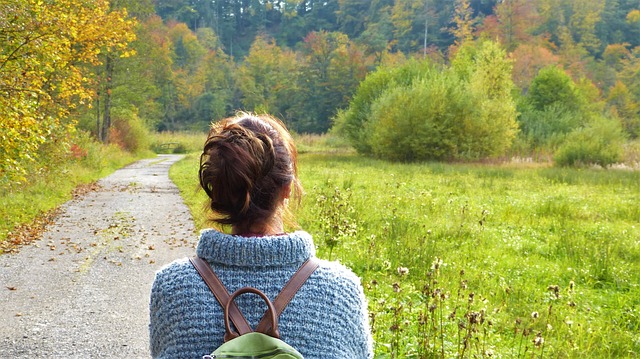
Two key ways to achieve the combination of mindfulness and movement to help redress physical and mental decline are mindful walking and Tai Chi. While mindful walking in the open brings the added benefits of engaging with nature, mindful walking on the inside (indoors) can be more readily accessible, especially when the weather is inclement and uninviting.

Earlier in this blog, I discussed the many physical, mental and emotional benefits of Tai Chi, including enhanced mind-body connection. A recent Harvard Medical School report, An Introduction to Tai Chi, reinforces these benefits and highlights the research showing that Tai Chi develops a “sharper mind”, offsetting the natural decline in your mental faculties, which can lead to dementia.

Whether you engage in mindful walking, Tai Chi or yoga, these practices have in common “meditation-in-motion” and strengthen the mind-body connection. So, combining movement and meditation, simultaneously strengthens our mental and physical capacities and their interconnection.

As we grow in mindfulness through combining meditation and movement, we can supplement and enhance the many benefits of sitting, standing or lying meditations. We can reduce the mental and physical decline that comes with age and improve our overall capacities, especially the connection between mind and body.

____________________________________________

By Ron Passfield – Copyright (Creative Commons license, Attribution–Non Commercial–No Derivatives)

Image source: courtesy of silviarita on Pixabay

Disclosure: If you purchase a product through this site, I may earn a commission which will help to pay for the site, the associated Meetup group and the resources to support the blog.