Respecting Our Bodies

During our July Creative Meetup, we were introduced to the theme “Honoring Your Body” by our facilitator, Jennifer Crystal.  Jennifer provided two poems by different poets as a way to stimulate the creativity of our group of writers-with-chronic-illness.  

Our first stimulus poem was “Primary Care” by Dr. Rafael Campo that graphically addresses the body of the ill person, not only the symmetrical perfection but also the smell and blood.  He also exclaims, “beneath your fragile skin, I see the soul that you shield”.   He acknowledges that “you, body, weep, you think, you scar as if to show us our own history”.  The poem is included in Rafael’s sixth collection of poems, Alternative Medicine, that reveals his deep understanding of the relationships amongst “language, empathy and healing”.

 Our second stimulus poem was by Lucille Clifton, former Poet Laurette for Maryland.  The poem, “Homage to My Hips”, focused on a single body part, the hips.   In the poem Lucille expresses gratitude for her femininity and respect for her “body parts”.   She describes her body with pride and humour.   In a discussion of “What Poetry Is”, Lucille suggested that “poetry is a way of living in the world”.   “ a way of trying to express something that is very difficult to express” and “a way of trying to come to peace with the world”.  In her view, poetry comes from questions, not answers, and a sense of wonder about the world, ourselves and those around us.

Writing Prompts provided during the Creative Meetup

Jennifer provided the following writing prompts on the theme of the Meetup, “Honoring Your Body”:

  1. Write a piece of prose or a poem beginning with, “Oh, body…”
  2. Write a poem or a piece of prose about one part of your body.

I chose to respond to the first prompt and decided to write a poem titled, “A Letter to My Body”.   The poem reflects the emotional ups and downs that I experience as a result of having the chronic condition, Mass Cell Activation Syndrome (MCAS).  The condition means that I have to severely limit what I eat and drink, otherwise I suffer from hives, rash, swelling of the legs and ankles, arthritic pain, indigestion and headaches.

Despite this condition, I am able to do many things, including think and write, read and play sport.  I feel endlessly grateful for what I can do and savour my residual capabilities.  I will be 80 years old in three weeks’ time and I value my overall good health.

A Letter to My Body

Oh Body – you test me at times,
react to the smallest thing,
create pain, itch and scars.
What are you protesting?

Where did this reactivity come from?
Why now in later life?
Pleasures from food and drink
turned to irritation and frustration.

You have served me well,
provided joy, pleasure and contentment.
Your agility and resilience amaze me,
even now, a source of astonishment.

I value that I can still walk and run,
the many times that you have been competent,
your flexibility and keenness to learn and adapt.
enabling me to play five racquet sports and two football codes.

Physical discomfort is partly in my control,
I choose to eat what I enjoy,
there are consequences that I know,
you have been forgiving of my abuse.

I’m grateful for my genetic inheritance,
a gift that keeps on giving.
Despite my ups and downs,
you stand by me – a constant companion.

Every day I see people whose bodies will not let them walk unaided,
whose movement is restricted or uncontrolled.
Some have to rely on others for their mobility,
always dependent on someone else for basic tasks.

I’ve taken my independence for granted,
not tethered to others to move around,
doing many things with ease,
the recipient of competency’s benefits.

You’ve stuck by me through thick and thin,
through the aftermath of a serious car accident,
through melanomas and skin cancers,
through the daily MCAS assaults and arthritic pain.

You’ve kept me mobile and mentally alert,
physically capable beyond my years,
despite my lack of respect for you,
my abuse of your good intentions.

There is grief here,
about the foods I cannot eat,
the drinks I cannot drink,
the meals I cannot share.

You have sweated and swelled to protect me from perceived invaders.
I appreciate your diligence in caring for me,
in helping me to maintain my immunity,
in providing the good health to enable my physical pursuits.

You enable me to enjoy my mobility when travelling interstate,
to achieve my 3,500 steps daily,
to play recreational pickleball weekly at intermediate level,
to do my regular exercise routine that keeps me agile, strong and resilient.

I’m surprised by your sense and sensibility.
Your intelligence is not just in my brain,
but also in my gut and heart.
You rein in my unfettered emotions with deep breathing.

I marvel at your body memory,
your capacity to play racquet shots instinctively,
without any conscious intervention,
reading the play and responding intuitively.

I have savoured your competence,
bringing me endless joy in the “now” and in “replay”.
I feel challenged to show you more respect,
to curtail what I eat and drink that is harmful to me.

Oh body, you are like a tree firmly rooted in the ground,
swaying with the winds of change,
inexorably displaying my life history,
in the texture of your bark and the shedding of your leaves.

You are my grounding,
my earthly residence,
my link to nature and others,
my sole comfort in times of darkness.

Reflection

In writing the poem, “A Letter to My Body”, I was very conscious of what I had discussed in an earlier post when I wrote about poetry “blending opposites and breaking frames”.  I wrote the first five stanzas during our Meetup writing exercise.  As I reflected further and processed my mixed emotions around the Meetup theme, I became more conscious of the need to blend opposite emotions and achieve a breaking of my “victim” frame.  In the poem, I was able to bring together sadness and joy, grief and gratitude, disdain and respect, frustration and elation, disorientation and groundedness.  The poem helped me to change my inner landscape from “victim” to privileged.

_____________________________________

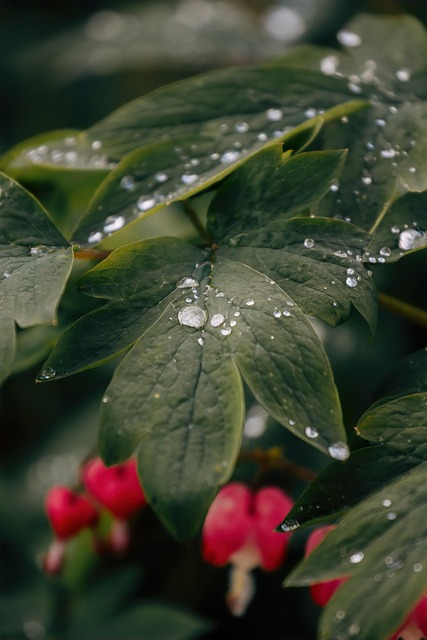
Image by wal_172619 from Pixabay

By Ron Passfield – Copyright (Creative Commons license, Attribution–Non Commercial–No Derivatives)

Disclosure: If you purchase a product through this site, I may earn a commission which will help to pay for the site, the associated Meetup group, and the resources to support the blog.
The Need for Mindful Listening by Doctors

After completing my last blog post about Dr. Rafael Campo’s view that poetry expresses the rhythm of the body, I began to reflect further on my recent medical experience.  Rafael contends that doctors can access the “interior story” of a patient by listening to the poetry of the patient.  The patient’s medical story encapsulated in their poem provides the “context” for the evolution of the patient’s illness.

Uncovering strong emotions

On writing about Rafael’s perspective on what makes a “good doctor”, I began to realise that my “interior story” was really one of resentment and frustration with my recent treatment by doctors and specialist consultants.  It has been difficult for me to own this part of my medical story because of my inherent respect for doctors and their calling to help people in need of medical assistance.

In the past, I had focused on the “data” about my medical story .  For example, when I wrote the poem The Sounds of My Medical Story, I was very focused on eliciting the sounds and not on exploring the meaning and feelings behind them. Through a process reflection, I became more aware of the disruptive nature of my chronic illnesses and my frustration about the lack of support from the medical profession.

It was left to me to find a way to tone down the sounds/noise of my body by exploring “periods of silence and solitude” so that my body could emit a “soft pattern of soothing sounds”.  I have found these soothing sounds disturbed on a number of occasions recently when my body reacted to specific foods and elevated my heart rate to twice its normal level (from 50 beats per minute to 110 beats per minute) for a period of hours.

Lack of knowledge and understanding of many doctors

Part of the problem is that there is a lack of knowledge and understanding amongst doctors and specialist consultants in relation to my core dermatitis and digestive illness, Mast Cell Activation Syndrome (MCAS).  In consequence, there is a tendency to deny its existence or to ignore it as a part of my medical story. 

It is interesting that one of the new questions added to the survey for the joint Influenza/COVID vaccination asks, “Do you have MCAS and do you suffer anaphylaxis from it?’.  This new question for the Federally-funded, free vaccinations gives an indication that the existence of MCAS and its potentially serious impacts are recognised by some medical professionals in positions of authority.

In contrast, last year I had asked my gastroenterologist to undertake a biopsy during my routine colonoscopy to diagnose officially whether or not I had MCAS (apparently, a biopsy is the only reliable way to test the presence of MCAS as a blood test alone does not provide the necessary information).  My gastroenterologist refused on the grounds that “MCAS is a controversial area” and not accepted by all medical professionals.  At the same time, he gave me the name of a specialist consultant in another area who recognises MCAS and works with patients on this illness. 

Disinterest and disdain of some doctors

I subsequently obtained a referral to a specialist allergist who refused to read my medical history (that I spent hours preparing) but undertook a number of skin prick tests that showed that I was allergic to soy, wheat and dairy products among other things.  He lost interest in my case when he established that I do not suffer from anaphylaxis.  It was left to me to ascertain what foods, in what quantities, are harmful to my body and mind.

I then turned to my General Practitioner (GP) who has a Doctorate in Immunology and again I received no insight into MCAS and how to manage it. However, my GP referred me to a specialist dermatology clinic at a hospital because they were of the view that I would be “a good candidate for biologic treatment” as my MCAS was not under control and I was restricted to 10 foods (that were not harmful to me).  No explanation of biologics or its potentially harmful effects were given to me (I had to research this treatment myself).   From my own research, I have established that biologics are complex and expensive, can cause an allergic reaction and expose the body to more serious infection.  They are often given by injection and can require regular visits to a hospital (e.g. fortnightly).  

During my initial visit and a follow-up to the dermatology clinic, I saw two different registrars.  The first took my medical history record “for the file” but did not discuss my MCAS or subsequent events such as a tick bite, Mammalian Meat Allergy or Ciguatera fish poisoning.  The registrar was totally data-focused on assessing my suitability for biologics.  I was given a request form for a battery of blood tests (20+) to check whether I had one of the conditions that would eliminate me from further consideration for biologics.

Apparently my blood tests results were “good” which I ascertained to mean that they did not invalidate me as a biologic candidate.  On the follow-up visit to another registrar, I was not given the test results but told, after a physical examination, that I did not qualify for biologic treatment as my dermatitis “did not cover my whole body”.  From the outset, I had explained that I was not interested in biologics but this was ignored. 

Since my visits to the hospital dermatology clinic involved more than three hours (including travel time), I cancelled a further follow-up meeting.  I received no useful help with my dermatitis (no one was interested in my symptoms or triggers) – the registrars were only interested in pursuing their biological model which, in this case, entailed biologics. 

In a recent Q & A session with MCAS 360 practitioners I asked whether they supported using biologics for MCAS, the response was that they did not support this approach because it was very much trial and error as it was very difficult to determine the appropriate level of intervention and because it had potentially damaging side effects.

Reflection

Interestingly, during a live presentation by Dr. Neil Nathan, author of The Sensitive Patient’s Healing Guide, a participant from Chicago described her experience with the medical profession when she attempted to discuss her MCAS triggers and symptoms.  She visited an allergist (who claimed expertise in MCAS) and “ was belittled” and told to go to a dermatologist.  However, the allergist ordered a serious of tests despite saying it “was a waste of time”.  The participant then visited a dermatologist who “put his hand up” and told her “to shut up”.  He prescribed steroids which proved to be “useless”.  The original allergist’s office rang the participant back after the test results and told her she had MCAS and needed to return.  The participant chose not to return and over time progressively researched her own condition and improved her health by herself.  Dr. Nathan himself, during his presentation, commented that “if you can find someone who will listen to what you are saying about how sensitive you are, that’s a godsend”.

Rafael highlights the fact that doctors are taught “detached concern and distancing”.  They are “immersed in the biological model” and think only in terms of diagnosis and the “treatment algorithm”.   Poetry, in contrast, expresses emotion fully and thus “abets empathy”.   The cadence of poetry demands mindful listening, attention and attunement to emotive expression and the human sounds within.  It challenges doctors who are caught up in endless checklists, “overwhelmed with diagnosis codes” and disabled by “distancing”.

The Health Story Collaborative is designed to close the listening and empathy gap.  It creates multiple platforms for health storytelling  and provides an empathetic audience of people-with-chronic-illness, as well as doctors.  A supportive community is a key element in the healing journey of people with chronic illness.  I have participated in HSC’s Creative Meetups for the past two years.  This group of writers-with-chronic-illness meets online once a month and provides an opportunity to write about our “interior story” and to share the outcomes in this supportive community.

I have written a poem to reflect my experience with medical professionals and my feelings about their lack of listening and empathy:

The Inner Story Laid Bare

Frustration and resentment abound,
each professional with deaf ears,
not listening to my subjective medical story,
intent on objective data exploration,
missing the “interior story”.

Failing to understand the context of my chronic illness,
blind to its origins, effects and impact on quality of life,
always grasping for what is scientifically known,
shared patient experience ignored,
in the interests of a deemed correct diagnosis and treatment.

Lack of knowledge and understanding,
desensitized by a biological model,
closed to our “interior story”,
unable to listen mindfully,
unwilling to summon empathy.

A peer support community,
ready to share their health story,
prompts for prose and poetry,
collaborating to close the empathy gap,
willing to be vulnerable for each other.

If medical professionals practised some form of mindfulness they can develop the art of mindful listening to patients.  Rafael Campo has used poetry as his way into mindfulness.  Research demonstrates that mindfulness practices are highly effective for the medical professionals

As they grow in mindfulness, medical professionals can enhance their physical wellbeing, reduce the risk of burnout, improve their care of patients and develop emotional regulation.  Training in mindfulness, undertaken by hospitals and medical institutions, is designed “to train doctors to actively listen and engage with patients mindfully” thus increasing empathy amongst doctors and improving the accuracy of diagnosis.

_____________________________________

Image by Alexa from Pixabay

By Ron Passfield – Copyright (Creative Commons license, Attribution–Non Commercial–No Derivatives)

Disclosure: If you purchase a product through this site, I may earn a commission which will help to pay for the site, the associated Meetup group, and the resources to support the blog.
Listening to Our Interior Story

Dr. Rafael Campo, in an interview for the Boston Globe, spoke of the ability of poetry to reveal the “interior story” of the creator.  He highlighted the rhythm of poetry and how it mirrored the rhythm of the body.

Dr. Rafael Campo, a Harvard trained doctor, is a highly acclaimed poet, essayist and medical specialist at Harvard Medical School.  He is an untiring advocate and health professional for HIV infected patients.  Rafael is the author of nine books of poetry and other publications.  He is also the poetry editor for the Journal of American Medical Association (JAMA).  He teaches primary health care at several medical institutions, including Harvard Medical School. 

Rafael has received many awards and honours for his poetry and prides himself in using a “palette of poetry” by adopting a diversity of poetic forms, thus reflecting his “hybrid” experience.  Rafael uses his poetry to express his feelings for his cancer and AIDS patients as well as emergency room patients who have encountered the brutality of racism and homophobia in America.  He also teaches poetry to patients and medical professionals alike.

Listening to the rhythm of poetry

Rafael considers poetry to be “the opposite of silence” because it expresses the stories of patients and medical professionals.  He maintains that patients are often silenced by the biomedical focus of doctors who are trained to be “relentless in the pursuit of facts”.  He argues that doctors are taught to suppress their own feelings and adopt a “detached” stance.  In the process, doctors don’t listen to the life stories of patients and lose valuable insight into the “context” of the patient’s illness.

Rafael contends that just like listening to a heartbeat with a stethoscope, doctors can listen to “the physical rhythms of the body” expressed through the language of poetry.  In his own words, “poetry is full of the music of the body”.  He highlights the corporeal nature of poetry because, in his view, it fundamentally expresses “in a visceral way what it is to be human”. 

Rafael argues that listening to patients’ poems and writing poetry makes him a better doctor because he is more attuned to the “context” of an individual’s illness and their “interior story”.

Writing prompts for our Creative Meetup Group inspired by Rafael Campo

I participated in the June, online Creative Meetup sponsored by the Health Story Collaborative for writers-with-chronic-illness.  Our facilitator, Jennifer Crystal, read an extract from Boston Globe’s interview with Rafael.  When Jennifer introduced Rafael’s perspective on the human rhythm of poetry, it immediately struck a chord with me.

The interview extract served as the stimulus for our writing during the Meetup.  We were invited to write poetry or prose around the theme of the stimulus piece and the related writing prompts offered by Jennifer.  I chose to write a free-form poem about my experience of chronic illness while addressing both the writing prompts.

Writing prompts:

  1. What are the sounds and/or rhythms of your medical story?
  2. If you could hold a stethoscope up to your interior story, what would you want us to hear?

After we had completed 20 minutes of writing, Meetup participants shared their writing which was rich with metaphors to describe the sounds of their medical story and the nature of their “interior story”.   The metaphors employed by the participants focused on both disruptive/disturbing sounds and soothing sounds:

Metaphors of disruptive/disturbing sounds:

  • like war sounds
  • the storm that couldn’t kill
  • church bells ringing
  • loud chaotic concert
  • waves crashing
  • noisy, electronic hospital environment
  • like trumpet blasts.

Metaphors of soothing sounds:

  • sweet melody of harp
  • whispers of nature and beauty
  • soft pattern of soothing sounds
  • silence and solitude.

Poetry affords the opportunity to blend opposites (e.g. noise and silence) and change metaphors to break frames and create a new mindset.  Poetry has the power to transform our perspective.

My response to the writing prompts is reflected in the following poem:

The Sounds of My Medical Story

A story that lacks rhythm,
a staccato effect.
Flare-ups like trumpet blasts,
Disrupting and interrupting.
Periods of silence and solitude,
A soft pattern of soothing sounds.
Poetry as alchemy.

Reflection

I have been inspired by The Book of Alchemy authored by Suleika Jaouad in which she explores the art of journalling with 100 very accomplished contributors.  As Suleika was writing the final chapter of her book she received word that her aggressive leukemia had returned.  While preparing herself and her house for another extended hospital stay (for chemo and a third bone marrow transplant), she recalled the alchemy of writing a journal.  This led her to write a poem about how journalling alchemizes isolation and suffering and leads to new insights and a newly envisioned future.

In her poem, Suleika draws on multiple analogies to express how she has experienced the alchemy of journalling:

  • a companion to untangle the knots in her life
  • a source of memory and reverie
  • a teacher of mindfulness (through paying attention to the simple things in life)
  • a mirror for her past, present and future self
  • a refuge and hiding place and “finding place”
  • a means “to write her way through”
  • a co-creator of a future self.

On reading her poem about the alchemy of writing and journalling, I was inspired to produce an “erased poem”(in Haiku format) from her words:

An Ode to Poetry

Friend for company,
finding place for future self.
Create my way through.

As we grow in mindfulness through writing poetry, blogging or journalling, we can access our “interior story”, develop creative approaches to challenging situations (such as illness) and build a new level of acceptance of “what is”.  We can also draw inspiration from others by writing in community – accessing the power of storytelling and sharing.

Rafael reminds us that a poem is “crafted” around a theme and structural elements such as rhyme. rhythm, alliteration, metaphor, length, format, and language.  I found that I had to craft this blog post when I became overwhelmed by the volume of information about Rafael and his poetry.  In crafting the post, I needed to reduce the focus to one key area, find ways to integrate disparate sources and explore avenues for integrating the material.  The content and structure evolved through multiple edits and rewrites.

_______________________________________

Image by Olle August from Pixabay

By Ron Passfield – Copyright (Creative Commons license, Attribution–Non Commercial–No Derivatives)

Disclosure: If you purchase a product through this site, I may earn a commission which will help to pay for the site, the associated Meetup group, and the resources to support the blog.

Time as Metaphor

George Lakoff and Mark Turner point out in their book, More Than Cool Reason: A Field Guide to Poetic Metaphor, that we “deal with time metaphorically”, just as we do with other abstract concepts such as life and death.  In a previous post, I discussed how a metaphor itself shapes our perceptions and world view and how poetry can enable us to change metaphors and break frames.   Time metaphors are pervasive in our everyday language and expose how we view time.

Time metaphors

In this current post, I discuss several time metaphors and explore ways to break free of the constraints in thinking and feeling that they elicit:

If only I had more time

The desire for “more time” is fraught with difficulty because “time” is finite in the sense that we only live one lifetime (normally, up to 100 years).  The saying suggests that we could do “more of the same, without reflecting on how we use our time”.  We need to review how we spend our time, e.g. in watching TV, sleeping, going to the movies, talking, spreading rumours, playing video games, engaging with social media, feasting on the news.  We can treat time as an endless commodity to be drawn on at will or view it as something that is finite and valuable.  We can waste time or fritter it away because we have not learned to value what time represents – our chance to learn, grow, contribute and support.  There is more to time than meets the eye.

Killing time

This is a way of saying: I need to use time up because I have too much time.  It suggests that  we are bored, have nothing positive or productive to do.  This is an opportunity to savour the freedom of boredom.  We are consumed by the need to be doing things all the time, to fill in time with activity.  The emphasis on “doing” instead of “being” creates its own stresses.  Boredom can be freeing in that it motivates us to be more creative in how we spend our time – the work that we do, our leisure choices, our creative pursuits, developing relationships, our mindfulness practices.  Arlie Russell Hochschild suggests that our need to be busy creates a Time Bind that means we are caught up in an obsessive need to fill in time with activity. In the workplace, we have to be seen to be busy – what Christine Jackman describes as “performative busyness”.

Running out of time

This expression often refers to an impending deadline, one that is externally imposed or self-created.  We can review the external deadlines in terms of importance and necessity and, where possible, negotiate a change in timeline.  Self-imposed timelines are time- traps of our own creation.  We can review them and question why we have created them – are they the product of limiting self-beliefs, a need to please, or a need to achieve?  In reviewing our self-imposed deadlines, we can ask ourselves, “How necessary are they?” “How could they be changed/adjusted?”  By way of example, when I started out writing this blog, I set myself the goal of daily blog posts. This became unsustainable when I started co-facilitating manager-development programs across the State. On the advice of my mentor, I changed my goal to two or three posts a week. I have subsequently adjusted my timeline again to reflect my desire to write a series of e-books based on this blog.  I now aim to write two 1,000 word posts per month, along with updating my archive page.  Adjusting our self-imposed deadlines for changed circumstances becomes essential if we are to avoid creating unnecessary stress.

Wasting time

We often hear the expression, “That’s a waste of time” or “Stop wasting time”.  The emphasis on waste is a recognition that time is a finite resource for our life here on earth.  Unfortunately, we spend so much time either thinking about the past or worrying about the future – catalysts for depression and anxiety.  Jake Bailey reminds us too that we can spend so much time on looking forward to tomorrow (and live in expectation of what it has to offer) that we lose sight of the present.  Elisha Goldstein in his book, The Now Effect, reminds us that being mindful of the present moment can change our life.  Richard Carlson and Joseph Bailey reinforce this message in their book, Slowing Down to the Speed of Life.  They maintain that we speed up our lives when we live in the past, engage in self-judging or become overly-analytical of our daily life and its related problems.   They argue that the benefits of slowing down to the present moment (rather than racing ahead)  include improving our health and relationships, enjoying more peace and equanimity, reducing our stress and strengthening our focus and capacity to be productive.   

Time metaphors and chronic illness

 Jennifer Crystal – writer, educator and  author of One Tick Stopped the Clock – has written about the different perceptions of time and mindsets by people experiencing chronic illness and those close to people suffering from chronic illness.  In a blog post, The Time-Warp of Tick-Borne Illness, she discusses time metaphors in the context of her own experience of tick-borne chronic Lyme Disease.

Jennifer points out that we typically have a different relationship to time (and different time metaphors) at the various stages of our life.  As children, time does not move fast enough; as we become aged, we want time to slow down.  When people experience chronic illness, different time metaphors come into play.

Jennifer notes that she lost so much time through illness which delayed her degree graduation, her relationships and job/life plans.  For her during this period of chronic illness and a subsequent relapse, time moved too fast.  She felt an urgency to catch up with time.  However, her recovery depended on her slowing down and spending time on self-care.  Despite the feeling of having a lot of catching up to do,  Jennifer has had to move at her own pace to achieve her goals in her own time and to avoid further major relapses.

Jennifer noted that perceptions of time can be so very different for the well in comparison to the chronically ill. The former often wish for the free time that they see as the province of the chronically ill (time to lie around and read or watch TV).  What they don’t realise is that the chronically ill person often does not have the energy or pain-free experience to enjoy these envied activities.  Jennifer maintains that each side (the healthy and the chronically ill) need to develop an understanding of the perspective and experience of the other.  Even the healthy person experiences stressors and pain in this fast-paced world.

Reflection

In this post, I have concentrated on several time metaphors that can constrain our perception and mindset.  However, there are time metaphors that have positive connotations or that promote proactivity, such as a stitch in time saves nine.

In the March Creative Meetup, an online support group for writers-with-chronic-illness, Jennifer shared her blog post and offered two time-related writing prompts:

  1. How has your relationship to time changed with your illness?
  2. Imagine yourself springing forward or backward to a future or past moment in your life.  Write a letter to your future or former self from your current self.

 As we grow in mindfulness through reflection and other mindfulness practices, we can gain self-awareness about our own time metaphors and find creative ways to break the frames that constrain our thinking and mindset.

I developed the following poem while reflecting on time metaphors:

Time Metaphors

Time doesn’t wait,
it marches on.

We waste time when
killing time,
living for tomorrow,
buying our time,
waiting for the right time.

We express time regrets when we say
if only I had more time,
I have too much time on my hands,
time is going too fast,
if only I had my time over again.

We express frustration with time when we say
where has all the time gone?
I can’t wait till tomorrow comes,
I’ve run out of time,
I’m caught in the trap of time.

Time is restless, relentless, resilient, resourceful.

Time is opportunity
to learn, grow and create,
to care for self and others,
to be in the present moment,
to experience wonder and awe.

_______________________________________

Image by Gerd Altmann from Pixabay

By Ron Passfield – Copyright (Creative Commons license, Attribution–Non Commercial–No Derivatives)

Disclosure: If you purchase a product through this site, I may earn a commission which will help to pay for the site, the associated Meetup group, and the resources to support the blog.
A Letter in Response to Chronic Illness

Each month I participate in an online Meetup of a group of writers-with-chronic-illness sponsored by the Health Story Collaborative (HSC).  In our February Creative Meetup, we were introduced by our facilitator, Jennifer Crystal, to the concept of writing a letter to our chronic illness.  Jennifer who has Lyme Disease herself, read out a poem by Bonny van Geffen, titled One Lyme Warrior’s  Letter to Herself

In the letter to herself, Bonny exhorts herself to admire her own strength in dealing with her illness and to avoid guilt, shame, self-hate and self-accusations.  She compassionately encourages herself to forgive others for their lack of understanding of her illness and its debilitating effects.  In her final paragraph, she suggests to herself that she blame the tick and it’s bite, not herself, for her chronic illness.

Writing prompts

Following the reading of Bonny’s letter, Jennifer invited us to spend 20 minutes writing prose or poetry in response to one of the following writing prompts:

  • Write a love letter to your illness or yourself
  • Write a letter to someone involved in your story (such as a doctor, family member, or friend). What do you need them to know?

Participants in the group shared their insightful letters to their illness or self, some with humour that they explained was a coping mechanism for them.  One participant wrote A letter to My Father expressing appreciation and love for his tolerance and support during his mental illness.  Synchronistically, I wrote A Letter to My Son who recently suffered a mental health episode that resulted in his hospitalisation.

The context of my letter- its connection to my chronic illnesses

I have MCAS and histamine intolerance along with hypertension.  So the stress generated by my son’s behaviour over a week, affected me not only emotionally and mentally but also physically.  It resulted in increased blood pressure along with elevated histamine levels leading to rashes and hives, that alternated between being excessively itchy and generating very dry skin with a burning sensation.

Writing poetry as a mindfulness practice

I found that writing poetry during this time helped me to deal with the stress and enabled me to achieve some degree of emotional regulation and capacity to assist my son and other affected family members – a result of poetry as a mindfulness practice (as recommended by Rosemerry Wahtola Trommer).

My mixed emotions and hopeful thoughts were expressed in my poem, A Family Crisis:

Disturbing distress,
disrupted sleep,
distracted concentration,
confused feelings.

Concentric circles of disorientation,
extending to family and friends,
putting life on hold,
family’s peace and privacy punctured.

As I experienced a deepening divide between my son and myself during his mental health episode, I wrote a poem with the title, The Great Divide:

Anger and aggression rear their ugly head,
an unbridgeable chasm,
a physical, mental and emotional divide,
Therein lies grief – separation and loss.
Lives in disarray.

Stretching out across the void,
seeking connection,
unable to reach the other side,
into the tunnel, no light at the end,
dislocation, disturbance and dismay.

As I began to empathise with my son’s mental health condition, I came to realise that we were living in Parallel Worlds:

Parallel worlds of exhaustion,
of mind, body and spirit,
loss of control, freedom and choice,
shared experience of anxiety, uncertainty and deep distress.

As his condition began to improve through medication, I was able to experience some relief (together with mixed emotions) – expressed in the poem, Light at the End of the Tunnel:

Grateful for the care,
concern for the future,
admiring resilience,
trusting intention.

Relief floods in as aggression abates,
freedom, control and choice partially restored,
regret and shame emerge,
revisiting trust and faith.

New insight into “elevated”,
shedding psychosis,
re-emergence of sensitivity,
growing self-awareness.

Mixed emotions –
trust, patience and tolerance restored,
pain and hurt linger beneath,
still unease remains.

A way forward emerges,
light appears at the end of the tunnel,
faith and hope abide,
welcoming home what was lost.

My response to Jennfer’s writing prompts

I chose to write to the second of the writing prompts provided by Jennifer (listed above), so I wrote A Letter to My Son:

You are in pain and lost in your world.
I see you emerging out of the darkness of a deep tunnel.
We have been in parallel worlds.
Hurt and distrust lie within.

I look for the thoughtfulness and sensitivity that is the real you.
I treasure the times when you showed me love and concern.
I savour your presence, personality and power,
your insight, kindness and intelligence.

Reflection

At the end of the Meetup session, after we had shared our writing with other members of the group, Jennifer suggested that we write a short process journal entry.  The aim here is to identify what the session brought up for us in terms of insight and feelings.  It surfaced for me, my love for my son despite the hurt, pain and resentment.  It helped me to deal with my nervousness by focusing on what I truly value and savour in my son who is very likeable and loving.

I felt especially grateful to Jennifer for introducing us to the poetry of Rosemerry Wahtola Trommer.  Writing poetry during this family crisis was an important anchor for me as everything around me was in freefall.  I had read the introduction to Rosemerry’s book, Exploring Poetry of Presence 11: Prompts to Deepen Your Writing Practice, and started writing poems frequently, rather than as a one-off exercise.

In a previous Meetup, Jennifer reinforced the added value of sharing our writing by reading our poem/prose to others in the group.  Jo, a participant, reinforced this idea by commenting to me, “I felt calm just listening to you”.  I have subsequently listened to a number of interviews with Rosemerry about her anthologies of poems.  In an interview about her new anthology, The Unfolding, she states that she really loves doing poetry reading around the world and conducting classes where “we read poems and talk about them”.  Rosemerry maintains that she finds this process “ecstatic”, “Juicy“ and yummy” because “we all translate it [the poem] through the lens of our own experience”. There are times that Rosemerry is “shocked” or experiences “utter admiration” for the different translations of a poem that people bring to the conversation.

Writing poetry can help us to grow in mindfulness because it makes us more present to what is, develops insight into our inner world and encourages us to value and appreciate our outer world, its beauty and awe-inspiring nature.

_______________________________________

Image by StockSnap from Pixabay

By Ron Passfield – Copyright (Creative Commons license, Attribution–Non Commercial–No Derivatives)

Disclosure: If you purchase a product through this site, I may earn a commission which will help to pay for the site, the associated Meetup group, and the resources to support the blog.
Poetry as Mindfulness

In the previous blog post, I discussed the mindfulness practices that Mary Fowler, international soccer star, uses to grow her resilience, support her mental health and develop calm and happiness. What I did not include in these discussions is the poetry that Mary writes and incorporates in the chapters of her memoir, Bloom: Creating a life I love.

Poetry can be a rich source of mindfulness, both when reading poems or writing them.  Rosemerry Wahtola Trommer, author of Exploring Poetry of Presence 11: Prompts to Deepen Your Writing Practice, explains how writing poetry can be a mindfulness practice.  Her book provides not only a guide to reading Poetry of Presence 11- More Mindfulness Poems, but also a stimulus to our own poetry writing.  To achieve guidance for reading the focal book, Rosemerry draws on every poem in the book and uses them and other poems to stimulate our own writing of poetry.

Rosemerry co-hosts the podcast Emerging Form that discusses how to develop the creative process and provides examples.  Her poetry is published widely and her anthologies include Hush (a winner of the Halcyon Prize), Naked for Tea, and All the Honey.  She has written a poem daily since 2006 and these can be accessed by subscribing to her mailing list and/or by reading her blog, A Hundred Falling Veils.  Rosemerry also produces an audio daily, The Poetic Path, which she describes as “an immersive daily experience of poetry and reflection”. 

Writing poems as a mindfulness practice

Writing poems develops our capacity to be in the present moment, to be open to the richness of our daily experience and to engage more consciously with others and the world at large. Writing cultivates curiosity and acceptance of what is.  It enables us “to show up in the moment”, if we arrive daily with a pen in our hand or a digital device for capturing our thoughts, observations and reflections in-the-moment.

Writing poems changes the way we engage with others, ourselves and our daily environment. It makes us more aware of, and open to, both our external and internal worlds and helps us to achieve an integration between them.  When we are seeking to write poetry, we are on the lookout for inspiration and are more conscious of what is going on in our life, in our body and in our mind – it makes us so much more grounded in the reality of our everyday life.

Rosemerry maintains that we should not seek to write “good” poetry according to external standards or those of other people. She argues that this only taps into our negative self-thoughts and cultivates a mindset of criticism and can lead us to get stuck or frustrated.  For her, this self-criticism is the opposite of being mindful – it is not accepting what is and how our writing reflects the vicissitudes of our daily life and our natural responses to how we experience our reality.  She encourages us to write from our own truth – what is true for us in this moment of writing.

The outcomes of writing poems as a mindfulness practice

Rosemerry draws on her own poem-writing experience to provide a “caveat” for the readers of her book.  She counsels us to be aware that not only will our writing change but a lot of other things in our life will change too in unpredictable ways.  She explains that using writing as a mindfulness practice has made her more open to life, softened her perspective on many things and enabled her to be “more willing to be vulnerable”.

She found that through her poetry writing she became more honest and trusting.  A key outcome of this mindfulness practice was her ability to meet “great loss”, in particular, when her son took his own life.  Rosemerry contends that the mindfulness practice of writing poetry really matters when we are faced with “trauma, loss, fear and woundedness”.  In her anthology of poems titled The Unfolding, written after the deaths of her son and father, she shares her aching heart while savouring beauty and wonder.  Her poems in this collection convey contrasting states such as playful and sombre. They express a life lived fully, consciously and openly.

Despite her grief over her son’s death, Rosemerry experienced an ever-increasing capacity and desire to be open to the richness of life. In the process, she was able to love and connect even amidst “the tough stuff”.   She attributes the mindfulness practice of writing poetry to her ability to avoid “shutting down” in the face of extraordinary pain.  Having established a “practice of presence”, she was able to show up each day.  Her daily stimulus for writing was a set of questions such as, (1) “What is here?” and (2) “What is true right now?”.  We could add for our own writing practice the question, “How do I want to show up today?”.

Rosemerry contends that gaining these mindfulness outcomes does not depend on our talent, wisdom or skill level – all that is required is to “show up with a blank piece of paper and a pen”.  She maintains that using other people’s poems as a guide can help us to write as well as drawing on the writing prompts she provides in her book or other books such as Exploring Poetry of Presence: A Companion Guide by Gloria Heffernan.

Writing prompts for poems

Throughout her book, Rosemerry provides a series of writing prompts to enable us to write our own poems if we need an external stimulus.  Sometimes poems just come to us, catalyzed by significant events in our lives. The writing prompts she offers are an invitation to write our own poems and are an excellent stimulus for self-expression.  An example of the prompts she provides includes the following prompt:

Paying attention – the challenge to be in the present moment, noticing the world around us and within us.  We can view the world (and our writing) through our senses – sight, sound, smell, touch and taste.  Consciously noticing our outer world can lead to cognisance of our inner world – our thoughts, our feelings, our sense of wonder and awe.  Rosemerry claims that writing poems mindfully can “build a bridge between these two worlds” – our outer and inner reality.

According to Jon Kabat-Zinn, meditation teacher and practitioner, paying attention is central to mindfulness and enables openness, curiosity and self-awareness (particularly of our negative self-talk).  Rosemerry suggests that an easy way to start to pay attention and write is to create a list, e.g. of “what could be”, “what I sense in the moment” or “what I find interesting about the world”.  She maintains that by “naming things outside the body” we are led to a “revelation inside the body”. 

Reflection

I have found that writing a reflective poem has helped me to manage my frustration and pain associated with chronic illnesses.   Writing poetry enables me to take a different perspective, explore the consequences of my own actions and often acts as a “bridge to action” when I am faced with inertia.

Writing poems has been particularly helpful for me to stay grounded during a recent family crisis where violence and injury, destruction and dissolution, were very real.  Mindfulness heightened by poetry writing enabled me to reflect on what was occurring, explore alternatives and be conscious of my whole-body stress.

As we grow in mindfulness by poetry writing, we can tap into the power of being present, enhance our creativity and build our resilience in the face of “the tough stuff”.  We can also develop self-care strategies that enable us to withstand the ever-occurring forces of overwhelm.

_______________________________________

Image by Janusz Walczak from Pixabay

By Ron Passfield – Copyright (Creative Commons license, Attribution–Non Commercial–No Derivatives)

Disclosure: If you purchase a product through this site, I may earn a commission which will help to pay for the site, the associated Meetup group, and the resources to support the blog.