Poetry as Mindfulness

In the previous blog post, I discussed the mindfulness practices that Mary Fowler, international soccer star, uses to grow her resilience, support her mental health and develop calm and happiness. What I did not include in these discussions is the poetry that Mary writes and incorporates in the chapters of her memoir, Bloom: Creating a life I love.

Poetry can be a rich source of mindfulness, both when reading poems or writing them.  Rosemerry Wahtola Trommer, author of Exploring Poetry of Presence 11: Prompts to Deepen Your Writing Practice, explains how writing poetry can be a mindfulness practice.  Her book provides not only a guide to reading Poetry of Presence 11- More Mindfulness Poems, but also a stimulus to our own poetry writing.  To achieve guidance for reading the focal book, Rosemerry draws on every poem in the book and uses them and other poems to stimulate our own writing of poetry.

Rosemerry co-hosts the podcast Emerging Form that discusses how to develop the creative process and provides examples.  Her poetry is published widely and her anthologies include Hush (a winner of the Halcyon Prize), Naked for Tea, and All the Honey.  She has written a poem daily since 2006 and these can be accessed by subscribing to her mailing list and/or by reading her blog, A Hundred Falling Veils.  Rosemerry also produces an audio daily, The Poetic Path, which she describes as “an immersive daily experience of poetry and reflection”. 

Writing poems as a mindfulness practice

Writing poems develops our capacity to be in the present moment, to be open to the richness of our daily experience and to engage more consciously with others and the world at large. Writing cultivates curiosity and acceptance of what is.  It enables us “to show up in the moment”, if we arrive daily with a pen in our hand or a digital device for capturing our thoughts, observations and reflections in-the-moment.

Writing poems changes the way we engage with others, ourselves and our daily environment. It makes us more aware of, and open to, both our external and internal worlds and helps us to achieve an integration between them.  When we are seeking to write poetry, we are on the lookout for inspiration and are more conscious of what is going on in our life, in our body and in our mind – it makes us so much more grounded in the reality of our everyday life.

Rosemerry maintains that we should not seek to write “good” poetry according to external standards or those of other people. She argues that this only taps into our negative self-thoughts and cultivates a mindset of criticism and can lead us to get stuck or frustrated.  For her, this self-criticism is the opposite of being mindful – it is not accepting what is and how our writing reflects the vicissitudes of our daily life and our natural responses to how we experience our reality.  She encourages us to write from our own truth – what is true for us in this moment of writing.

The outcomes of writing poems as a mindfulness practice

Rosemerry draws on her own poem-writing experience to provide a “caveat” for the readers of her book.  She counsels us to be aware that not only will our writing change but a lot of other things in our life will change too in unpredictable ways.  She explains that using writing as a mindfulness practice has made her more open to life, softened her perspective on many things and enabled her to be “more willing to be vulnerable”.

She found that through her poetry writing she became more honest and trusting.  A key outcome of this mindfulness practice was her ability to meet “great loss”, in particular, when her son took his own life.  Rosemerry contends that the mindfulness practice of writing poetry really matters when we are faced with “trauma, loss, fear and woundedness”.  In her anthology of poems titled The Unfolding, written after the deaths of her son and father, she shares her aching heart while savouring beauty and wonder.  Her poems in this collection convey contrasting states such as playful and sombre. They express a life lived fully, consciously and openly.

Despite her grief over her son’s death, Rosemerry experienced an ever-increasing capacity and desire to be open to the richness of life. In the process, she was able to love and connect even amidst “the tough stuff”.   She attributes the mindfulness practice of writing poetry to her ability to avoid “shutting down” in the face of extraordinary pain.  Having established a “practice of presence”, she was able to show up each day.  Her daily stimulus for writing was a set of questions such as, (1) “What is here?” and (2) “What is true right now?”.  We could add for our own writing practice the question, “How do I want to show up today?”.

Rosemerry contends that gaining these mindfulness outcomes does not depend on our talent, wisdom or skill level – all that is required is to “show up with a blank piece of paper and a pen”.  She maintains that using other people’s poems as a guide can help us to write as well as drawing on the writing prompts she provides in her book or other books such as Exploring Poetry of Presence: A Companion Guide by Gloria Heffernan.

Writing prompts for poems

Throughout her book, Rosemerry provides a series of writing prompts to enable us to write our own poems if we need an external stimulus.  Sometimes poems just come to us, catalyzed by significant events in our lives. The writing prompts she offers are an invitation to write our own poems and are an excellent stimulus for self-expression.  An example of the prompts she provides includes the following prompt:

Paying attention – the challenge to be in the present moment, noticing the world around us and within us.  We can view the world (and our writing) through our senses – sight, sound, smell, touch and taste.  Consciously noticing our outer world can lead to cognisance of our inner world – our thoughts, our feelings, our sense of wonder and awe.  Rosemerry claims that writing poems mindfully can “build a bridge between these two worlds” – our outer and inner reality.

According to Jon Kabat-Zinn, meditation teacher and practitioner, paying attention is central to mindfulness and enables openness, curiosity and self-awareness (particularly of our negative self-talk).  Rosemerry suggests that an easy way to start to pay attention and write is to create a list, e.g. of “what could be”, “what I sense in the moment” or “what I find interesting about the world”.  She maintains that by “naming things outside the body” we are led to a “revelation inside the body”. 

Reflection

I have found that writing a reflective poem has helped me to manage my frustration and pain associated with chronic illnesses.   Writing poetry enables me to take a different perspective, explore the consequences of my own actions and often acts as a “bridge to action” when I am faced with inertia.

Writing poems has been particularly helpful for me to stay grounded during a recent family crisis where violence and injury, destruction and dissolution, were very real.  Mindfulness heightened by poetry writing enabled me to reflect on what was occurring, explore alternatives and be conscious of my whole-body stress.

As we grow in mindfulness by poetry writing, we can tap into the power of being present, enhance our creativity and build our resilience in the face of “the tough stuff”.  We can also develop self-care strategies that enable us to withstand the ever-occurring forces of overwhelm.

_______________________________________

Image by Janusz Walczak from Pixabay

By Ron Passfield – Copyright (Creative Commons license, Attribution–Non Commercial–No Derivatives)

Disclosure: If you purchase a product through this site, I may earn a commission which will help to pay for the site, the associated Meetup group, and the resources to support the blog.
Managing Adversity with Mindfulness

Mary Fowler recently published a memoir, Bloom: Creating a life I love, that covers the period from her teens to early adulthood. Mary is considered one of the brightest female talents in soccer in Australia.  In 2018, when under 16 years of age, she was the fifth youngest soccer player to represent Australia.  Since then she has gone on to represent Australia in soccer on 64 occasions, scoring 16 goals.

The highs

Mary had been selected to represent Australia at the 2019 FIFA Women’s World Cup but owing to a hamstring injury was unable to play.  She had always dreamed of being an Olympian and, although a gifted long-distance runner, chose soccer as her sport to excel in.  The highpoint of her soccer career, in her own words, was being chosen in the Australian team for the 2020 Summer Olympics in Tokyo.  She scored a goal in extra time in Australia’s quarter final win over Great Britain.

Mary was elated to be chosen in the Matilda’s team for the home-based 2023 FIFA Women’s World Cup.  With the loss of team captain, Sam Kerr, through injury, Mary’s role in the team increased significantly.  She scored her first World Cup goal against Canada and was instrumental in the win over Denmark in the Round of 16 game.

In her memoir, Mary recounts the lead-up and successful execution of a penalty goal in the penalty shoot-out against France in the quarter final.  She expressed appreciation for her coach’s extensive pre-game practice of taking penalties in a shoot-out, including the line-up at halfway, the slow progression to the penalty spot and the elation on scoring against the goalie.  After her World Cup performance, Mary was chosen to represent Australia at the 2024 Summer Olympics in Paris.

The Lows

Throughout her soccer career and much of her early life, Mary was plagued by negative self-thoughts – questioning whether she was good enough, looked good enough or was a good person.  Her low self-esteem was frequently aggravated by social media messaging that reinforced her negative self-image.  With the sudden advent of fame, Mary’s social media following expanded dramatically and so did the “haters” and belittlers (which only fed her negative view of herself).  Wisely, a close friend advised her to stop responding to the online “haters” and spend her efforts commenting on messages from supporters who sought to acknowledge her skills and achievements and wanted her to do well.

In her memoir, Mary describes her period at Montpellier Football Club as her lowest point.  She joined the club on her 17th birthday and spent three years with the club (2020-2022).  In her early period there she spent a lot of time on the bench.  She was very conscious that being the youngest player in the team, she lacked the experience of the other players.  However, she felt acutely the status differential between the “starters” and the “benched” players – the latter sometimes being totally ignored by the coach.

Mary found that as the team suffered a series of losses, conflict within the team grew. She was challenged for the amount of time she spent in the gym, as if she was contributing to their losses by trying to improve her fitness and overall stamina.  She also felt keenly the divide within the team between the French players and the “internationals”, the later considered of a lower value. 

Mary’s mixed race (Irish and Papua New Guinean) had always been a source of low self-esteem and differentiation by others.  These feelings of inferiority were compounded when she finished up at Montpellier.  Players leaving the team were given flowers at the end of the of their tenure whereas Mary and her close friend (two of only six black players in the team) were given bananas.  She didn’t know whether this was an intentional slight or just a consequence of an accidental series of events. 

Mary, who valued her creativity in playing soccer, had offered suggestions on ways to improve the team’s play but had been told by the Montpellier coach to “do what you are told”.  This frustration of her creativity was another source of dissatisfaction for her.  However, her experience was the opposite when she played with the Australian team as coach Tony Gustavsson encouraged her to be adventurous.  Mary found, too, that the move from “striker” to “wing” reduced the pressure on her to score but enabled her to provide plenty of “goal-assists” and become a real team player.

Mary reached an absolute low point during her time with the Montpellier soccer team.  She describes cutting herself and engaging in other forms of self-harm, ultimately leading to thoughts of suicide.  She also lost her love of the game and thought seriously about giving up the sport (to the point of planning her “retirement”).  What helped Mary recover was the very strong support of close friends and family, together with therapy.  In her memoir, Mary strongly encourages people who are not coping to reach out for help and therapy if needed.  She argues that, like her, people who are stressed have to get past feelings of vulnerability and be willing to share their feelings and concerns with others.  Mary learnt that being vulnerable with friends actually deepened her relationships.

As Mary’s fame grew, so too did the pressures on her.  She could not go out to do shopping without people recognising her and seeking “selfies” and autographs.  She had to deal with increased performance expectations from her friends, fans, team mates and coaches. Negative social media commentary intensified.  An additional pressure was the invasion of privacy, particularly in relation to her emerging relationship with Nathan Cleary (who was famous in his own right).

Managing adversity with mindfulness

Mary turned to a series of mindfulness practices to help her restore calm and balance to her life and provide her with the mental clarity and stamina to manage the stresses in her life.

Mary found the strength to go on and pursue what proved to be a stunning international career, as well as eventual success with the Manchester City English Premier League team (2022 till now).  She drew on a range of mindfulness practices to help her manage the downside of her career as an elite athlete and to achieve her potential:

  • Journalling – Mary had been journalling since she was a child but found new commitment and energy for journalling as she progressed in her career and had to deal with the pressures of international fame.   Journalling enabled her to deal with the unpredictable and daily challenges.  She also found that journalling helped her to get in touch with her feelings, which she tended to hide from others and herself.  It provided her with a different perspective on issues and served to challenge her negative thinking about herself.
  • Positive Affirmations – Mary had to deal with constant negative self-talk that told her she was “not good enough” in many ways.  She turned to daily recitation of affirmations to reinforce what was good in her life and was good and positive about herself.  Danette May argues that affirmations can replace unconscious negative thoughts with reinforcement of what is good in ourselves.  This change in focus (from negative to positive thinking) can alter our mindset and reality.
  • Drawing nurture from nature – spending time in nature played a major role in Mary’s life and, in her memoir, she acknowledges the role of nature in providing her with calm, new insights, energy and a source of awe and wonder.  While in Montpellier she undertook daily mountain walks with her brother to absorb the peace and tranquility of nature.  In her memoir chapter on “Stop & smell the flowers” (Chapter 8), Mary explains how she began an intentional practice of stopping to admire a flower, closely observing its colours and textures, and smelling its aroma.  This became a habituated practice and extended to stopping to observe any animals along her path (such as birds and possums).  She experienced excitement and a warm glow from these animal encounters.   Mary often spoke of the Moon as a personal source of stability, energy and positive self-affirmation.   Mary’s discussion of her encounters with nature and her slow, observant walking resonates with a mindful walking approach to developing mindfulness.
  • Reframing goals – Mary was an obsessive goal-setter.  She had goals for when she would get pregnant, get married, own her own home and many other things in her life and career.  Her goals had set times for achievement.  While this aided her outcome focus, it eventually created undue stress through self-created time-pressures and left no room for the vicissitudes of life (such as sporting injuries) that can prevent or delay goal achievement.  In a discussion with her “bestie” at the time, Mary decided that she would set “targets” instead of “goals”, removing the constraining effect of detailed timelines.
  • Expressing gratitude – Mary discovered the power of gratitude to offset negative feelings. Like Kim Armstrong, she found that daily gratitude practice builds resilience, overcomes resentment and envy, and develops a positive mindset.  In the final analysis, expressing gratitude helps us “to get in touch with ourselves”.  Mary found that routinely expressing gratitude helped her manage the downside of her soccer injuries – times on the sidelines from concussion, an ACL injury and hamstring injury.
  • Present moment awareness – Mary consciously sought to be in the “present moment” whether playing competitive soccer or being with friends and family.  She was strongly influenced by a book, The Power of Now, written by meditation teacher, Eckhart Tolle.  She routinely practised meditation to develop this present moment awareness.  Mary found that through this mindfulness practice, she began to savour the small things in her life.
  • Mindset change  Mary had publicly stated that she wanted to be the “best in the world” as an international soccer player.  After a period of reflection on how self-limiting this goal can be (she pursued it at the expense of her relationships with friends and the opportunities for fun and new adventures), she changed her target to “be the best that I can be”. This change in mindset freed her from obsessive practice, a sole focus on soccer and a tendency to envy the success of others.  Instead, she developed better as a team player, savouring the success of others.

Reflection

Mary Fowler experienced some great highs and some serious lows.  Her negative self-talk contributed to many of her lows.  However, by turning to mindfulness practices she discovered that as she grew in mindfulness she developed resilience, changed her mindset, increased her happiness, savoured the small things in life, developed a positive self-image and increased her capacity to deal with the stressors in her life.

In her memoir; Mary states that she has now achieved a high level of happiness; increased her tools for managing challenges; and developed sound, close friendships that support her daily.  By using a range of mindfulness practices, she has developed a toolkit to address mental health issues as they arise and to draw on the positive energy that surrounds her.

Throughout her memoir, Mary provides several reflection questions that are relevant to the discussion in each chapter.  She offers reflection questions such as:

These questions can provide a rich source of reflection and insights and can serve as journalling prompts.   The discussion that precedes these reflective questions provides a basis for challenging our own mindset and identifying ways to enhance our own life and happiness.

 _______________________________________

Image by Lori Dunn from Pixabay

By Ron Passfield – Copyright (Creative Commons license, Attribution–Non Commercial–No Derivatives)

Disclosure: If you purchase a product through this site, I may earn a commission which will help to pay for the site, the associated Meetup group, and the resources to support the blog.
The Transformative Elements of a Poem

In a previous post I discussed the transformative power of poetry.  In that post, I drew on Kim Rosen’s book, Saved by a Poem: The Transformative Power of Words, to illustrate personal transformations that have occurred through poetry, including that of the author and Maya Angelou.  Poetry has a special power to transcend our analytical mind and capture our deeper inner landscape.  It has a unique capacity to move people out of darkness into light, out of depression into contentment, out of loneliness into connection.  In a section of her book, The Anatomy of A Poem (Chapter 5), Kim explains the elements of a poem that generate this transformative power.  She links her discussion of the poetic elements to their psychophysical impact on an individual, while acknowledging that each person reacts to a poem differently and may change their reaction over time – rejection can turn into admiration.    

The anatomy of a poem

In discussing the elements of a poem that may contribute to personal transformation, Kim identifies four aspects that can influence our reaction – (1) breath, (2) drumbeat, (3) song, and (4) image.  These are discussed below to offer a sense of what they may look like and feel like:

  • Breath – our breathing can be impacted by the pattern and pace developed in a poem through rhythm, line length and phrasing.  Rhythm, for example, can create calmness or a sense of urgency.  Line length can be slow and ponderous or fast and staccato-like.  Phrasing can be regular or irregular with disruption to an established pattern by short statements or punctuation.  Surprise and challenge can change breathing patterns because they can pull us up from our habituated behaviours.
  • Drumbeat – the sense of a drum beating can flow from accentuated syllables followed by softer syllables or broken with pauses.  The rhythm of a poem can create a sound experience similar to that of a drumbeat.
  • Song – a sense of singing can be generated through repetition, rhyme, or rhythm or alliteration as in the repeated “r’s” in this sentence. Words themselves can conjure sounds and their own sound can be a reminder of a song or singing.  Resonance in a poem has a unique quality that can reverberate in the listener’s mind and body.  Kim also maintains that “rhythm creates entrainment” and entrainment, in turn, “creates passion and movement” – the whole person synchronizes with the poem’s rhythm.
  • Image – can be created by word-pictures, metaphor, exploring ambiguity or opposites, and challenging linearity or expectations.  Kim argues that “the body feels the images” – images that create sensations arising from both left-brain and right-brain activation.

While each component of an element (such as repetition, rhyme, or metaphor) can create an effect, it’s the unique combination of elements in a poem that can generate a transformational impact.  In a New Dimensions Radio podcast, Kim discusses her concept of the “anatomy of a poem” and describes poetry, in all its many forms, as medicine for the soul.

Reflection: A poem about tennis

My poem below was inspired by Kim’s discussion of the “anatomy of a poem”.  In writing the poem I was conscious of the transformative elements that Kim describes.  I did not actively try to incorporate all the elements but became aware as I wrote how Kim’s discussion and illustrations were influencing the shape of my poem, For the Love of Tennis:

For the Love of Tennis

I’m grateful to play tennis again

The slice, the serve, the stroke, the sound.

A different goal

Not to win every point

To play with appreciation

And create surprise.

I’m grateful I can run, bend, stretch and strain

So much I’ve taken for granted.

No longer annoyed at my mistakes

Gratitude that I have the chance to make them.

There are many components of the elements that Kim describes incorporated in my poem.  What immediately comes to mind is the alliteration achieved through the number of “s” letters/sounds present – slice, serve, stroke, sound, surprise, stretch, strain.  The word “sound” has its own resonance and each type of tennis stroke (e.g. slice or serve) conjures up a different sound.  The “strokes” together with “run, bend, stretch and strain” evoke images and conjure up a sense of movement.

There are components of challenge as well as surprise in the poem.  There are challenges to expectations (to play to win; being grateful for the chance to make mistakes) along with “surprise” that is reinforced by the word itself.  The goal of surprise arose from my need to change my own expectations of what I am able to achieve on a tennis court in my late 70’s.  To this day I am able to create shots that surprise my partners and/or opponents (e.g., a backhand, half-volley drop shot; a  topspin lob from corner to corner; an unplayable backhand slice; or a half-volley, backhand lob) – so this element of surprise is an achievable goal for me (since I have lost a lot of my strength, speed of reflexes and movement around the court).   Surprise, too, is present in the sudden change in line length and equally sudden return to a longer line – eliciting the sense of a “drumbeat”.

Permeating the poem is a strong sense of gratitude – that I am able to play tennis again (after a period of rehabilitation); that I have access to a tennis court, social tennis partners and the equipment and funds to play; that I have been coached, had practice partners and played numerous games of tennis with different players; that I can move (run, bend, stretch and strain); that I can play many different tennis shots and associated spins; that I have played tennis on different surfaces and on overseas courts in France, Port Moresby, England and New Zealand.  Finally, there is the personal challenge not to take these things for granted.

Tennis to me, like writing poetry, is one of the many ways to grow in mindfulness.  Through tennis, I develop my powers of concentration and my gratitude, creativity, resilience and resourcefulness. I also become more able to “be-in-the-moment”.

_______________________________________

Image by Carola68 Die Welt ist bunt…… from Pixabay

By Ron Passfield – Copyright (Creative Commons license, Attribution–Non Commercial–No Derivatives)

Disclosure: If you purchase a product through this site, I may earn a commission which will help to pay for the site and the resources to support the blog.

The Transformative Power of Poetry

I have just been reading Kim Rosen’s brilliant book, Saved by a Poem: The Transformative Power of Words.  I found it enlightening, stimulating and inspirational – opening up new areas for personal exploration.  Kim is a world-renowned poet, activist, an award-winning “spoken-word artist, and a teacher of self-inquiry.  She brings a rare openness, insight and compassion to her writing and numerous individual and community engagements.  Kim collaborated with cellist Jami Seber to create Feast of Losses, a unique merging of music and poetry.  The collaborative endeavour reflects the ambiguity of everyday life in today’s world – life and death, grief and joy, loss and gratitude.

Saved by a poem

In her book, Kim describes situations in her own life and that of significant other people where a poem has proved to be a source of insight, healing, support, and rescue from depression and/or suicide ideation.  At the age of 15, Kim experienced an awakening from what she describes as her insular life characterised by “distance, intelligence, and control”.  The poem, “somewhere I have never travelled, gladly beyond” by E.E.Cummings, broke through her protective shell – a remarkable unfolding occurred through the “waves of sensation, emotion, and imagery” she experienced when reading the poem aloud.

Kim explains that the healing from poetry occurred for her not from writing poems but from “taking a poem deeply” into her heart and life and speaking it aloud.  She contends that the language of poetry is not a purely intellectual exercise but involves a holistic approach – engaging the whole person, their thoughts, emotions, spirit and body.  Poetry enables personal integration, reinforcing the mind-body connection, exposing our inner reality and its embodiment in our physical sensations.  It creates a sense of being vulnerable before a deeply profound truth that is difficult to deny.

Developing a relationship with a poem

Kim explains that sometimes we can seek out a poem for strength and support in a time of crisis – at other times a poem can seek us out.  We may initially resist a poem’s message but eventually if we persist, especially in reading it aloud, it will penetrate our defences.  She suggests that to take a poem into our life requires allowing the words to ignite our true essence – achieving an alignment of our “thoughts, words, and deeds with our heart’s wisdom and longing”.  

Kim tells the story of when she lost all her investments and savings in a scam that left her unable to pay rent.  A friend offered her somewhere to stay and together they continuously read aloud the poem Kindness, created by Naomi Shihab Nye.  The poem seemed to find each of them independently before they shared lodging for a while.  Kim recounts how, after memorising the poem and repeatedly saying it aloud, she came to understand that the kindness referred to in the poem is not about kindness to others but the kindness others offer you when you have lost everything.  The opening words of the poem resonated deeply with her – Before you know what kindness is, you must lose things.  Kim experienced an incredible outpouring of kindness from others when she lost everything – offers of accommodation or financial support and many gifts (even a year’s supply of lattes).

Kim suggests that choosing to learn a poem by heart can be influenced by curiosity, desire for pleasure, love or a personal need arising from a crisis.    She also talks of the challenge from what she calls “the yoga of poetry”.  We might be attracted initially to a poem but its inherent challenge, intellectually and/or emotionally, may be off-putting.  The focal poem requires a degree of stretch, moving beyond our comfort zone or opening ourselves to new insights about ourself and/or others.  This yoga-like stretch can be achieved progressively by persisting with the poem, reading it aloud, committing it to memory and, where possible, sharing it with others.

Opening up to poetry

Kim describes the habit she developed of recording poems in a diary, both those she has written and poems by others.  She describes the resultant record as an Autobiography in Poems. She explains how each group of poems addressed a need at a particular point in her life, e.g. to challenge her “idealized image” of herself; facing chaotic feelings; and finding herself and her life purpose. 

Kim argues that we can access the transformative power of poetry by writing or reading poetry, joining a poetry writing group, reading poems aloud by ourself or in public presentations, reading poems with a group and/or recording poems that appeal to us in a diary (or on digital voice media).  She encourages us to explore poetry as a way of opening ourselves to the richness of our inner life, as well as our inhibitions.

Reflection

In her book, Kim describes how poetry saved Maya Angelou, after she had been raped by her mother’s boyfriend (at the age of seven) who was jailed and subsequently murdered.  Maya, feeling guilty for exposing her attacker and contributing to his death, became mute for six years.  During her silence, she memorised poems that appealed to her, including 60 Shakespearean sonnets.  Her school teacher (when Maya was 12 years of age) was aware that Maya was mute and loved poetry, so she challenged her by saying, “in order to love poetry, you must speak it”.  This led to Maya reciting a sonnet from Shakespeare – her first spoken words in six years. Maya went on to become a  world-famous author, poet and activist.  She also pioneered a unique autobiographical style in her book, I Know Why the Caged Bird Sings.

Kim observes that poems “seemed to know me better than I knew myself” and often “reflected my deepest feelings more intimately than words alone can touch” – because what touches us through a poem Is “between and beyond” the actual words.  She maintains that poems can give voice to supressed feelings and longings that may be hidden from ourselves.  I found this personally when I wrote a poem called The Inflammatory Thread in My life after hearing William Stafford’s poem, The Way It Is, provided as a stimulus piece for our writer’s meetup group with the Health Story Collaborative.  Until I wrote the poem, I had not realised the extent of my frustration with my allergies and food sensitivities that were impacting what I could eat and drink and negatively affecting my relationships.   

Writing, reading, speaking or sharing poetry can help us to grow in mindfulness because these activities can develop deep insight, expose our inner landscape and strengthen our resolve and courage, along with inspiring us to emulate the compassionate action of others.

__________________________________________

Image by cromaconceptovisual from Pixabay

By Ron Passfield – Copyright (Creative Commons license, Attribution–Non Commercial–No Derivatives)

Disclosure: If you purchase a product through this site, I may earn a commission which will help to pay for the site and the resources to support the blog.
Appreciating the Jacaranda

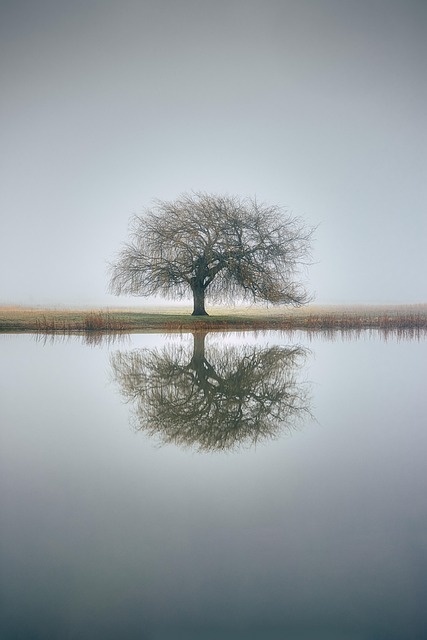
For a long time now, I have viewed trees as a source of meditation and of poetry.  The title of this post is really a metaphor for appreciating our own life and the uniqueness of others.   Jacarandas in Brisbane flower during October/November which is around exam time and their stunning display of purple flowers serves as a reminder of all we have accomplished in formal learning and all the people who have helped us in these achievements.  So, Jacarandas help us to appreciate our life and what we have achieved.  At the same time, they remind us that outward success is ephemeral – impermanent and quickly fading, which is a characteristic of the Jacaranda flowers.  

Savouring your achievements 

In a previous post I discussed in detail how savouring your achievements can be a mindful exercise in appreciating your opportunities in life and valuing what you have been able to achieve through the assistance of others.  Reflection on your study achievements can build confidence and a sense of self-efficacy – your belief in being able to achieve a particular outcome through focus and effort.  You can reflect on what it took personally to graduate at school, university and/or a TAFE College 

You can be grateful that you have acquired the knowledge and skills that come with your study achievements and that have opened the way for many other opportunities in life, e.g. the nature of the work that you do, the opportunity to travel or the ability to build relationships and interact effectively with others. 

Acknowledging the contribution of others 

Recognising that your achievements were accomplished through the support of others is a great leveler and a source of appreciation and gratitude.  Those who have contributed to your achievements could include your parents, schoolteachers, educators, lecturers, trade trainers, or professors. Some had a role to play in your formative years, others in your adulthood as you made your way in the world.  You can value their contributions to your personal growth in knowledge and skill.  

Of particular importance, is focusing on the people who played a significant role at different turning points in your life.  They could be mentors, coaches, friends, bosses, or relatives.  It pays to spend time to focus on a particular individual who has influenced the way you think, how you go about your work, how you relate to others and/or what you consider important.  It may be someone who encouraged you and supported you to believe in yourself and what you are capable of.  This type of reflection reinforces our connectedness and interdependence and can deepen our humility and gratitude.   

Radiant beauty, quickly shed 

A key source of insight when observing or reflecting on Jacarandas is the ephemeral nature of their beauty.  I once captured this thought in a poem about Jacarandas when I wrote, “radiant beauty, quickly shed”.  This is a reminder that external signs of success can quickly fade or disappear – as many people have found during the onset of the global pandemic.  Thomas Merton reminded us that what is important is the “inner landscape”, not externalities, when he wrote:  

If you want to identify me, ask me not where I live, or what I like to eat, or how I comb my hair, but ask me what I am living for… 

Savouring our achievements is not designed to be an exercise in considering ourselves to be “better than” others; it is designed to help us to realise the gifts, talents, knowledge, skills and supports that we have to enable us to make a contribution to the welfare of others.  It is one way to help us overcome the barriers to achieving our unique contribution and life purpose.   We can be prompted to ask ourselves, “What am I doing with my life and all that I have been given in terms of opportunities, knowledge, skills and insights?” 

Frank Ostaseski reminds us that one of the lessons from death and dying is the need to cultivate a “don’t know” mind – a mind that is “open, receptive and full of wonder” and willing to learn from anyone, even young children.  He suggests that we need to develop our curiosity and instead of trying to prove that we are “interesting” or learned in our interactions with others, that we focus instead on being  “interested in” others. 

Reflection 

Savouring our achievements can be a source of appreciation and gratitude.  Remembering that our external success is ephemeral and that what is important is our contribution to the welfare of others, can be a source of humility and motivation to pursue our life purpose.  As we grow in mindfulness through meditation and reflection, we can progressively develop our “inner landscape”, gain insight into our life purpose, and develop the courage and creativity to make our unique contribution. 

______________________________________

Image by Christian Abella from Pixabay

By Ron Passfield – Copyright (Creative Commons license, Attribution–Non Commercial–No Derivatives) 

Disclosure: If you purchase a product through this site, I may earn a commission which will help to pay for the site, the associated Meetup group and the resources to support the blog.