Journalling for Creativity

In the Book of Alchemy, Suleika Jaouad provides ten themes for journalling, with each thematic chapter prefaced by her own essay on the focal topic.  Each chapter, in turn, has ten authors who contribute to the chapter theme by providing a short essay and related writing prompts.  The book thus provides an excellent source of inspiration for journalling for creativity as well as practical hints on how to overcome writer’s block when attempting creative writing.  The sub-title of the book, A Creative Practice for an Inspired Life, highlights the intent of the book to stimulate creativity and provide inspiration.

One of the many contributions that had a profound impact on me is that of Natalie Warther who wrote about “Poetry by Erasure”.  Natalie was awarded a Master of Fine Arts in poetry from the Bennington Writing Seminars.   Her essay in the Book of Alchemy, in the chapter “On Seeing”, explains the process of writing poetry by erasure and states that she started this practice in the early months of quarantine during the pandemic.  Natalie found that the erasure practice helped her to overcome overwhelm as it provided a way to be creative without having “to start from scratch”.

The process involves starting with a piece of text – a poem, newspaper article, book you have read or a novel you are reading – and progressively whittling away at it until it is transformed into “the thing that needs to be said through you”.  Words are lifted from their context and studied as discrete entities with a disembodied meaning.  Your “creation through elimination” results in the original text being unrecognisable – the context, sequence and meaning of the employed words have changed.  You can give your created poem a new title to communicate the change in focus and meaning.  Natalie cites the famous poet Mary Ruefle as saying of her own erasure poetry process that she doesn’t read the page of the original text but rather just the words.

Erasure poetry

I found that starting with an existing poem made it easier for me to come up with an erasure poem.  My initial attempts were basically a restating of the theme of the original text while using some of the words employed by the original author.  This involved elimination but little in the way of creativity.  Here are two examples of my early attempts:

Acts of Kindness

The simple act
sending love
when I was terribly low.

I trust acts of kindness
live in my body.
I am made of them.

(Erasure poem drawn from The Making – a poem by Rosemerry Wahtola Trommer)

The Gift of Solitude

Suddenly a solitude,
an enormity, an empire.
It’s gigantically different!
Thank God.

(Erasure poem drawn from It is Difficult to Speak of the Night– a poem by Jack Gilbert)

As I made further attempts with erasure poetry I started to move away from the theme of the original creator and establish a new focus and meaning.  Here are two examples of these transformations:

The Pursuit of Science

Commitment and wonder,
passionate and precise,
no detail too small,
noticing the smallest of things.

(Erasure poem drawn from No Detail Too Small – a poem by Rosemerry Wahtola Trommer)

The Wonder of Stories

Listen to stories
I carry everywhere
for sharing.

Break open the vast ache
that all of us carries
for wonder.

(Erasure poem drawn from The Elephant in the Room – a poem by Rosemerry Wahtola Trommer)

Rosemerry Wahtola  Trommer provides a poem-a-day so her poetry is a good source of inspiration for erasure poetry.  What I found in reading her daily poems is that the lack of structure seemed to get in the road of my appreciating the full meaning of her poems (I’m used to reading other people’s poems that are more structured although I write “free form poetry” myself).  However, by taking out individual words and examining them closely and then putting them back into the context of Rosemerry’s poem, enabled me to really appreciate the meaning of her original poem (I saw her poem in a new way as if the light of understanding illuminated the meaning of the original poem).

The benefits of erasure poetry

Besides helping the reader to see the original poem in a new light, erasure poetry can be (in Natalie’s words) “freeing” and “playful”, even “meditative”.  It can free us from writer’s block and get the “creative juices” going.  It can be inventive and creative, opening up new insights, perspectives and different ways of looking at things and situations.  Natalie suggests that erasure poetry creates a space where we can be a writer without using an original word – thus taking the pressure off to start from scratch, particularly when we are exhausted or overwhelmed through the challenges of daily life and the human condition.

Reflection

Several of the contributors to Suleika’s Book of Alchemy are experiencing (or have experienced) chronic illness, including Suleika herself who has leukemia (diagnosed at age 22).  The contributors discuss writing for healing and explain how journalling has helped them through the highs and lows of chronic illness.

Suleika turned to journalling during her periods of treatment including chemotherapy and bone marrow transplants.  In her words, “journaling went from a favorite pastime to a lifeline”.  Initially she started with the 100-day project, developed by Michael Bierut, which basically involved undertaking a creative act (of your choice) each day for 100 days. Both her parents were supportive and led by example (her mother being creative with ceramics while her father “wrote a daily memory from his childhood”).

Suleika chose journalling for her 100-day project and indicated that instead of giving in to a sense of hopelessness, she was able to “trace the contours of what she was thinking and feeling and gain a sense of agency over it”.  However, after “four harrowing years of treatment” she gave up journalling.  She was “lost in translation” for a year – having to process her new reality that had negatively impacted her heart and body. 

Suleika became fear-driven and stale.  So, to break with this downward spiral, she undertook a 15,000 mile solo road trip across country and visited people on-route, capturing their stories in the process.  A key journal entry at the time stated, “It is possible to alter the course of my becoming”.  

On returning to New York Suleika moved “to a log cabin in Vermont”.  There she faced the challenge of writing her memoir – with self-doubts abounding.  Her way through was to “set a daily word count” for her memoir writing.  However, her inner-critic about writing a memoir overtook her.  Suleika then returned to journalling and used the “morning pages” method made popular by Julia Cameron in The Artist’s Way.

When this new method of journalling failed to stimulate her creativity, Suleika turned to the writings of inspirational authors such as the Journals of Sylvia Plath.  She also drew on the creative works of women who shared their stories about chronic illness and its effects on mind, heart and body.  Suleika concluded that reading, just like journalling, can “alchemize isolation into creative solitude”.

Reading, too, can help us grow in mindfulness and increase our self-awareness, awareness of the world around us and of the people in our inner and outer circles.  Suleika’s book not only provides her own story of resilience through the pursuit of creativity, but also gives snippets of the lives, challenges and successes of the 100 contributors through their short essays and writing prompts.  The Book of Alchemy  offers endless stimulation for our own daily journalling.  The benefits that accrue as a result include enriched creativity, heightened gratitude and enhanced equanimity.
_______________________________________

Image by Warren Griffiths from Pixabay

By Ron Passfield – Copyright (Creative Commons license, Attribution–Non Commercial–No Derivatives)

Disclosure: If you purchase a product through this site, I may earn a commission which will help to pay for the site, the associated Meetup group, and the resources to support the blog.

The Art of Journalling

Suleika Jaouad brilliantly illustrates the art of journalling in The Book of Alchemy: A Creative Practice for an Inspired Life, which she published in 2025.  In explaining the practice, she drew on examples and stories from her own life and that of others.  The book grew out of a 100-Day Project she started during the Covid-19 Pandemic. Suleika, experiencing the negative effects of isolation, decided to start a newsletter to encourage people to start journalling daily to manage their challenging situations as a result of the Pandemic. 

Suleika provided a short essay and writing prompt with each newsletter to encourage people to write about their experiences. She first approached some well-known people she knew but before long the project went truly viral beyond anyone’s expectations.  Participants in the project were encouraged to share their journalling to create a sense of community and shared challenge.  The Book of Alchemy draws some of these contributions together.  In the process, Suleika shares her own experiences and wisdom, sometimes painfully achieved, as well as the insights and personal changes experienced by the contributors to the book.

Each chapter has an introduction by Suleika around some theme such as “On Beginning” and “On Memory”.  The contributions of people such as Sharon Salzberg, Elizabeth Gilbert, and Esther Perel are grouped under one of the ten chapters, with ten contributors in each chapter.  Thus the book provides essays and writing prompts for our own 100-day project. 

In her book, Suleika, as well as many contributors, offer suggestions on how to overcome blockages to writing a journal.  At the outset, she points out the need to avoid expectations about output volumes, just the admonition to write daily.  Suleika explains that there were times when she had to accept a paragraph in her journal as her output for the day.  She points out that no one has to see what you have written.  There is no coercion (apart from self-messages) to achieve coherence, cohesion, clarity or content in a journal entry. 

Overcoming blockages

Suleika found that by reading a poem or an excerpt from something someone else has written (e.g. a memoir or novel), she was able to progress her writing even when initially “stuck”.   She maintains that reading can prompt ideas, offer creative solutions and provide inspiration.  It can also propose alternative perspectives, stimulate lines of enquiry and identify new aspects on which to focus.  Erin Khar, in her contribution to the book, states that when she feels blocked she pulls a single sentence from one of her favourite essays or books to use as a starting point.  She often uses the sentence as the opening for her journal entry. Erin is the author of Strung Out,  

Ash Parsons, in her story in the book, discusses her “Ten Images” approach to journal writing.. She had adopted a son who was premature, football-size and confined to an Intensive Care Unit (ICU).  Being with him and holding him close to her was “all-consuming and not conducive to writing”.  She had to rely on creating “mental notes of images” of whatever was around her, e.g. the scrub room used before entering the ICU.  She would write about the images once she returned home after hospital visits. Unwittingly she was effectively “writing her life”.

Marie Howe, author of New and Selected Poems,  shared her “Radical Receptivity” story in the Book of Alchemy and explained her own process of journal writing.  When she is overcome with the pressures of her “to-do” list, she clears her desk and gathers a pile of clean paper and begins to write with her non-dominant hand after setting a timer for a specified number of minutes.  She then repeats the cycle and finds often that her mind slows down and she can more readily access her subconscious. 

Suleika suggests too that we don’t have to only resort to writing for our daily journalling.  We can draw pictures, paint with water colours, build a collage (e.g. from photos), or create a poem.  Kim Rosen reminds us that writing poetry can be transformative.  Poetry, like other forms of journalling, can enable us to “blend opposites and break frames”.

Carmen Radley offers the idea of mind maps as a way forward when we are stuck.  She adopts the practice of creating a mind map by putting a year, place or person at the centre.  The mind map can be developed by extending out from the centre using any other items of association such as words, feelings or events.  Carmen describes the process as surprising and exhilarating as it effectively “mines the memory for things long buried”.

Overcoming the self-critic

Suleika suggests that we have to find our own ways to overcome the self-critic so that we can “let the words flow without self-censure”.  There is a natural tendency to be self-critical, to perpetuate negative self-stories.  She proposes the  idea of addressing the ego directly by saying “You are sabotaging my writing, be quiet!”  The processes of  challenging expectations (about output and quality), writing with the non-dominant hand and writing freehand are also ways to help overcome the “internal censor”.

Even the very best and most experienced writers have to deal with the inner critic.  Dani Shapiro, author of 11 books, suggests that no matter what you are attempting to write “you must first gather up an unreasonable, unearned confidence bordering on lunacy”.  She talks about the inner voices that say something like, “You will fall flat on your face”, “People have done this before”, “Who do think you are to talk about your life?”, “How many followers do you have on the Internet?”.   Dani ignores these voices and tells herself, “Here goes nothing!”.  She says to get to this point in self-awareness and beyond self-censure, you need to believe that you have “nothing to lose”.

Even highly successful writers such as Elizabeth Gilbert have to deal with negative thoughts that can attack self-esteem and derail creative endeavours.  After the outstanding success of her first book, Eat, Pray, Love, she was beset by negative thinking about her second book and whether it would be good enough – the challenge of expectations, our own and that of others.  Elizabeth addressed the related anxiety in her TED Talk, Success, failure and the drive to keep creating.  She found that reflection, meditation, mindfulness practices and writing herself “daily letters of love” enabled her to overcome the natural inclination to “self-hatred”.   She explains this “letters of love” process in Suleika’s book and offers a writing prompt based on this approach.

Why people journal

Suleika explains that people journal for all kinds of reasons, reflecting where they are at in life.  Some use journalling to deal with grief, to manage transitions (such as leaving home for college), to gain self-understanding, to manage a relationship break-up or to help them to live with a chronic or terminal illness.

People who journal find that the process is transformative – they gain new perspectives, insights and creative ways of moving forward in their life.  Suleika describes the process of journal writing as alchemy – a metaphor for inner transformation or purification.  She maintains that journalling creates space for exploring alternative responses to those generated by our habituated behaviours.  In her view, journalling provides the tools necessary “to engage with discomfort, to peel back the layers, to uncover your truest, most laid-bare self”.

Reflection

I was stuck for what to write for this blog post until I started reading The Book of Alchemy by Suleika.  Her book provides 100 essays and writing prompts by accomplished writers as well as extended essays by Suleika at the start of each chapter.  There are numerous prompts available online including poetry prompts by Rosemerry Wahtola Trommer.   Rosemerry contends that poetry enables us to blend opposites, break mental frames and change perspectives.

The barriers to daily journalling are typically internal – our own self-criticism, mental blockages and excuses we give ourselves (such as not enough time).  The secret is to start small and build on an existing daily habit like having a cup of coffee or undertaking an exercise routine.  What will help to maintain the habit of daily journalling is develop your own personal strategies to deal with expectations, mental blockages and self-criticism.  Suleika and her hundred contributors offer numerous suggestions for strategies that you can employ to achieve these goals.

As Suleika and her contributors attest, there are numerous benefits to daily journalling, not the least being that we can grow in mindfulness and tap into “flow” as we experience “being-in-the-zone”.  As we commit to daily journalling we can grow in self-awareness, enhance our creativity, progress a writing project, and find creative solutions to life’s daily challenges.

If you need community support to start your journalling, you can join a journalling club or start one of your own as Sheri Campbell did (she provides some guidance for others who want to do the same).  You can also access Suleika’s Journalling Club Guide here.

_______________________________________

Image by Penny from Pixabay

By Ron Passfield – Copyright (Creative Commons license, Attribution–Non Commercial–No Derivatives)

Disclosure: If you purchase a product through this site, I may earn a commission which will help to pay for the site, the associated Meetup group, and the resources to support the blog.
Tai Chi: Releasing Creativity

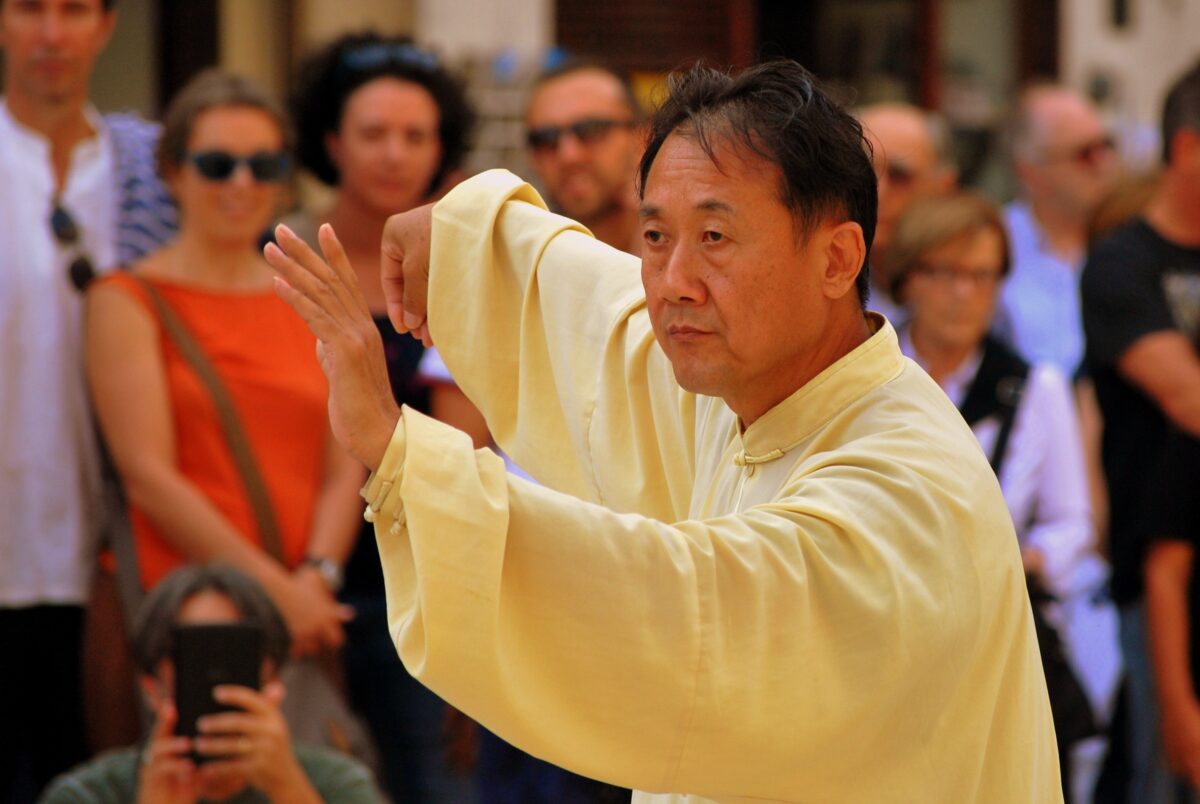
Tai Chi is often described as “meditation in motion”.  I have previously written about the benefits of Tai Chi for physical health, energy and psychological well-being.  I subsequently developed a mnemonic (F.R.A.I.C.H.E.) for capturing the benefits of Tai Chi in terms of improvements in physical and mental aspects that are beneficial for  playing social tennis:

  • F – flexibility
  • R – reflexes
  • A – awareness
  • I – integration
  • – coordination
  • – heart health
  •  – energy .

More recently I have had to play pickleball instead of tennis because of personal, physical limitations such as osteoarthritis in my hands and wrist, osteoporosis, exercise asthma and multi-level disc degeneration.  Tai Chi can assist in reducing the impact of some of these limitations.  However, I have also found that Tai Chi practice has helped me release my creativity when playing pickleball.

Releasing creativity.

Overcoming the pressure of expectations can have a freeing effect in terms of creative pickleball play.  This is partly why I have chosen to play “intermediate recreational” pickleball games rather than “intermediate competitive” – the former places emphasis on fun and social interaction, while the latter is focused on winning.

Tai Chi practice adds another range of benefits by releasing creativity during pickleball games.  Based on my personal experience, I have identified these benefits as follows:

  • Overcoming a blind spot – in the past, I have had a blind spot in relation to using a  topspin backhand in tennis.  I had developed the false self-belief that this stroke was beyond me.  This belief was founded in the fact that my early tennis training involved the use of a  one-handed backhand that utilised either a flat shot or a slice, not a topspin.  I sustained this belief when I started playing pickleball.  However, a recent game experience proved that this was indeed a “blind spot” – that there was no basis for sustaining this belief when playing pickleball. This blind spot had been restricting my creativity during intermediate recreational games (which typically involve competent pickleball players who use a range of spins in serving, driving and volleying).
  • Activating body memory – especially procedural memory.  This form of body memory relates to “sensorimotor and kinesthetic faculties”.  Thomas Fuchs explains that “well-practiced patterns of movement and perception become embodied as skills or capacities” that we can use in everyday life such as bicycle riding, keyboard use and tennis strokes.  We can experience the impact of body memory on the procedural level when we sit down unconsciously on a car seat when someone else has lowered the seat.  We tend to feel a sudden drop and the discomfort of landing heavily in the seat (because our body expects the seat to be higher).  A similar experience occurs when trying to place knives in a drawer after someone has changed the order of the cutlery trays – we keep trying unconsciously to place the knives where they were originally.   The change in order can even create a sense of cognitive dissonance for us.   I found recently that despite my “blind spot” re the topspin backhand shot, I spontaneously executed such a shot during a game of pickleball – my body remembered how I had used this shot extensively when playing table tennis.   The Tai Chi practice enabled me to bypass my self-imposed limitations of the related “blindspot” and enabled me to activate my procedural memory in relation to this shot. 
  • Heightening instinctive physical responses – I have found when I regularly practise Tai Chi that my ability to access instinctive responses is heightened.  For example, when playing tennis I have executed a backhand, half-volley lob and a backhand half-volley drop shot – neither of which I have been taught or practised.  The same has happened when I have played pickleball, e.g. a half-volley drive off an opponent’s smash.   What Tai Chi enables us to do is not only to access procedural memory but also to bypass the “self-critic” that tells us that we can’t do something.  Tai Chi frees the body to respond instinctively to what it confronts when playing a sport. 
  • Accessing unconscious competence – Tai Chi has helped me to more readily access unconscious competence (mastery of a skill prior to playing pickleball).  After completing a Tai Chi practice session, I find that I can seamlessly adapt skills acquired in other sports to the challenge of playing a pickleball game, e.g. I can readily use six different spins in pickleball that I have developed through playing tennis, squash and table tennis.  The six spins are a forehand topspin, a slice (forehand and backhand), backspin (forehand and backhand), underspin (forehand and backhand) and spins that I have labelled “outswinger” and “inswinger”.  Also, I find that I can tap into acquired skills such as “anticipation” (reading an opponent’s shot before they actually play the shot by acutely observing body movement).  The power of concentration and “being-in-the-now” are acquired skills that are enhanced through Tai Chi and readily accessed by me during a game of pickleball.

Reflection

While Tai Chi develops strength and flexibility, one of its key benefits is the cultivation of stillness – leading to calmness, clarity, vitality and joy.  Creativity lies in stillness – the dynamism of silence and internal spaciousness.  In stillness, we are in touch with the present moment – not disturbed by thoughts of the future or the past.  We can readily dismiss negative self-stories and open our minds to creative possibilities. 

Tai Chi is only one form of mindfulness practice that can be cultivated in concert with other related practices such as mindful walking, meditation, and reflection.  As we grow in mindfulness, we can better access our positive instinctive responses, adapt our unconscious competencies, cultivate calmness and clarity and strengthen our capacity to concentrate and focus.

_______________________________________

Image by Gianni Crestani from Pixabay

By Ron Passfield – Copyright (Creative Commons license, Attribution–Non Commercial–No Derivatives)

Disclosure: If you purchase a product through this site, I may earn a commission which will help to pay for the site, the associated Meetup group, and the resources to support the blog.

Happiness and Fulfillment in Retirement

In the previous post I explored aging and retirement planning.  In that post I drew on the work of Bec Wilson, creator of the Epic Retirement Flagship Course and the author of the book, How to have an Epic Retirement.  In the current post, I want to focus on Bec’s discussion of happiness and fulfillment in retirement while drawing on the writings on the topic by other authors.  At the outset, Bec debunks the image of a retired person who is spending their days in a lazy chair on the beach while drinking wine – research highlights the fact that this portrayal is a recipe for boredom and a shortened life span.

Ways to achieve happiness and fulfillment in retirement

Bec offers a series of suggestions for how we might go about achieving these retirement goals:

Examining your personal stories for sources of happiness and fulfillment

In her Epic Retirement Workbook (that accompanies the Course), Bec offers a way to examine our personal stories including recording our key experiences and challenges, triumphs and passions.  She also offers some probing questions to identify themes in our responses such as resilience, creativity, and sources of happiness.  This approach to recording personal stories is consistent with the research supporting the use of storytelling to manage life transitions.  Such storytelling is often described as narrative therapy – an emerging area for university-level study.

Identifying your purpose and source of happiness by exploring your curiosity

Bec’s Workbook has a series of questions designed to elicit your level of curiosity about your future options, friendships, challenging pursuits, and what you might do with your time in retirement.  She maintains that without a degree of curiosity in your retirement years, “you might find yourself isolated, bored and even becoming stale”.    Frank Ostaseski, author of The Five Invitations: Discovering What Death Can Teach Us About Living Fully, encourages us to cultivate openness and curiosity to achieve intimacy with ourselves, live life fully, develop self-forgiveness and “a deep sense of belonging”.

Creating meaning in your life as a retiree

Bec discusses various ways to create meaning because research confirms that a meaningful life can lead to happiness and a sense of fulfillment.  She encourages retirees to volunteer to contribute to a cause beyond ourselves and lists multiple arenas in which to volunteer, including volunteering for charity shops, aged care residents and sporting clubs.  A psychologically-rich life can generate a meaningful life and a sense of fulfillment. Pursuits such as the following can create meaning in our retirement years:

  • Collaborating with others in learning
  • Exploring part-time work options
  • Pursuing new sporting challenges and social relationships
  • Expressing gratitude and kindness which are contagious and cultivate health and happiness in others and ourselves.
Identifying your skills and strengths to develop your sense of purpose

Bec suggests that developing a happy and fulfilling life as a retiree depends largely on having a sense of purpose.  She draws on the work of Richard Leider and Mihaly Csikszentmihalyi to maintain that developing a sense of purpose involves employing your skills and strengths in areas that you are passionate about, are congruent with your values and contribute to something beyond yourself (such as a charity or other  organisation pursuing social goals).  In her Workbook, Bec offers a columnar chart to assist us to identify the relationships amongst our skills, passions, values and purpose.

Exploring your courage

Bec points out that it takes courage to move beyond our comfort zone, to pursue “endings” to the way we do things and to try new things that are challenging.  She encourages us to tell ourselves the truth about our life, our happiness and sense of fulfillment; to make difficult decisions that will present challenges to our self-concept and our comfort zone; to make mistakes as we try out new things; to dream big; and to say ‘no” or “yes” when it is appropriate for self-preservation or to achieve our potential.

Engaging in epic pursuits

Bec draws on research to show that to achieve an “engaged, curious and happy life” as a retiree we need to adopt three or more pursuits  that we enjoy and that ideally engage us physically, cognitively and socially.  To this end, she lists (on pages 280-281 of her 2025 Book) epic pursuits that “active and engaged retirees” have adopted to pursue their passions.  This can serve as a  stimulus and checklist to help us to identify epic pursuits that might interest us.  Home swapping can also bring excitement and a change of location (either domestically or overseas).

Exploring different types of work that may be compatible with semi-retirement

Bec suggests that this work could provide supplementary income and draw on existing knowledge and skills (such as lecturing, tutoring, consulting or training) or , alternatively, provide the opportunity to learn new skills (such as starting a small business built on a hobby or a special interest area).   Her other suggestions include roles such as driving for rideshare services such as Uber, baby-sitting, pet-sitting, carer/helper, or landlord.  The opportunities are numerous and include having a hobby farm, house-sitting, or developing bed and breakfast accommodation. 

Developing a new daily routine

It is important that this is developed over time as you become more accustomed to life beyond full-time work or being a home-parent.  Research in this area suggests that a daily routine enhances longevity and meaningful living.  A retirement routine is very individual and takes some planning and acknowledgement of your own “circadian rhythms”.  Bec offers suggestions for rebuilding our morning routine and creating purposeful evenings.  Penny Pennington Weeks shares her comprehensive retirement routine to encourage us to plan our own “to enjoy a retired life”.

Practising mindfulness for a happy and fulfilling retirement

Throughout her Epic Retirement Book and Course, Bec strongly encourages cultivating  openness, curiosity and reflection – key components of mindfulness practices.  Research and personal experience confirm the multiple benefits of mindfulness that accrue from regular mindfulness practices such as Tai Chi, mindful eating, and engaging with nature.  Mindfulness practice has been shown to enhance happiness, improve health, strengthen our sense of self-efficacy and enable fulfillment by helping us to realise our potential.

Reflection

I identify as a Morning Person, so in retirement I tend to do creative pursuits such as writing in the mornings and the more routine activities in the afternoons or evenings.  As we grow in mindfulness, we can increase our self-awareness, self-compassion, and perception of options.  We can also reduce negativity and self-limiting beliefs to enable us to achieve happiness and fulfillment in retirement.

_______________________________________

Image by Ahmet Yüksek from Pixabay

By Ron Passfield – Copyright (Creative Commons license, Attribution–Non Commercial–No Derivatives)

Disclosure: If you purchase a product through this site, I may earn a commission which will help to pay for the site, the associated Meetup group, and the resources to support the blog.
Aging and Retirement Planning

Bec Wilson, creator of the Epic Retirement Flagship Course, reminds us that the concept of retirement has changed in recent times.  “Retirement” used to mean leaving your job and work because of your age.  It was often age-related with organisations setting mandatory age limits for full-time employment.  Bec notes that a more modern concept of retirement involves choice – choosing to live off income from investments, superannuation and pensions while undertaking personal exertion in relation to work that you choose to do (whether paid or voluntary).  There is also the choice not to work at all but to pursue your “bucket list”, including travel options or explore hobbies or other recreational/sporting activities.  Bec explores these retirement choices extensively in her book, How to have an Epic Retirement.

Barriers to retirement planning

People are often fearful of retirement planning because they are concerned that they will “run out of money”.  They may be anxious that stopping work will leave them without a purpose and structure to their life.  Many people define themselves by their work role – e.g. a teacher, social worker, lawyer, accountant, or librarian – they are concerned that they will lose their identity if they stop working.  Others are concerned that they  will not be able to enjoy their retirement because they will be afraid to spend money.

One of the biggest barriers to retirement planning is attitudes to aging.  The impact of negative beliefs about aging is pervasive – reaching into  every aspect of our life.  Research shows that negative aging beliefs can have a damaging effect on us, both physically and mentally.  It can severely restrict our perception of options open to us, including retirement planning.  “Ageism” portrayed in the media reinforces negative portrayal of the aging process, highlighting the elements that “decline” without counteracting that with the positive benefits of aging.

In contrast to such reinforced negativity, positive beliefs about aging have numerous benefits including longevity; enhanced knowledge, understanding and wisdom; improved capacity to handle stress; heightened creativity; and improved physical health.  Positive beliefs about aging also free us up to explore the many options available to us in planning our retirement. 

We can develop positive beliefs about aging by increasing our awareness of the pervasive presence of ageism while exploring positive images of aging portrayed in memoirs and stories of exemplars and by interacting with aged people in our family and social network.  With this kind of ammunition we can more readily challenge the assumptions behind negative stereotypes of aging.  We can also begin to explore options for ourselves as we begin to consciously plan for retirement.

One member of the community-based The Epic Retirement Club, Sam Sang,  maintains that we each have “retirement superpowers” – unlimited energy, instant skill mastery, endless travel.  Other members empathise the freedoms that they and other retired people enjoy.  This community sharing of real retirement experiences  contrasts sharply with the pervasive perception that retired people do not have the capacity to contribute to society, are unable to enjoy life and experience severe limitations.

Planning for retirement

Bec is motivated by the desire to help people better understand the choices they have by learning about what supports are available to assist with retirement planning and, in the process, to “figure our what’s really important to you.”.  To this end, she not only provides her Epic Retirement book and Flagship Course but also a 150 page, practical Workbook to “guide you through each module” of the Course.  Bec suggest that you undertake the Course and complete the Workbook with your partner or an “accountability buddy” who  could be a friend.

The Course and Workbook are structured around what Bec calls the Six Pillars of retirement – time, financial confidence, health, happiness and fulfillment and travel.  For each of these pillars, she provides a series of questions and points for discussion, along with quizzes and the space to record our own answers.  For example. Bec provides a basis for calculating longevity to highlight that we often have much more time in retirement than we envisaged based on old data – nowadays, people are looking at 30 or more years in retirement given increased longevity owing to medical breakthroughs, new health and exercise regimes and extensive lifestyle advice.

To assist us to develop financial confidence, she provides the means to calculate whether we have the financial resources to support a comfortable or modest retirement or whether we will be dependent on a Government pension.  A number of exercises in the workbook support this latter source of income.  Bec helps us to complete both the asset test and the income test to enable us to see whether or not we qualify for the Australian Government pension and related financial and health concessions.  For those who are on the borderline of the relevant pension cut-offs, she assists us with suggestions of how we might qualify for the pension in the future.

In relation to health, Bec offers suggestions for ways to improve health outcomes and longevity, including diet, exercise, building a daily routine, managing health risk factors and ensuring you undertake preventative testing at the recommended intervals.  For those of us who experience chronic inflammation, she strongly argues for the need to reduce inflammation by identifying and managing triggers (e.g. foods, environmental toxins and harmful stress).

Her discussion and questions concerning health and happiness are comprehensive and covers aspects such as transitioning to retirement, research about happiness, creating meaning, maintaining and developing relationships, epic pursuits and goals.

In relation to travel, Bec shares the idea that there are potentially three phases of retirement travel: (1) active and independent travel, (2) less active, slower pace travel with the possibility of assisted travel, and (3) travel closer to home (avoiding the rigours of international travel and seeking more comfort).

Reflection

My wife and I are completing the Epic Retirement Course and Workbook together.  We find that this approach is a catalyst for a number of important discussions, including what we will do in retirement; where we want to travel to (we have already been overseas a number of times); how we can create a comfortable retirement; what financial planning we need; what are our assets and overall financial position; how much we will need to live on; where we will like to live in retirement; how we provide for our children; and how to structure our wills.

Bec identifies 5 key stages of retirement: (1) prime time, (2) adjustment, (3) epic retirement, (4) ageing, and (5) frailty.  Even though my wife and I are at different stages of retirement (owing to a 10 year age gap), we are able to use the Epic Retirement Course and Workbook to work towards an agreed, shared retirement future.

Mindfulness practices can help us to develop positive beliefs about aging and contribute to our longevity (we have been married for forty years).  As we grow in mindfulness, we can broaden our retirement options, enhance our creativity and develop new skills relationships and travel options.

________________________________

Image by 🌸♡💙♡🌸 Julita 🌸♡💙♡🌸 from Pixabay

By Ron Passfield – Copyright (Creative Commons license, Attribution–Non Commercial–No Derivatives)

Disclosure: If you purchase a product through this site, I may earn a commission which will help to pay for the site, the associated Meetup group, and the resources to support the blog.

Managing the Seasons of Chronic Illness – Summer

In a previous post,  I discussed the season of winter in the progress of our chronic illness.  There I explored “wintering” as a way to move beyond the darkness, despondency, despair and debilitation that accompanies the experience of winter in the progression of our chronic illness.  Wintering, in this context, involves “letting the light in” through rest, renewal and regeneration.  In my accompanying poem about wintering, I explored what it meant for me during a particular period of darkness.

In our August Creative Meetup, Jennifer Crystal read an extract from her book, One Tick Stopped the Clock, as a stimulus piece for writing in our group of writers-with-chronic-illness.  The extract focused on the hope associated with the arrival of summer following a period of winter.  In the extract, Jennifer recounts her desperation in the face of her totally debilitating Lyme Disease.  At the time, she had a catheter feeding intravenous antibiotics through her arm and chest cavity to her heart.  She was grossly sleep-deprived, suffered migraines , battled a health insurance company for her reimbursement entitlements, and experienced brain fog.

Jennifer sought help from a therapist as well as a specialist in Lyme disease who was a member of ILADS (International Lyme and Associated Diseases Society).  Jennifer’s therapist, Michelle, spoke to her about her dreams that involved Jennifer water skiing.  In an earlier period, Jennifer was unable to water-ski but had been able to drive the boat for other water skiers.  The literal interpretation of her dream suggested that she was missing the ability to water ski herself.  However, Michelle suggested that a metaphorical interpretation was that the dream reflected “loss” in a broader sense – the loss of a positive and productive  life style that preceded Jennifer’s debilitation from Lyme Disease.

Michelle suggested that even though Jennifer should be in the “summer of her life” at age 27, the summer would come and the experienced winter of her chronic illness would pass.  The future onset of summer represented hope for a better quality of life.  Michelle questioned Jennifer’s disbelief in the possibility of experiencing “the summer of her life”.  Jennifer expressed her doubts when Michele said, “you can live a happy, fun, fruitful life once you are well”.  Jennifer has gone on to publish her book despite her personal hardships, and become a story coach and trainer, author of a weekly column for the  Global Lyme Alliance and facilitator for the Creative Meetup group, hosted by the Health Story Collaborative.

Creative Meetup Process – Writing Prompts

Following the reading of the stimulus material, we were invited to address one of the following writing prompts:

  • Write about something that you have lost as a result of chronic illness.
  • What have you replaced or how have you transformed this loss?
  • How would you describe the season of your current illness?

I decided to address these prompts together because they were interdependent.

The loss I focused on was my inability to play social tennis during the cold seasons of the year because of chronic arthritis in the joint of the middle finger of my right hand.  The cold weather aggravates the arthritis which is also aggravated by allergies (allergic arthritis brought on by MCAS).  However, I have been able to replace my social tennis with weekly social pickleball which also enables me to play more consistently because I play it indoors and am not subject to the vagaries of the weather (or exposed to cold winds).  While I still have to manage the arthritis in my finger, the impact of hitting the ball is not as great or painful as it was with tennis.

The Summer of my medical condition

When I thought about where I was up to with managing my current chronic health conditions, I thought of summer – a season of hope.  I have located a general medical practitioner who is an immunologist and very willing to explore a range of treatment options.  She is also willing to listen and not jump to conclusions. 

Pickleball has been a very effective and rewarding replacement for my social tennis.  The gains through pickleball are many and varied:

  • New knowledge and skills
  • The opportunity to continuously learn
  • The chance to try out new shots – experiment
  • The ability to build on existing competence in shot making and strategic play built up over many years of tennis (more than 60 years)
  • A new form of exercise and increased motivation to stay fit.

Pickleball has transformed my weekly social, physical activity so that it is not as demanding as playing tennis.  It also provides a range of new rewards:

  • Joy from experiencing new competence (intermediate level pickleball skills)
  • Developing new friendships
  • Fun with playing with different partners in a social environment (the requirement to “play nice”, rather than all-out competitively)
  • Social support from people who are also aged and experiencing physical limitations
  • The enjoyment of looking forward to catching up with my pickleball group and playing more games.

When I reflect on my current medical condition, I can appreciate that in many senses I am experiencing a summer of my chronic illness.  I have framed my present state as “summer” because of what I have achieved or am achieving:

Reflection

I’ve recognised that a prerequisite for managing chronic illness is acknowledging that there will be ups and downs, times of moving forward and other times of regressing – there will be winters and summers of our chronic illness experience.  For each of the seasons of our medical condition, there are strategies that we can use to heal and recover.  One of these is the process of writing.

If we can grow in mindfulness through practices such as Tai Chi, meditation and mindful walking, we can learn to reframe our situation, express gratitude for what he have and can do and access our creativity to explore healing options.  There is a lot of helpful information on the Internet that is readily available to us if we choose to look.  The real test is in the application of what we learn. 

Dexter Dunphy and Bob Dick, in their book Organizational Change by Choice, provide a relevant quote from an anonymous author (p. 126):

To look is one thing
To see what you look at is another
To understand what you see is a third
To learn from what you understand is something else
But to act on what you learn is all that really matters.

____________________________________

This post is provided for information purposes only and is not intended to replace personal medical advice provided by a trained medical practitioner.  Please seek advice from a qualified professional before deciding on treatments for yourself or other members of your family.

______________________________________

Image by Jürgen from Pixabay

By Ron Passfield- Copyright (Creative Commons license, Attribution-Non-Commercial -No Derivatives.

Disclosure: If you purchase a product through this site, I may earn a commission which will help to pay for the site, the associated Meetup group and the resources to support the blog.
Exercising Agency When Living with a Chronic Illness

There is a story in chronic illness – it’s evolution, it’s manifestation, our proactive attempts to manage it and its resolution (whatever form that takes).  Managing chronic illness invariably involves the three “As” – acceptance, accommodation and agency. 

Agency refers to our capacity to have some control over our internal and/or external environment.  Typically, chronic illness reduces our agency in various areas of our life because it creates some form of disability which can be far reaching or limited in its manifestation in our day-to-day lives.  The challenge for people with chronic illness is to limit the loss of agency where possible and increase its presence in other areas of our life.

How to develop agency as a writer with a chronic illness

In a previous post, I discussed ways to develop agency when we are trying to write while having a chronic illness.  In that post, I discussed specific strategies relating to writing such as setting your own pace, finding a comfortable location for writing, writing a reflective poem and starting small.

I have developed agency in my own writing despite having MCAS, a chronic disease affecting the immune system.  One form of accommodation I have adopted is to reduce my expectations about the frequency with which I produce a blog post.  I have also written a series of reflective poems to help me manage the symptoms and feelings associated with MCAS.  I have also started a new writing enterprise in the form of a co-authored book on management (now in its first draft stage).  I have had to exercise self-compassion with this project because of the setbacks I have experienced during my writing efforts – setbacks such as the bankruptcy of our contracted publisher, the loss of data, the serious illness of my coauthor, and a week-long cyclone and associated anxiety and disruptions.

Developing agency through research and education

In an earlier post when I discussed a holistic approach to MCAS and histamine intolerance, I mentioned the work of Beth O’Hara, FN, a sufferer from multiple chronic illnesses.  Beth used her illness to motivate herself to research her own health solutions and to create the Mast Cell 360 facility which offers paid, holistic health interventions as well as  free resources.  Her research and her own clinical practice highlighted the role of the nervous system in the development and expansion of MCAS. 

Beth’s proactive approach to understanding the role of the nervous system in MCAS was to provide a specialised, online course to help MCAS sufferers gain control of their nervous system which is variously dysregulated with MCAS.  Her self-help program, Master Class to Reboot the Mast Cell Nervous System, gives sufferers some degree of agency over their own health improvement.

Through this Reboot Course I came to better understand the components of the nervous system and how the nervous system interacts with other systems of the body (e.g. the digestive system).  The Roadmap incorporated in the course gave me insight into the vagal nervous system, factors impacting it and manifestations of damage to the vagal nerves.  More importantly, the Roadmap provides strategies to address vagal nerve excitation based on the level involved.  In other words, through this Reboot Course I have a way of exercising agency over my own nervous system and its level of excitation.  This provides a proactive way of managing the nervous system element of MCAS which according to Beth represents 50% of the recovery protocol.

Typically, a chronic illness will have a pattern – good days, bad days; good periods, bad periods (of variable duration).  Once we understand the pattern of our chronic illness (how it manifests itself from day to day), we can exercise agency by utilising the “good” times to undertake what we consider to be important and productive.  This can involve writing prose or poetry, engaging in social work or undertaking part-time employment as Jennifer Crystal did with her part-time teaching while she experienced the difficult aspects of Lyme Disease.

Exercising agency in our recreational activity

Agency can also extend to our recreational activity – we can shape our activities to fit our physical, emotional and/or mental ups and downs.  I play social tennis despite having MCAS which often means that my ankles and legs are swollen and I have arthritis in one of the fingers I use to hold a tennis racquet. 

I have found that swelling in my ankles reduces my mobility.  I find that the lack of mobility is very frustrating as this used to be a strength of my tennis game (I was a champion sprinter during secondary school).   Now with the swelling I feel anchored on the spot, not able to accelerate forward.

As the inflammation is caused by sensitivity to some foods and drinks, it is within my control to limit these to reduce the swelling and improve my mobility.  This, however, is easier said than done as it severely restricts what I can eat and drink.

Another related area of agency with regard to the quality and enjoyment of my tennis game is undertaking exercise on a daily basis – including walking, a daily exercise routine (designed by my exercise physiologist) and my Tai Chi routine.

I re-learnt recently that most of the power of a tennis shot comes from your legs, not your arms or hands. I was getting very frustrated with the arthritic pain in my fingers which caused me to lose power in my arms and hands.  However, I have found that by bending my knees with each shot (as I used to do), I can restrict the pain in my fingers and hands and increase the accuracy and power of my tennis shot.

An added benefit of this form of agency is that by bending my knees I unconsciously activate my body memory so that I can access a wider range of tennis shots than I would normally play without the knee-bending. You only have to watch Grand Slam tennis to see how much players, both male and female, rely on bending their knees to gain power and to play a wide range of tennis shots (some even kneel at times to absorb the power of an opponent’s shot).  So the simple act of knee-bending gives me a form of agency that increases both the quality and enjoyment of my social tennis.

Reflection

The challenge with chronic illness is to identify areas for increased agency and to experiment with particular strategies to activate whatever agency we can find in whatever window of opportunity reveals itself.  Mindfulness practices such as meditation, conscious breathing, reflection and Tai Chi can help us to be open to opportunities for agency and to act on them.  As we grow in mindfulness, we can gain insight, heighten creativity and develop the courage to act on our increased self-awareness.

The story of Lucy, a 13 year old blind girl who is also neurodiverse, is an outstanding example of what is possible when we focus on our strengths rather than our deficits. Lucy is a prodigal pianist who has wowed audiences in places such as Leeds Train Station with her rendition of the extremely complex Chopin piece “Nocturne in B-flat Minor Op.9 No.1”.  She competed in a public piano competition with three other gifted pianists who were selected by Lang Lang, world famous pianist who was “speechless” with her performance and chose Lucy as the best of the four pianists. 

Lucy achieved agency in the form of her creativity and musicality, playing complex classical pieces for audiences, by utilising her strengths despite her obvious disabilities.  She has highly developed hearing and an incredible sense of touch – she learned to play the piano by placing her fingers under the fingers of her piano teacher as he depressed each key.  Her sensitivity in playing the classical pieces astounded Lang Lang.  She played at the Coronation Concert at Windsor Castle on 7 May 2023.  Lucy has since produced a classical piano CD, simply called Lucy – The Album.  Lucy’s story and her training through the Amber Trust and her teacher, Daniel, is available on video.

_______________________________________________

Image by yoshitaka2 from Pixabay

By Ron Passfield – Copyright (Creative Commons license, Attribution–Non Commercial–No Derivatives)      

Disclosure: If you purchase a product through this site, I may earn a commission which will help to pay for the site, the associated Meetup group and the resources to support the blog.

How to Write with a Chronic Illness

At the recent Write Your Own Way Summit, Sandra Postma spoke eloquently about how to write with a chronic illness.  Sandra is a book coach for writers with chronic illness.  She is especially well-qualified for this role having studied journalism and literature at university and undertaken a Book Coach Certification with Author Accelerator.  Sandra is able to draw on her own lived experience as a writer with several debilitating illnesses over many years. 

She stated that the book coaching role helped to save her life and motivated her to create her own coaching business, Your Story Mentor.  Sandra acknowledged the technical aspects of her prior training as a writer but stated that the book coaching course helped her to learn “how to coach a writer both on a craft and on an emotional level.”

Challenges for writers with chronic illness

In her Summit presentation and an interview with Savannah Gilbo for the Fiction Writing Made Easy Podcast, Sandra outlined the many challenges facing writers with chronic illness that exist over and above those experienced by other writers:

  1. Symptoms –  writers with chronic illness have to deal with fluctuating energy, brain fog, and times when they are mentally or emotionally not feeling well.  Other symptoms may include constant pain, itching and/or swelling of joints (e.g. ankles, fingers, hands, arms) and debilitating symptoms such as migraines or breathing difficulties.  Sometimes, it may be impossible for the writer to sit or even to get out of bed.
  2. Low self-esteem – Sandra points out that there is a social stigma associated with having a chronic illness.  There may be emotional baggage arising from a lack of social status (lacking a job or having to constantly isolate to manage disabling symptoms).   Like many other writers, those with chronic illness feel that their voice is not worth hearing but for the chronic sufferers this self- story is amplified by the sense of not being an active contributor to family or society, but rather being a burden.
  3. Momentum – a key element in writing is momentum,  the ongoing impetus to pursue writing whether in the form of a blog, a short story, a novel, non-fiction work or a memoir.  Momentum provides energy and motivation but for the writer with chronic illness this is continually punctuated by disability, so there is a loss of momentum as a result of the fluctuation of symptoms.

Feelings experienced by writers with chronic illness

What is not often appreciated is that such writers can experience genuine grief – from loss of identity, family, friends, social activity and work (with its attendant loss of both a meaningful role and income).  This, in turn, impacts the sense of self-worth of writers with chronic illness.

There can be anger and ongoing frustration from not being able to do what you used to do with relative ease.  Sandra points out that the anger can arise from the knowledge that you “have to surrender to this thing [chronic illness] that you didn’t choose and is with you for the rest of your life”.  With this awareness, you can “lose trust in your own life”.

Sandra highlights the fact that you can lose a sense of agency, your underlying capacity to control your body, your thoughts, your responses to stimuli and your actions.   This can lead to a sense of helplessness and hopelessness – the loss of a meaningful existence and the capacity to change your debilitating situation.

Strategies to use while writing with a chronic illness

In her Summit presentation and interviews, Sandra proposed a number of practical ways to deal with the emotions, blockages and challenges of writing with a chronic illness:

  • Break free – a starting point is to break free from expectations, your own as well as that of others.  In an earlier post, I wrote about the tyranny of expectations – how they hold us back and lock us into ways of doing things.
  • Set your own pace – it is important to overcome rule-bound advice such as writing every day for a set time in a set place.  You have to determine your own writing pattern based on your capacity at the time.  It will be frustrating at times that you can’t write as much as you want, as often as you want or as fast as you want.  You have to get to the stage where your are “at peace with your own pace”.
  • Write where you are comfortable – you don’t have to sit at a desk to write, sometimes “sitting” itself may not be possible (as in Sandra’s experience).  You can lie down and use a mobile phone to write or use a dictation device.  You will have to overcome the self-talk about what “proper writers” do.
  • Practice self-compassion – avoid “beating up” on yourself for failing to achieve what you set out to achieve or for not meeting others’ expectations.  Self-compassion, kindness to yourself, can enable you to overcome the disabling effects of negative self-talk.
  • Write what you know – Sandra points out that people with a chronic illness have a “superpower” as writers.  Because of their experience of pain and loss, they know about “deep emotions and feelings and the hardship of life”.  These are the challenges that everyone meets in daily life, being part of the human condition.  This gives writers experiencing chronic illness a  distinct advantage.  Savannah, in her interview with Sandra, maintained that such writers have  “a rare edge that empowers them to connect with readers on a much deeper level”.   As Sandra herself pointed out, “books are conduits of uncomfortable emotions and explorations of how to deal with them”.
  • Start small – if you start small, you can start “right now”.  At the outset of her writing endeavours, Sandra found that she could not write a lengthy story such as a novel, so she started small by writing poems and short stories.  She acknowledged in her podcast interview that it took “a long time to be right with that” and live with the belief that it is worth the effort.  She found, however, by writing short stories across multiple genres, she improved her writing craft and gradually built the capacity to begin writing a novel.  She recognised that this novel-writing would take at least three years. Sandra is adopting the “start small” principle with her novel writing by treating each chapter as a short story.
  • Write a reflective poem – sometimes it is helpful to write a reflective poem to get your feelings out into the open and to help you identify “next steps”.  This process can also unearth hidden emotions that are acting as a blockage to your writing.
  • Join a support community – Sandra indicated that one of the things that helped her immensely was joining a support community.   In an interview for CanvasRebel, she expressed her strong belief in “the power of the online community of other people with chronic illness sharing their stories and beliefs”.  Her online community reinforced her strength in managing her illness and associated pain, made her feel as though she was “seen” and confirmed that her voice was unique and “deserves to be used and heard”.   These personal outcomes have been my experience with the Creative Meetups, hosted by the Health Story Collaborative created by Annie Brewster, author of The Healing Power of Storytelling.

Sandra provides a free guide on How to Be a Writer When You Have a Chronic Illness on her website.  She has also started an online support community for writers with chronic illness – The Mighty Spoonies ClubThe name of the community is based on the “spoon theory metaphor” of chronic illness.

Reflection

I joined the online Creative Meetup group nearly two years ago and found that the supportive environment and writing exercises helped me “to access and release emotions” and to stimulate my creative expression in the form of poetry.   An added benefit is that I am sub-consciously working on my memoir as I explore and share my life story.

Reflecting and connecting with others who are experiencing their own chronic illness has been very supportive.   Their shared stories and insightful writing provides me with encouragement and practical strategies to deal with the challenges inherent in my chronic illness.

At our February 2025 Meetup, Jennifer Crystal, our facilitator, introduced a poem by Mary Oliver as a stimulus for our reflection and writing.  The poem, The Uses of Sorrow, speaks of receiving “a box full of darkness” but being able to understand over time that “this, too, was a gift”.  In our writing segment, we explored the “gift of illness”.

Illness provides a personal growth experience.  I’ve had to revisit my assumptions, self-image and goals.  Illness helped me to appreciate the small things in life that I often take for granted – that I can see, walk, run, play tennis, reflect, research and write. 

It helped me to realise that my identity is not tied to an image of myself as a very fit, competent tennis player.  Illness helped me to understand and accept the nature of the human condition – it’s vulnerabilities and frailties and undulating character.

I have been able to share with other people who are experiencing a healing journey.  I’ve met some wonderful people who are wise, resourceful and resilient as a result of  their experience of managing pain and losses.

Illness has helped me to become more compassionate towards others – to appreciate the pain, sorrow and distress that others are experiencing.  It has helped me to keep things in perspective and to savour the present moment.  It has forced me to be proactive, resourceful and engaged.

There are times when chronic illness has felt more like an unwanted gift – not desired or returnable.  Despite these setbacks, there have been hidden possibilities that have helped me to flourish and enrich my life and my writing.  As I grow in mindfulness through reflection, writing and storytelling, I am able to progressively develop agency, resilience and creativity.

I wrote the following poem after reflecting on the positive aspects of my illness and what it has contributed to my quality of life:

The Gift of Illness

Illness is a hidden gift,
with a rich lode of rewards,
that need to be mined,
in the fire of pain and loss.

Challenging assumptions,
reshaping identity,
acknowledging the human condition,
growing in awareness of self.

Opening to others,
appreciating life,
learning compassion,
disclosing feelings.

Discovering poetic expression,
rekindling creativity,
energising writing,
grounding in the present moment.

___________________________________________

Image by Leandro De Carvalho from Pixabay

By Ron Passfield – Copyright (Creative Commons license, Attribution–Non Commercial–No Derivatives)

Disclosure: If you purchase a product through this site, I may earn a commission which will help to pay for the site, the associated Meetup group and the resources to support the blog.
Managing People with Confidence

I have been co-authoring a book with my colleague, Julie Cork.  The book, Managing People with Confidence (to be published in 2025), is based on our co-facilitated, longitudinal, manager development program.  We have conducted the 4-6 month Action Learning Program together for the past 16 years.  The book is based on our experience of working with over 2,000 managers and draws on the Resources Book that we have co-authored and provided to Program participants.

I found it intriguing to read Ivan Cleary’s memoir, Not Everything Counts but Everything MattersIvan states very clearly that everything that you do as a leader/coach matters, whether you are in the public eye or not – it matters intensely to your team members.  In our Manager Development Program and co-authored book, we make the fundamental point that as a manager “what you say and do and how you say it and do it” matters – it shapes your team and your team culture.  We emphasise the need to manage mindfully – being conscious of the impact of your words and actions on members of your team.  Ivan reinforces this message by sharing his own learning experiences as a leader and coach.

There are many elements to Ivan’s book about how he led Penrith to three consecutive premierships (despite early career failures and depression) that resonate very strongly with our long established approach to managing people with confidence. Below are some of the elements that we have in common with Ivan when writing about managing people:

  • Consciously creating a team culture: Ivan spends considerable space in his book stressing  the critical importance of consciously establishing a team culture based on mutual respect, commitment and behavioural norms. Our Program emphasised this cultural element very strongly. We encouraged manager participants to think explicitly about the kind of team culture they are trying to cultivate and provided them with a model for developing a productive and mentally healthy team culture.
  • Building trust in the team: Ivan reiterates this time and again because it develops relationships and connection – so that people have a sense of belonging and become focused on the success and wellbeing of the playing team and all team members (including, in Ivan’s case, his Assistant Coaches and other staff).  He emphasises the importance of leadership accountability and authenticity, involving honesty and owning your mistakes.  We encapsulate these themes in our book by emphasising “congruence” – aligning your actions as a manager with your words.  It means not just espousing values but personally acting on them so that you model your desired cultural values in your own behaviours, in your words and actions.  This congruence, in turn, builds trust.
  • Giving positive feedback – in his early career, Ivan failed to do this and acknowledged in his book that it negatively impacted team members. He came to realise the power of positive feedback, acknowledging individual’s contribution to the overall positive team outcomes. The contributions will differ among players and non-playing staff but each person has a role to play for team cohesion and success and this needs to be acknowledged through positive, timely, sincere feedback by the leader/coach.  It’s through positive feedback that we build employee’s self-belief and self-efficacy.  In this way, we can also reinforce the desired values and related behavioural norms of our team.
  • Proving corrective feedback – failing to do this, can lead to self-deception and misconceptions on the part of an individual team member.  Honest, open corrective feedback reinforces cultural norms, builds self-awareness and helps people make the quality contribution that they are capable of.  Like Ivan, in our long-running Program and book, we have emphasised the need to provide such feedback face-to-face  and in private to facilitate understanding and acceptance of the feedback.
  • Being vulnerable to encourage openness by team members: Ivan shared with team members (and in his book) that fact that he had experienced debilitating depression and anxiety at various stages in his career as an elite footballer and coach.   By sharing his own vulnerability, he encouraged his team members to “speak up” about their personal difficulties and to draw on the social support of family members, friends and therapists.  As managers, we can build trust and openness in our team by acknowledging our own vulnerability and sharing strategies to develop positive mental health.
  • Developing individual and team resilience: by providing stretch and helping people to use challenges to build character and grow in confidence in facing inevitable setbacks.  In this way, we enable team members to grow and develop exponentially on all fronts – intellectually, physically and emotionally. In our Program and book, we provide specific strategies for building team resilience, through an approach we call “the 10 C’s”.  Managerial congruence is foundational to this approach. 
  • Delegating to team members and support staff: a fundament challenge for the leader/manager is to be able to “let go” to enable employees to grow and develop and learn  through their own mistakes.  In our book, we highlight the power of delegation and the disablement of others (and ourselves) that occurs when we fail to delegate.  Ivan acknowledged that he learnt the hard way by trying to do it all himself.  He recognises now that trusting others to perform and achieve builds connection, competence, respect and self-belief.
  • Mindfulness to overcome depression and anxiety:  Ivan stresses the importance of being able to stay in the present moment to avoid experiencing depression (by focusing negatively on the past) or anxiety (by focusing negatively on the future).  He discusses ways that different elite athletes have used mindfulness to restore their focus and concentration (away from negative-self-talk) in the middle of challenging encounters (with others or their own mistakes).   Ivan reiterates the importance of mindfulness for “high performance” and positive mental health.  Our own book and related manager development Program provides reflections and strategies to build managerial mindfulness, incorporating both reflection-on-action and reflection-in-action (the latter described by Ivan as “practising mindfulness in the middle of the football field” (e.g. joining our fingers to feel the warm of the blood flow in our hands).  He maintained that so much of his day as Head Coach with the Penrith NRL team is taken up with providing information to players or “mindfulness practices”. Mindfulness helps us to become grounded and firmly focused on the present moment.

Reflection

Both Ivan’s book and our manager development Program and book (currently in production) reinforce the power of mindfulness.  As we grow in mindfulness through reflection and mindfulness practices we can develop self-awareness, build resilience and grow in self-belief and creativity.

___________________________________________

Image by John Hain from Pixabay

By Ron Passfield – Copyright (Creative Commons license, Attribution–Non Commercial–No Derivatives)

Disclosure: If you purchase a product through this site, I may earn a commission which will help to pay for the site, the associated Meetup group and the resources to support the blog.

Shedding an Identity

In a previous post, I discussed surrendering to the process of shedding old beliefs.  There are also times when we need to shed an identity or an aspect of one of our identities.  In this context, identity relates to the way we conceive of ourselves as being different to others – it can encompass a set of specific skills or trade (e.g. an architect); a level of achievement in sport, art or literature (e.g. a writer); and/or represent identification with a particular group such as a cultural or ethnic group.  There are times, however, when assuming an identity ceases to work for us owing to outside influences, often beyond our control.

Elite sportspeople, for example, who suffer a career-ending injury are confronted with the need to reframe their identity.  Others may find that chronic illness or a disability makes it impossible to pursue the activities that they once saw as part of their identity.  It may mean that they can no longer teach, write or act in the theatre, so they need to rethink how they define themselves or suffer ongoing frustration and, potentially, depression.   People who suffer from the debilitating effects of Long Covid often find that they can no longer entertain an identity that has been a large part of their life – brain fog, fatigue, inability to concentrate and endless pain can preclude activities that they once saw as part and parcel of how they viewed themselves and their capability.

Shedding an identity is a long but rewarding process

 Shedding an identity takes time and self-care.  It involves acknowledging a declining competence, recognising a loss of self-efficacy and a need to address self-esteem issues.  While there can be residual elements of an identity retained in the event of major life changes, there needs to be acceptance that you are no longer like you used to be in relation to the identity being shed.  The challenge is to handle the change not only at an intellectual level but also on an emotional and physical level, particularly where a life time of competence building has been involved.

However, the rewards of shedding an obsolete identity are a sense of freedom, the opportunity to pursue other creative outlets, and build a new sense of identity.  One participant in a recent Creative Meetup noted that leaving her corporate job (and related corporate identity and trappings) provided space for her to pursue her artistic talents – she indicated that it had felt very constraining to be “an artist in a corporate suit”.

A personal example of the process of shedding an identity       

I prided myself as an “A” Grade tennis player, having won a number of team competitions at that level.   I enjoyed the feeling of competence and control that I could gain from playing great tennis shots and winning games (including my own serve).  Associated with this identity was a sense of agility, speed and endurance over many games and sets of tennis.  I would pride myself for being able to chase down a drop-shot and play a winning shot from this position (I was a school champion sprinter in secondary school).

However, more recently I have been diagnosed with multi-level spinal degeneration, exercise asthma and arthritis in my “trigger finger” (used to hold the racquet firmly).  The combination of these disabilities means that I can no longer use my “first serve” without causing injury to my back (because of the need to bend sideways), no longer play singles tennis (as a result of the exercise asthma) or hit the ball hard for a sustained period (because of the pain from the arthritic finger).  I have also had to avoid net play to reduce the risk of falling or being hit in the face (where I have had multiple surgeries for skin cancers, including a melanoma – a vestige of playing summer competition in the Queensland heat).  The challenge for my self-esteem is that I have gone from being a tennis player that people want to partner because of my proven competence to an aged player that some people resent playing with.

Over many years I have built up my sense of self-efficacy in playing tennis by recalling good shots that I have played during a match.  I would go to sleep at night replaying different shots in my head.  The net result is that I have virtually a video-tape library stored in my head that I can sort by tennis shot (e.g., backhand, volley, lob) covering shots that I have played over many years in both competitive and social contexts.  The challenge to my self-esteem now is that while I can envision these shots, I can rarely execute them.  As an opponent said on one occasion when I missed while playing a top-spin forehand shot down the sideline, “You must be playing from memory”.  He was right, but little did he know that I had spent many hours by myself just practising that shot when I was younger.

So I have had to make adaptions including shedding the image of being a very competent “A” Grade tennis player.  My adaption has involved making changes at three levels:

1. Mental
  • Giving up the goal of winning each shot/game (I no longer have the “weapons”)
  • Focusing on achieving shots that surprise my opposition as well as my partner (because of residual skills associated with my original tennis identity, e.g., being able to play different spin shots, able to “read the play”, sound positioning on the court, and an array of shots that I have learned and practised over more than 60 years).  The ingrained skills acquired through conscious effort have enabled me to retain the capacity to play instinctive shots in some situations (shots that I have never practised but just do intuitively in a rally, e.g., backhand, half-volley lob).
2. Physical
  • No net play or running down drop shots
  • No smashes or first serves
  • No lengthy rallies involving a lot of running
  • No singles play
  • No playing in daylight (because of UV radiation and the risk of more skin cancers/melanomas)
3. Emotional
  • Overcoming the worry about what people ‘think” in terms of my tennis prowess (or lack of it)
  • Being able to rise above my mistakes when playing tennis
  • Dealing with my tennis partner’s expectations and/or disappointment
  • Coping with the frustration of not being able to play a shot that I used to play with ease.

Reflection

Shedding an identity is a multi-layered affair that takes time – sometimes it is two steps forward and one backward, particularly on the emotional level.  At least I am only dealing with an identity in a recreational/sporting arena.  A lot of people are dealing with shedding an identity (or multiple identities) that are core to who they perceive themselves to be, and by how they are recognised by others.

Progressively shedding the identity of a competent “A” Grade tennis player has made room for me to develop a new creative outlet in the form of poetry.   Over the past few months, I have written at least eight poems of reasonable length that have caused one observer to comment, “You are a talented poet” – so something lost, something gained.   This provides a new arena for me to build a new sense of competence and self-efficacy – by writing poetry and researching this writing genre as I have done through books such as Kim Rosen’s book, Saved by a Poem: The Transformative Power of Words.

As we grow in mindfulness through reflection, writing, and sharing in community, we can develop new creative outlets, build stronger emotional regulation and develop resilience to manage life’s challenges and setbacks that lead to the need to shed an identity.

______________________________

Image by John Hain from Pixabay

By Ron Passfield – Copyright (Creative Commons license, Attribution–Non Commercial–No Derivatives)

Disclosure: If you purchase a product through this site, I may earn a commission which will help to pay for the site, the associated Meetup group and the resources to support the blog.